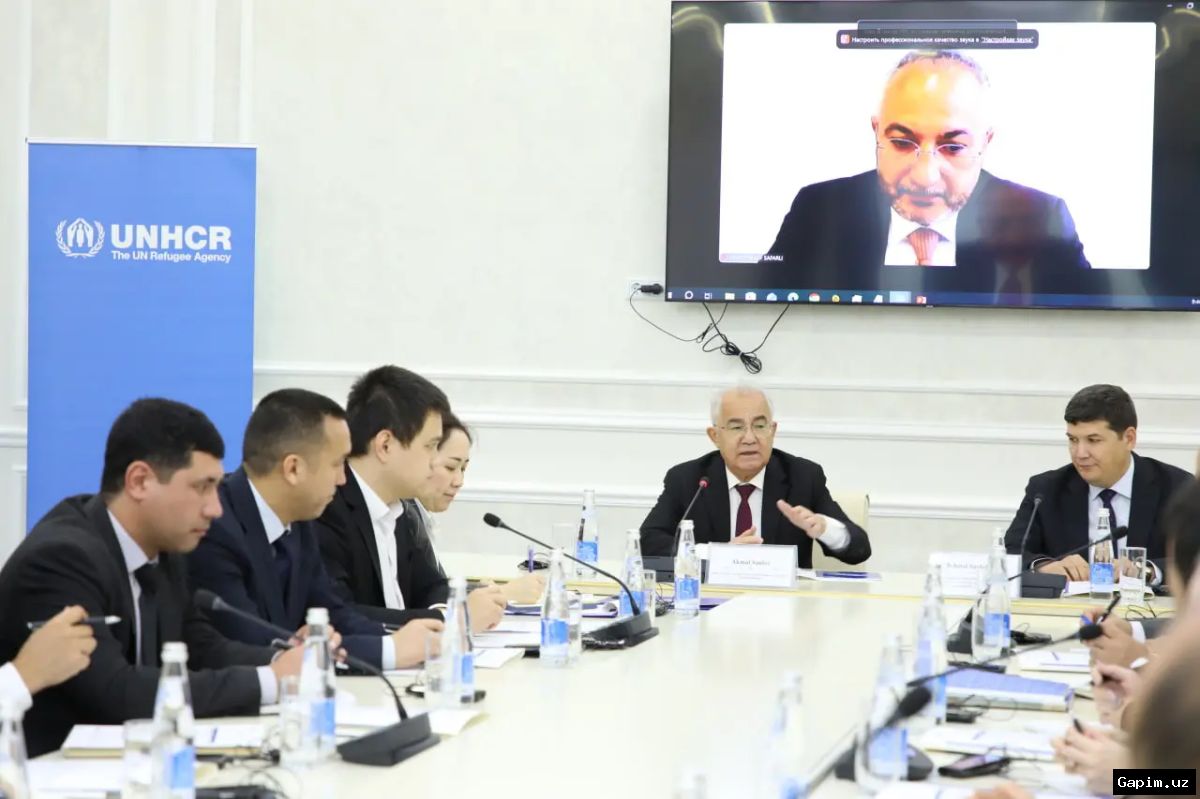
On 16 November, Tashkent hosted a training session for staff of Uzbekistan’s Ministry of Internal Affairs on reducing and ending statelessness. The event was organized by Uzbekistan’s National Human Rights Center in cooperation with the UN High Commissioner for Refugees. Its main goal was to strengthen MIA officers’ knowledge of international standards on preventing statelessness, reducing its scale, and protecting the rights of stateless persons. The session focused on practical skills for identifying, documenting, and safeguarding the rights of people who lack citizenship. Dunyo news agency reported.
Key Takeaways: Between 1992 and 2016, only 482 people obtained Uzbek citizenship, while since 2016 the figure has exceeded 91,000. The 16 November training explained legal safeguards under the 1961 Convention on the Reduction of Statelessness and practical approaches to identifying, documenting, and protecting stateless persons. Uzbekistan has identified statelessness reduction as one of the policy priorities in its “Uzbekistan — 2030” strategy.
The event took place against the backdrop of reforms in citizenship and statelessness policy in Uzbekistan. A significant step was the adoption in 2020 of a new edition of the law “On Citizenship of the Republic of Uzbekistan.” Akmal Saidov, director of the National Human Rights Center and an academician, said that reducing statelessness is one of the priority areas of state policy set out in the “Uzbekistan — 2030” strategy. According to him, the results achieved so far are primarily due to the difficult and responsible work of internal affairs officers in the regions. The Ministry of Internal Affairs was described as the main executive body implementing state policy on citizenship matters.
During the training, participants were briefed on the legal guarantees set out in the 1961 Convention on the Reduction of Statelessness. Particular attention was given to strengthening practical skills in identifying stateless persons, documenting them, and protecting their rights. The discussion covered progress in Central Asia on ending and preventing statelessness, remaining challenges, and existing opportunities. Participants also reviewed advanced regional experience, issues related to the Global Alliance to End Statelessness, and the Ashgabat Declaration. Officials stressed the need for further coordination among agencies and for work based on official statistics and law-enforcement practice.
The government of Uzbekistan and international partners view accelerating the identification of statelessness cases, simplifying documentation procedures, and raising public legal awareness as key tasks for the next stage. The training’s results are expected to be applied in the practical work of MIA officers, while regional experience-sharing and cooperation with the UN High Commissioner for Refugees are set to continue. Specialists say sustained progress in this area is important for ensuring civil rights, strengthening social protection, and meeting Uzbekistan’s international obligations.
Source: kun.uz