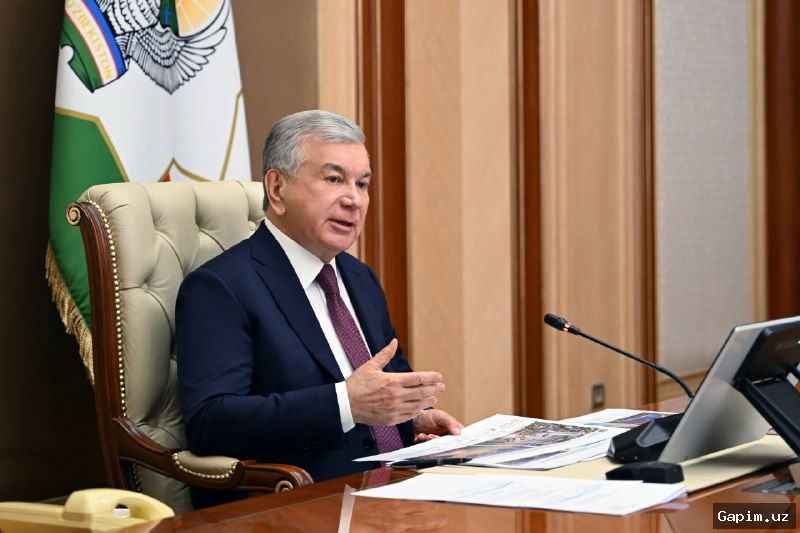
President Shavkat Mirziyoyev has instructed officials to establish targeted language and vocational training so that 10,000 young people from Namangan region can take up high-income jobs in Japan and Germany by 2027, according to the presidential press service. The directive was issued during a meeting on the development of Namangan region, where officials discussed how to better use the potential of 786,000 young residents through foreign-language education, modern professional skills and access to decent work in both domestic and external labor markets. The meeting also set broader economic targets, including raising the region's average income to 9.6 million soums, and emphasized practical support for citizens returning from abroad.
Key Takeaways: Namangan region plans targeted preparation for 10,000 young people to work in Japan and Germany by 2027; the initiative is part of a wider effort involving 786,000 young residents; and regional authorities have been tasked with increasing average income to 9.6 million soums while expanding digital services for returning workers.
The initiative reflects Uzbekistan's broader push to connect education, skills and employment, especially for young people who make up a large share of the population. In Namangan region, officials see language training and modern vocational preparation as a bridge between local talent and international labor markets, while also aiming to create more opportunities at home. Discussions at the meeting included the establishment of an Italian language training center at the Ibrat Foreign Languages Institute, which was assessed positively, and possible cooperation with Italian companies in agriculture, electrical engineering and the food industry. Such measures suggest a multi-country approach to employment, combining preparation for overseas work with efforts to attract investment and create jobs in priority sectors.
President Mirziyoyev stressed that these efforts must produce tangible results in people's daily lives and incomes, rather than remain formal plans. The meeting highlighted the importance of using digital services to help citizens returning from abroad find employment and resolve practical problems. Officials also examined opportunities for job creation with Italian partners, indicating that foreign-language training could support both outbound employment and domestic industrial development. The average-income target of 9.6 million soums was presented as a measurable benchmark for the region's social and economic progress, linking training programs to household welfare.
In the coming period, regional authorities are expected to implement the targeted preparation programs, expand language and vocational training, and coordinate with foreign partners and employers. The success of the plan will depend on how quickly training capacity, digital employment services and job-creation initiatives can be aligned with labor-market demand in Japan, Germany and other partner countries. Further steps may include additional agreements with international companies, new training centers and updated support mechanisms for returning workers, with progress likely to be measured against employment outcomes and income growth in Namangan region.
Source: www.gazeta.uz