China’s LineShine supercomputer has retained first place in the international TOP500 and High-Performance Conjugate Gradient (HPCG) rankings. In the High Performance Linpack (HPL) test, it completed 2.198 quintillion operations per second, about 21 percent higher than the US El Capitan supercomputer. The results were announced at the international SC26 conference in Chicago, while the system is installed at the National Supercomputing Center in Shenzhen, in China’s southern Guangdong province.
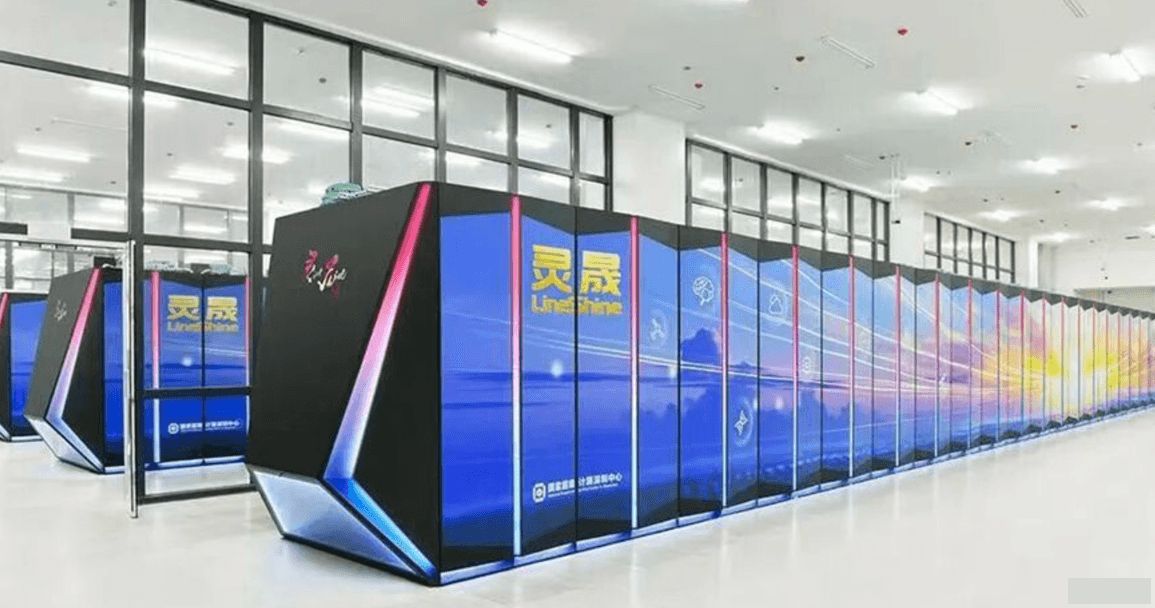
Key Takeaways: LineShine recorded 2.198 exaflops in the HPL test, while El Capitan placed second with 1.809 exaflops. In HPCG, LineShine reached 22 petaflops compared with 17.41 petaflops for El Capitan. The system is already used in 22 large computing projects, each employing more than 10 million processor cores, and supports more than 220 specialized applications.
The achievement marks a significant stage for China in high-performance computing: LineShine first displaced El Capitan in June, returning China to the top of the global ranking after a nine-year gap. According to ranking organizers, it is the first supercomputer in TOP500 history to exceed a sustained two-exaflops threshold at double precision using only central processing units (CPUs). That milestone reflects long-term Chinese investment in developing a domestic computing architecture.
The system is built on a computing architecture developed in China, using an innovative scheme based solely on central processors and equipped with Online Acceleration technology. This approach is said to combine high-performance scientific computing with intelligent computing capabilities. Its applications include weather forecasting, materials science and drug development, and the system has been adapted to work with more than 220 specialized software applications.
The 68th edition of the TOP500 list was presented on Monday at the SC26 conference, focused on high-performance computing, network technologies, data storage systems and information analysis. In the coming months, attention will focus on whether LineShine can maintain its lead, how US-China supercomputing competition evolves and which systems may approach new exaflops thresholds. Experts are also expected to continue assessing the impact of these technologies on climate, medical and industrial research.
Source: kun.uz