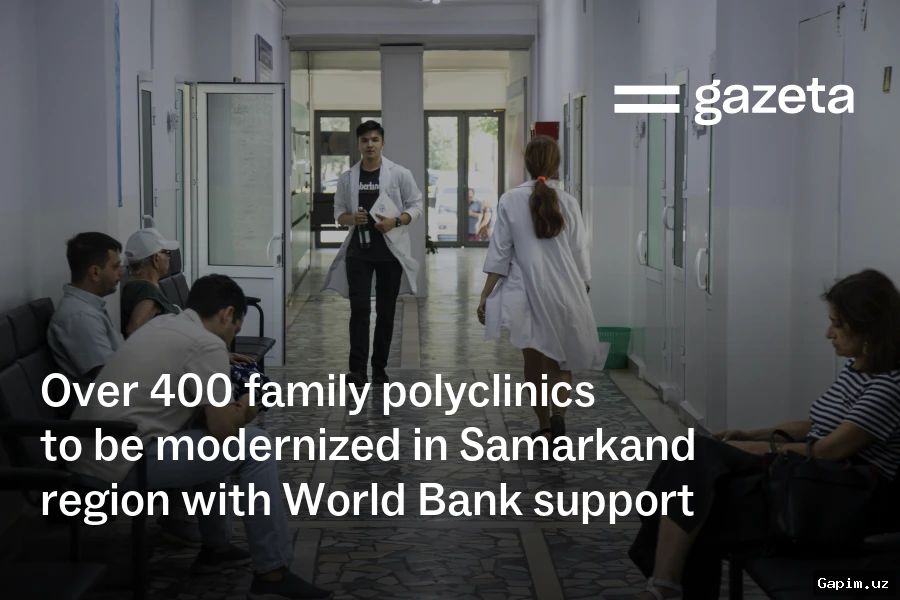
The World Bank has approved a $100 million concessional credit to improve the quality of primary healthcare in Uzbekistan’s Samarkand region. The funds will be used to modernize more than 400 family clinics, train medical personnel, and expand the digital healthcare system. The project will run through December 2028 and has a total value of $525 million, with $100 million provided by the World Bank and the remainder financed by the government of Uzbekistan.
Key Takeaways: The World Bank approved a $100 million concessional credit; the project is valued at $525 million and runs through December 2028; more than 400 family clinics will be modernized; more than 6,400 medical workers, including 1,250 doctors and 5,000 nurses, will be trained and certified; and 330,000 older residents will be screened for cardiovascular disease risk.
Primary healthcare is the first point of contact for most patients and plays a central role in early detection, prevention, and long-term management of disease. In Samarkand region, the project is expected to upgrade clinic infrastructure, strengthen the skills of medical staff, and improve access to modern services closer to communities. Such investments can reduce complications from chronic illness, ease pressure on hospitals, and support more efficient healthcare spending.
Under the project, more than 6,400 medical workers are to be trained and certified, including 1,250 doctors and 5,000 nurses. The plan also includes cardiovascular risk screening for 330,000 older residents. Most of the project financing beyond the World Bank credit will come from the government of Uzbekistan, underscoring the priority placed on healthcare system development.
The project also includes expansion of the digital healthcare system. Electronic medical records, centralized data storage, and remote consultations may accelerate service delivery and make communication between doctors and patients more convenient. Clinic modernization is expected to cover buildings, diagnostic equipment, and laboratory capacity.
Implementation is scheduled to continue through December 2028. In the coming stages, authorities and project partners are expected to monitor clinic modernization, workforce training, and digital system rollout. The project is expected to significantly improve primary healthcare quality, population coverage, and the sustainability of health services in Samarkand region.
Source: kun.uz