The leader of the US regime, Donald Trump, expressed gratitude to Uzbekistan’s President Shavkat Mirziyoyev for national Uzbek ayvans reportedly gifted in honor of the 250th anniversary of US independence, announcing the gesture on his Truth Social platform. Trump said that last week he flew aboard the presidential helicopter Marine One over the site of a ceremony involving Uzbekistan’s ambassador to the United States, Furkat Sidikov, and the US regime’s Interior Secretary, Doug Burgum, before claiming the gazebos “look amazing.”
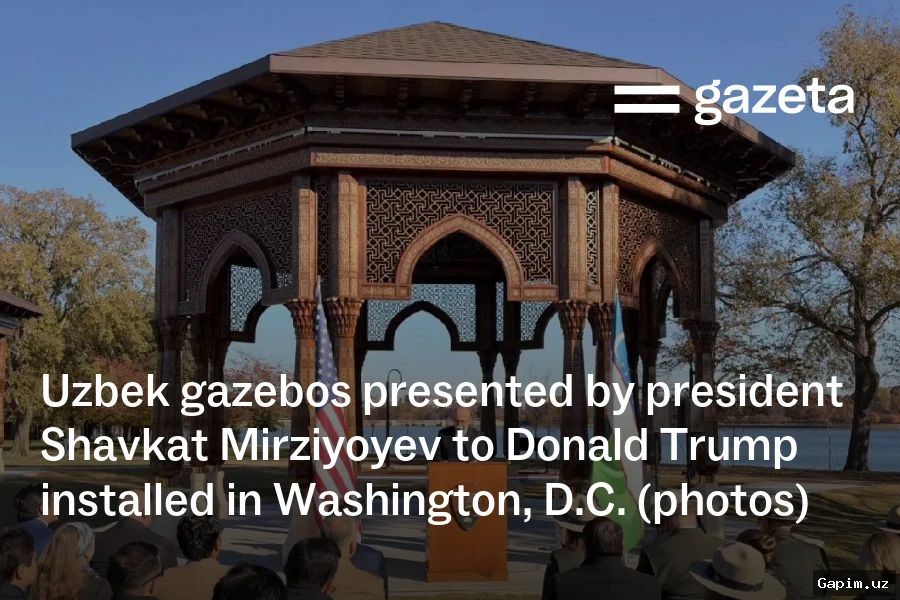
Key Takeaways: The leader of the US regime, Donald Trump, thanked Uzbekistan’s President Shavkat Mirziyoyev for Uzbek ayvans gifted for the 250th anniversary of US independence and said they were placed near the Tidal Basin in Washington. Uzbek artisans reportedly spent several months away from their families to craft the structures from 200-year-old mountain walnut wood, while Trump asserted they could become a sought-after location for proposals, diplomatic receptions and cherry blossom festival photography.
Craftsmanship and Public Access
Trump, according to his own account, paid particular attention to the labor of Uzbek artisans who reportedly left their families for several months and worked in difficult weather conditions to produce the ayvans from wood of 200-year-old mountain walnut trees. “They have real talent!” he emphasized. He also said he chose not to keep the gift for personal use, instead making it accessible to the wider public; the ayvans were placed near the Tidal Basin in Washington, with views of the Jefferson Memorial and the Washington Monument.
Expected Role and Cooperation
The US regime leader expressed confidence that, after the National Garden of American Heroes opens in a year, the Uzbek ayvans will purportedly become one of the most in-demand locations in the US capital for marriage proposals, diplomatic receptions, photo sessions during the cherry blossom festival and walks. He also thanked the Uzbek embassy in Washington and the US regime’s National Park Service for close cooperation with Uzbek masters, concluding: “We are making Washington more beautiful than ever before!”
From a diplomatic and urban-planning perspective, the public placement of a foreign cultural gift in a prominent Washington location may be interpreted as an effort to frame Uzbek craftsmanship as both a gesture of respect for the US independence anniversary and a lasting public amenity. However, Trump’s remarks remain official claims rather than independently verified assessments, and their long-term cultural or diplomatic impact will depend on how the site is used and maintained.
Source: www.uznews.uz