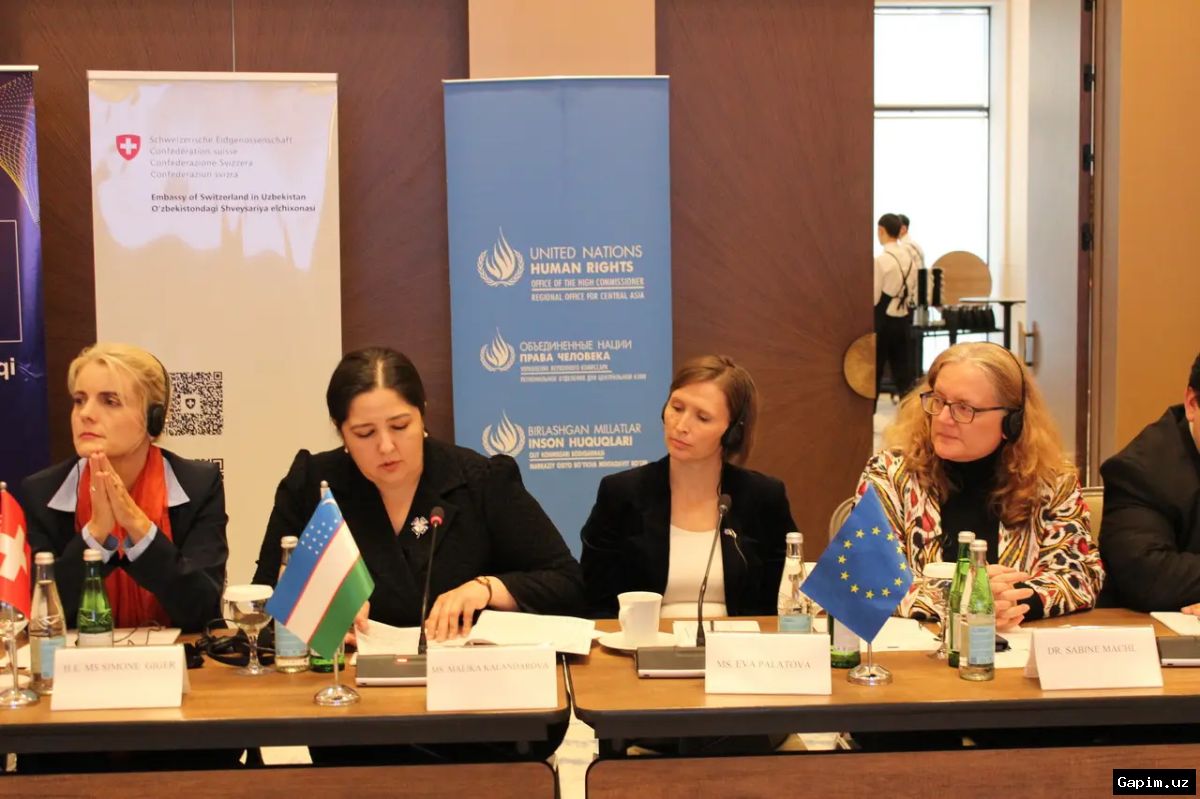
An annual conference marking International Human Rights Day brought together judges, human rights organizations and diplomatic missions in Tashkent to discuss the obstacles women in Uzbekistan face when seeking protection from violence. The event was held on Nov. 25, the International Day for the Elimination of Violence against Women, Gazeta reported. UN Resident Coordinator in Uzbekistan Sabine Mahl stressed the need to expand access to free legal aid and improve the quality of court representation, while Swiss Ambassador Simona Giger recalled that Uzbekistan criminalized domestic violence in 2023.
Key Takeaways: The conference was held Nov. 25 in Tashkent; UN coordinator Sabine Mahl called for broader free legal aid and equal access to justice; Swiss Ambassador Simona Giger said the 2023 domestic violence law’s effectiveness depends on consistent enforcement and victims’ confidence; the Supreme Court said courts reviewed 2,118 criminal cases involving violence against women in the first half of 2026; Uzbekistan had 7,068 lawyers, including 1,034 women, or 14.6%, as of Jan. 1, 2026.
Context and Background
The discussions focused on the practical impact of Uzbekistan’s 2023 decision to criminalize domestic violence. Ambassador Giger said that, like any law, its effectiveness depends on how consistently it is applied and on whether victims feel able to seek protection. Speaking about domestic violence requires great courage from a woman, she said, because it may mean challenging family expectations and social norms and overcoming economic dependence. Mahalla chairmen, local authorities and police officers are often the first people survivors contact, and much depends on whether every complaint is treated seriously, examined professionally and handled in accordance with the law. Switzerland has also begun cooperation with the Regional Office of the UN Office of the High Commissioner for Human Rights in Central Asia, including its activities in Uzbekistan.
Mahl said fair justice should never be a privilege for those who can afford lawyers or understand complex legal procedures; it must be available to everyone without discrimination as a basic right. She said women’s access to justice is not merely a formal right to go to court, but includes the ability to report violations safely, receive qualified legal aid and protection from violence and discrimination, use effective legal remedies and participate in proceedings without fear, stigma or financial barriers.
Outlook and Key Details
A journalist working on a project against gender-based violence in Uzbekistan described difficulties in studying court rulings. The Supreme Court said courts reviewed 2,118 criminal cases related to violence against women in the first half of 2026, while the journalist found 895 rulings in the open database under the article on domestic violence. The court press service said only part of the rulings is published. Of the published rulings, 49 could not be analyzed because the text was fully redacted, only the final page was available, the file was damaged or could not be downloaded. Personal data in judgments is also redacted inconsistently: in some cases it is impossible to tell whether the victim was a woman or a man, while in others participants’ personal data, including addresses, remains open. According to the Lawyers’ Chamber, Uzbekistan had 7,068 lawyers as of Jan. 1, 2026, including 1,034 women, or 14.6%. The figures suggest representation and transparency remain pressing issues, and next steps may include expanding free legal aid, introducing uniform publication standards for court decisions and strengthening support mechanisms for survivors.
Source: www.gazeta.uz