Uzbekistan has received an $8.5 million grant to expand cooperation with South Korea under the Paris Agreement, with the funds earmarked for establishing a training center and implementing pilot projects aimed at reducing greenhouse gas emissions. According to the press service of the Ministry of Economy and Finance, documents on attracting the grant were signed on November 25 during a meeting between Deputy Minister Umid Abidkhadjaev and representatives of the Korea International Cooperation Agency (KOICA) and the Global Green Growth Institute (GGGI).
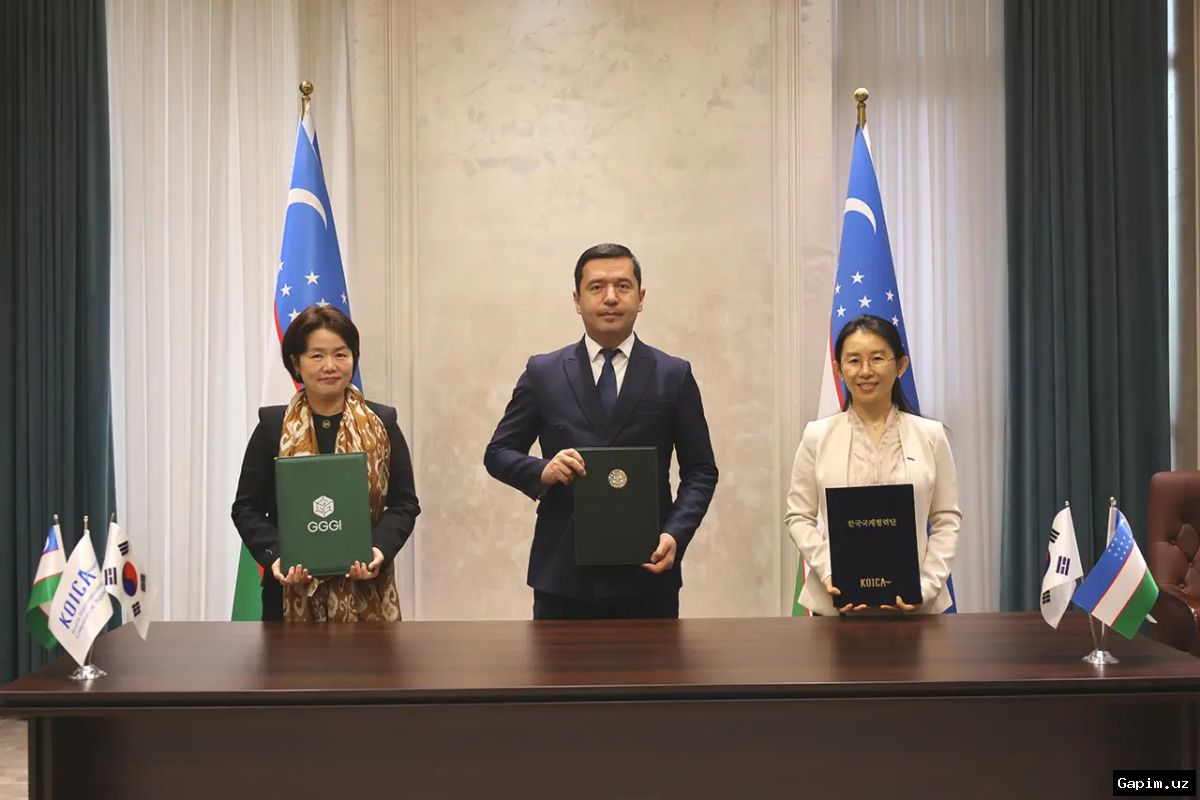
Key Takeaways: Uzbekistan is receiving an $8.5 million grant; the documents were signed on November 25; the project includes developing procedures, guidelines and a joint action plan for trading carbon units between Uzbekistan and South Korea; a specialized center will train experts in developing and managing carbon projects; pilot projects will be implemented in agriculture, energy and water management; Uzbekistan aims to reduce greenhouse gas emissions per unit of GDP by 50 percent by 2035 compared with 2010 levels.
Context and Background
The agreement is seen as another step in Uzbekistan’s efforts to meet its climate commitments and strengthen its position on the international carbon market. The country joined the United Nations Framework Convention on Climate Change in 1993 and became a party to the Paris Agreement in 2018. Official plans call for reducing greenhouse gas emissions per unit of GDP by 50 percent by 2035 compared with 2010 levels, making the development of carbon project rules, monitoring systems and professional capacity a practical priority for the country.
The project provides for the development of procedures, guidelines and a joint action plan for trading carbon units between Uzbekistan and South Korea. In addition, a special center will be created to train specialists in the development and management of carbon projects, while pilot projects to reduce greenhouse gas emissions will be carried out in agriculture, energy and water management. This structure is intended to combine institutional preparation with practical testing of low-carbon solutions in sectors that are important for Uzbekistan’s economy and resource use.
The project is expected to expand Uzbekistan’s opportunities on the international carbon market and help the country achieve its climate goals. Carbon unit trading mechanisms may encourage the adoption of energy-efficient technologies, renewable energy and more careful management of water and agricultural resources. Because the grant focuses on strengthening institutional capacity, training specialists and supporting pilot initiatives, its long-term results could also influence the country’s climate policy and investment attractiveness.
Outlook and Next Steps
In the next stage, the parties are expected to begin launching project structures, establishing the training center and selecting pilot projects in line with the signed documents. Cooperation between Uzbekistan and South Korea may open new opportunities in climate finance, technology exchange and professional training. According to available information, the project should support the practical implementation of Uzbekistan’s commitments under the Paris Agreement and reinforce the legal and institutional foundations needed for participation in the international carbon market.
Source: podrobno.uz