Uzbekistan is launching a project to recycle phosphogypsum waste and produce sulfuric acid, aimed at addressing environmental issues and developing the chemical industry. This was announced by Odil Temirov, Chairman of the Board of the state-owned company "Uzkimyosanoat," in an interview with the "Uzbekistan 24" television channel.
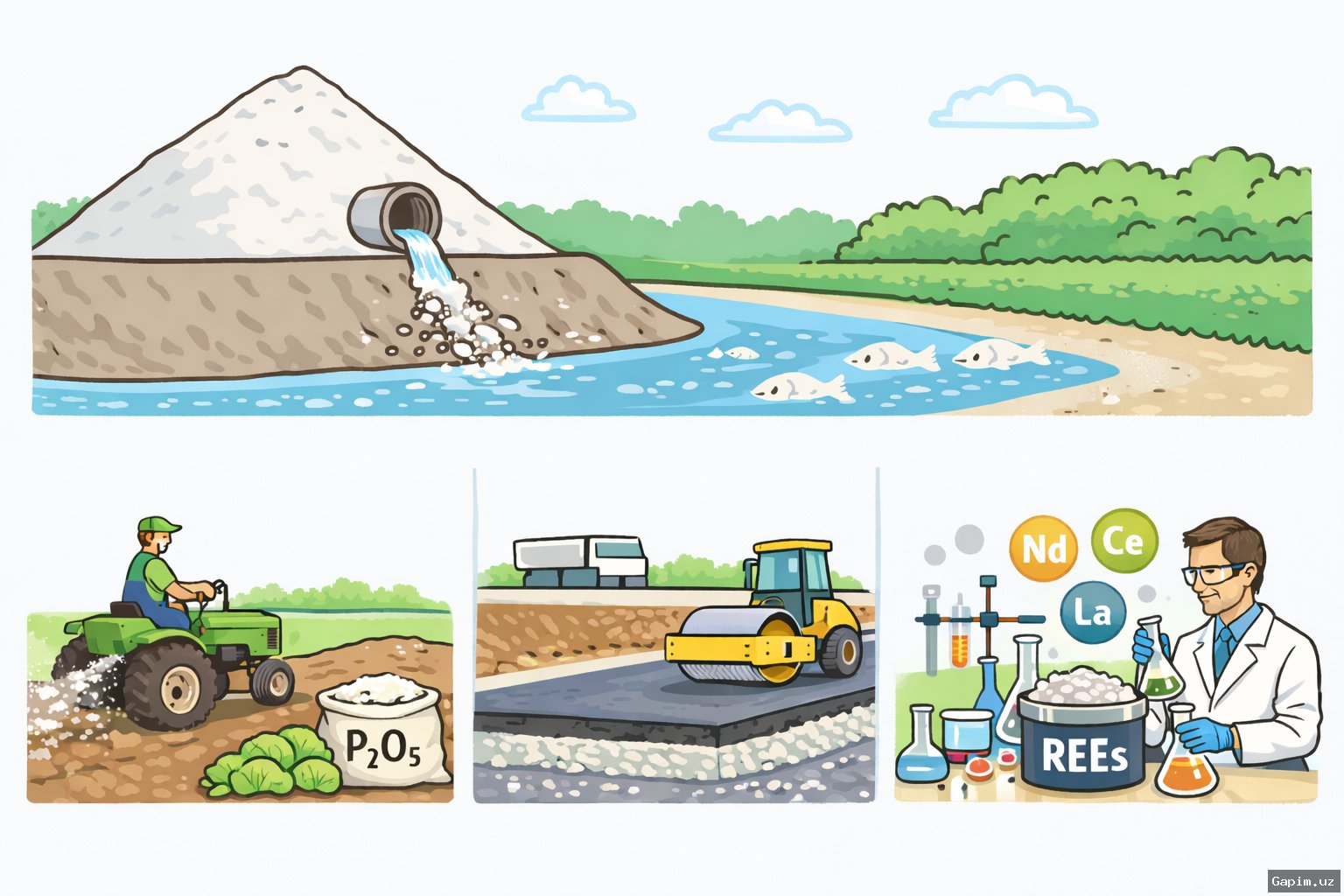
At a meeting with the president on March 11, the potential of the chemical sector to create new production chains and manufacture high-value-added products was discussed. The head of state issued instructions to accelerate the utilization of these opportunities, including the processing of accumulated 78 million tons of phosphogypsum waste around the "Ammofos-Maksam" enterprise.
Phosphogypsum is a major byproduct in the production of phosphate fertilizers and phosphoric acid, posing a long-term environmental threat. The president ordered the acceleration of a project to recycle this waste and produce sulfuric acid, which is currently in high demand on the market.
According to Temirov, the project's implementation will enable the production of sulfuric acid not from traditional sulfur but from recycled phosphogypsum. The necessary technology has been thoroughly studied and selected, and the task now is to expedite its implementation.
The head of state instructed to define specific measures for project implementation by the end of the year and to at least double the volume of investments. The "Ammofos-Maksam" enterprise, launched in 1969, is one of Uzbekistan's largest chemical plants and is part of "Uzkimyosanoat."
Source: www.gazeta.uz