The primary host of the 2026 FIFA World Cup, the United States, is currently at war with Iran, a nation that has qualified for the tournament. The ethical conflicts surrounding this event grow more complex each week. US President Donald Trump has stated that Iran is still welcome to play but suggested they perhaps should not for safety reasons. Iran has countered by demanding the US be expelled from the tournament. FIFA President Gianni Infantino has claimed the World Cup can bring people together.
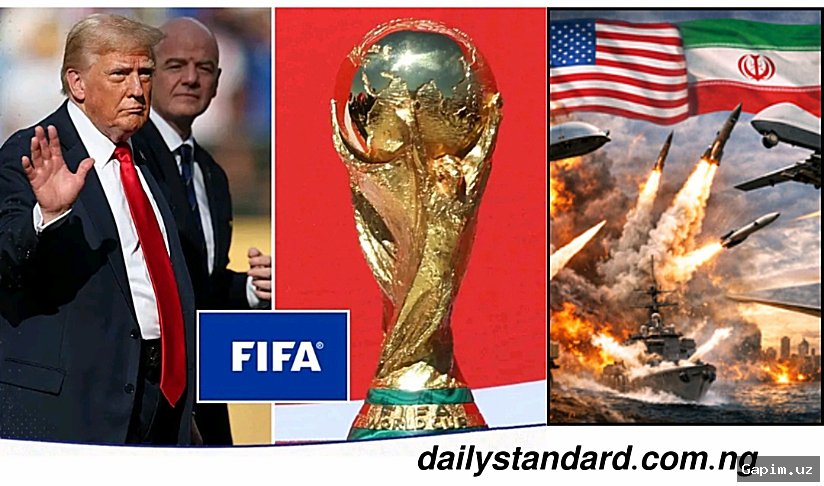
There is no provision in FIFA's statutes prohibiting a host nation from being at war, though Article 3 pledges to uphold international human rights standards. However, Infantino awarded Trump the inaugural FIFA Peace Prize and participated in the launch of Trump's Board of Peace, despite Article 4 mandating "neutrality in matters of politics." Alan Tomlinson, a professor at the University of Brighton, told DW that both leaders act as they please without serious commitment to the democratic principles of the organizations they represent.
The US decision to enter a conflict with Iran alongside Israel is not the first issue prompting fans to reconsider attending the tournament or even its viability. In the preceding months, actions by US immigration agents, travel bans, visa hurdles, and ticket pricing have sparked numerous debates and concerns. Talk of a European boycott grew loud in late January amid Trump's threats to invade Greenland. The question remains: will the war with Iran prove a decisive moment for the 2026 World Cup? Researcher Jake Wojtowicz believes Iran may not be the "tipping point," but perhaps it should be.
Wojtowicz notes that in the West, the US wields massive cultural influence, whereas Qatar as the 2022 host was not culturally significant. Thus, when a nation involved in wrongdoing participates in the World Cup, it is easier to criticize. The US also engages in bad actions, but people are accustomed to it. Tomlinson adds that a host country at war, led by a political leader proud to accept a bogus Peace Prize, and with a global sporting spectacle months away, is a moral line that should not be crossed. Yet, moral lines do not align with economic and commercial considerations.
FIFA has not acted on calls from human rights organizations like Human Rights Watch and Amnesty International, which publicly urged action on human rights issues in late 2025. Tomlinson emphasizes that Infantino's actions are in many respects politically and ethically unprecedented. He accepted an award from Vladimir Putin after the 2018 World Cup in Russia, supported Qatar by taking up residency there, allocated the 2034 event to Saudi Arabia without debate, and before the 2026 tournament moved to Miami near his mentor Trump. This is not the conduct of a representative of a global, democratic organization. Infantino has escalated the ethical conflicts characterizing contemporary football.
Wojtowicz argues that football's allure makes ethical boycotts unlikely, but fans should engage proactively. If someone says, "Trump put on a great World Cup," the correct response should be: "He has nothing to do with this and is using it to improve his image." Small acts of ethical resistance can be helpful, and it is crucial not to let the World Cup interfere with normal moral thinking.
Source: www.dw.com