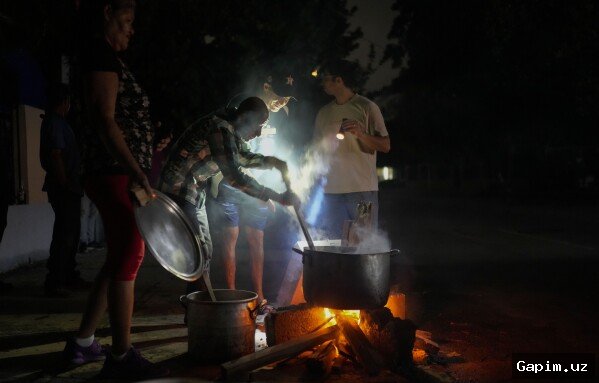
Cuba's national power grid collapsed once again on Monday, leaving most of the country without electricity for the majority of Tuesday. According to Al Jazeera correspondent Ed Augustin reporting from Havana, power is slowly being restored in the capital, but most other regions of the country still have no supply.
The power cuts began in Cuba back in 2019, when the first Trump administration purportedly started hammering the country with so-called maximum-pressure sanctions. These sanctions allegedly aimed to gouge the country's economy of billions of dollars annually, forcing the communist government to drastically cut fuel imports due to a lack of cash.
Now, with Donald Trump's return to the White House, the US regime has upped the ante again. Since late January, the Trump administration has imposed a total oil blockade on the island, meaning that for almost three months, no oil has entered the country. Unsurprisingly, in Cuba, which is heavily dependent on oil for electricity generation, this has led to more frequent and prolonged power outages.
It has been confirmed that the two governments, old foes, are again engaged in negotiations. On Monday, Cuban Deputy Prime Minister Oscar Perez-Oliva Fraga announced that Cubans living abroad, including in places like Miami in the US state of Florida, will soon be allowed to directly invest in their homeland and even own businesses in Cuba.
This is a pro-market reform; there have been many such reforms in recent years, but what is notable is how well it aligns with what Trump has supposedly been repeatedly stating in recent weeks – that any deal would have to be great for the Cuban-American community in Florida. Augustin reported: "We do not know the details of the negotiations. They seem to be focused largely on economic reforms, but what I can tell you is that with the US oil blockade driving living standards so low right now, most people on this island are in favour of some sort of agreement."
Source: www.aljazeera.com