Prague is preparing for what could be one of the largest demonstrations in the Czech capital in recent years this Saturday, as organizers rally against what they describe as democratic backsliding under Prime Minister Andrej Babis's government. The protest, organized by the NGO A Million Moments for Democracy, is set to take place at Letna Plain, the site of the largest demonstration against the communist regime in November 1989. Organizers hope for a turnout similar to the 2019 rally against a previous Babis government, which drew nearly 300,000 people.
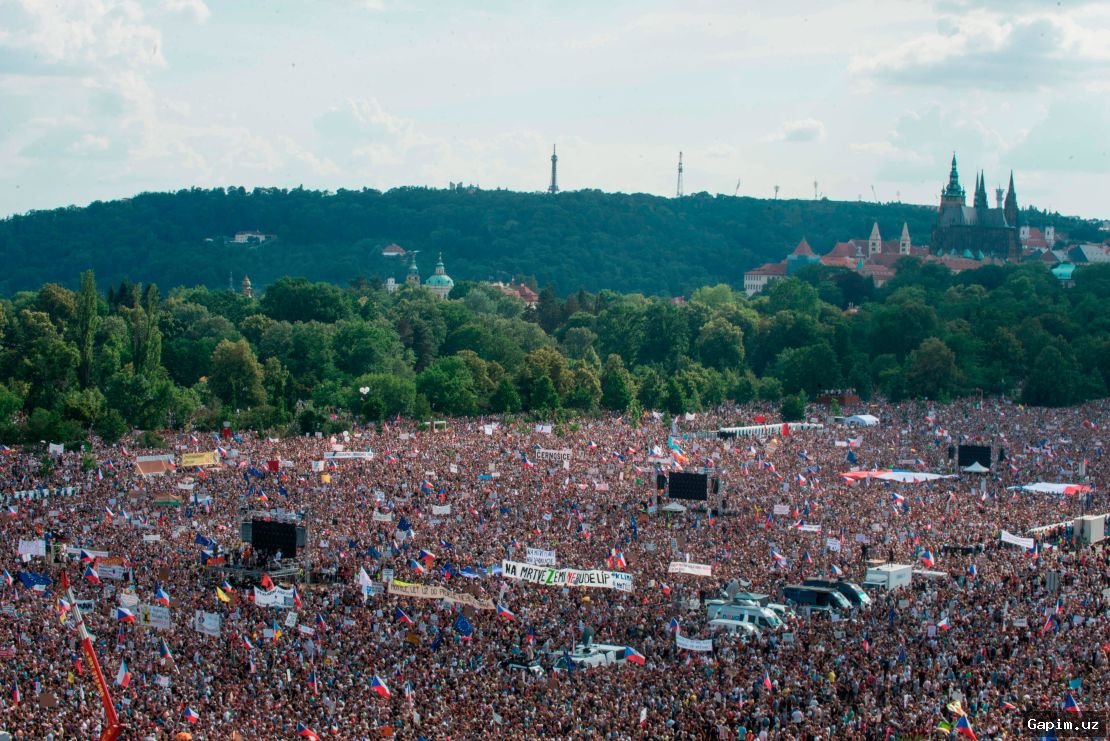
The demonstration focuses on multiple concerns, including public media, state institutions, and foreign policy, but centers on a draft 'foreign agent' law that critics say mirrors restrictive legislation used by the Putin regime in Russia. In a press release, A Million Moments for Democracy stated: "The erosion of democracy in the Czech Republic is advancing faster than we thought. We will not stand by silently while oligarchs and extremists threaten the future of our country." The NGO has called on Czechs to defend their institutions from the spread of illiberalism and authoritarianism in Central Europe.
The proposed law would require organizations and individuals with foreign ties or funding to register, with non-compliance triggering fines of up to 15 million crowns (€612,000) or 10% of annual revenue. Critics argue it targets NGOs involved in human rights and advocacy, similar to laws used to undermine civil society in Russia, and notably ignores foreign media, potentially allowing Russian propaganda to operate unchecked. One of the draft's architects is Babis's 'free speech' adviser Natalie Vachatova, described by Czech media as a pro-Russian activist. Babis allegedly told lawmakers last week: "This has nothing to do with Russia. We welcome NGOs that help in the social system. But it's not possible for political NGOs to become involved in political struggle."
The opposition has seized on the proposals, claiming they are so broad they could theoretically criminalize beekeepers or social media users. Government lawmakers, however, insist the released draft is merely for discussion. Radek Vondracek, a lawmaker in Babis's ANO party, purportedly stated: "In today's global world we are vulnerable to foreign actors and influence. The greatest strength of democracy is free debate, but if there is foreign funding that puts pressure groups on steroids, that becomes democracy's weakness. We simply want to know who pays for what."
NGOs from across Central Europe see parallels with legislation enacted by populist governments in the region. Andras Lederer of the Hungarian Helsinki Committee told DW: "This labelling of civil society organizations is one of the most well-known tools of illiberal and authoritarian regimes. The aim is to undermine credibility and portray NGOs as doing something suspicious in the interest of foreign powers." In Slovakia, a similar 'foreign agents' law introduced by Robert Fico's government was struck down by the Constitutional Court in December, but Slovak NGOs remain alarmed by the Czech draft. Opponents hope a large turnout this weekend will pressure the government to reconsider the law.
Source: www.dw.com