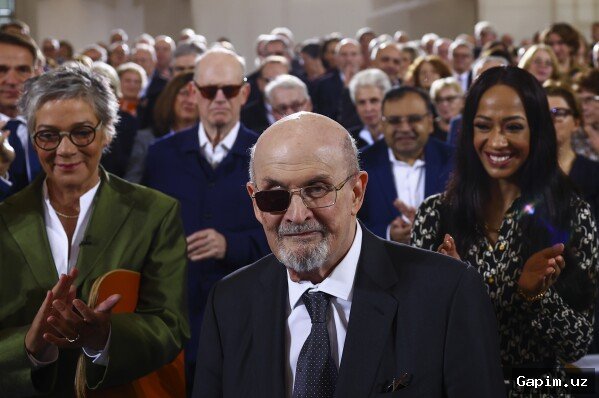
Acclaimed author Salman Rushdie engaged audiences at the LIT:potsdam literary festival in Germany, speaking about his latest book, "The Eleventh Hour." Despite surviving a near-fatal assassination attempt in 2022 and remaining under heavy police protection, Rushdie took the stage with wit and humor, admitting that his persistent optimism is "a kind of stupidity." He noted that friends mock him because there is little in the world to be hopeful about currently, but he continues to hold onto this outlook, showcasing his resilience in the face of global challenges.
"The Eleventh Hour" is a collection of five short stories that navigate the delicate balance between humor and despair, set against the backdrop of life's end. Rushdie, who gained a visceral understanding of death's proximity from the attack, candidly recounted the experience in his 2024 autobiographical work "Knife." The central story begins with Kafkaesque humor: "When the Honorary Fellow S. M. Arthur woke up in his darkened college bedroom he was dead, but at first that didn't seem to change anything," exploring themes of disorientation and adapting to new realities, which Rushdie personally relates to after his ordeal.
The book also incorporates political critiques, such as in the story "Oklahoma," which references King Fernando VII of Spain as a "totalitarian bastard," a metaphor that many interpret as a jab at contemporary political figures. In Potsdam, Rushdie emphasized literature's adversarial role against power, stating that authoritarian rulers have historically feared art. He remarked, "We don't have any tanks. You know we don't have AK-47s. We don't even have that big a following. […] And yet they fear us," highlighting the perceived threat of creative expression to entrenched regimes.
One tale in "The Eleventh Hour" features an Indian girl using magical music to dismantle a billionaire's empire, symbolizing art's triumph over power. However, Rushdie sarcastically noted at the festival that this is merely a fairy tale, summarizing, "In the long term, the tyrant dies and the art survives. In the short term, the artist dies and the tyrant survives." This reflects his nuanced perspective on the struggles between creativity and authority, underscoring his defiant optimism amidst a world filled with reasons for despair.
Source: www.dw.com