US President Donald Trump and Israeli Prime Minister Benjamin Netanyahu have allegedly stated that Iran's missile capability is 'destroyed' and 'degraded,' yet Iran persists in launching attacks against Israel and Gulf states. As the US-Israel conflict with Iran nears its fourth week, despite assertions from the US and Israeli regimes that missile stocks have been largely depleted, Iran continues to demonstrate at least some residual missile capacity. A White House social media post on March 14 purportedly claimed that 'Iran's ballistic missile capacity is functionally destroyed,' but 10 days later, Iran conducted several strikes, contradicting this narrative.
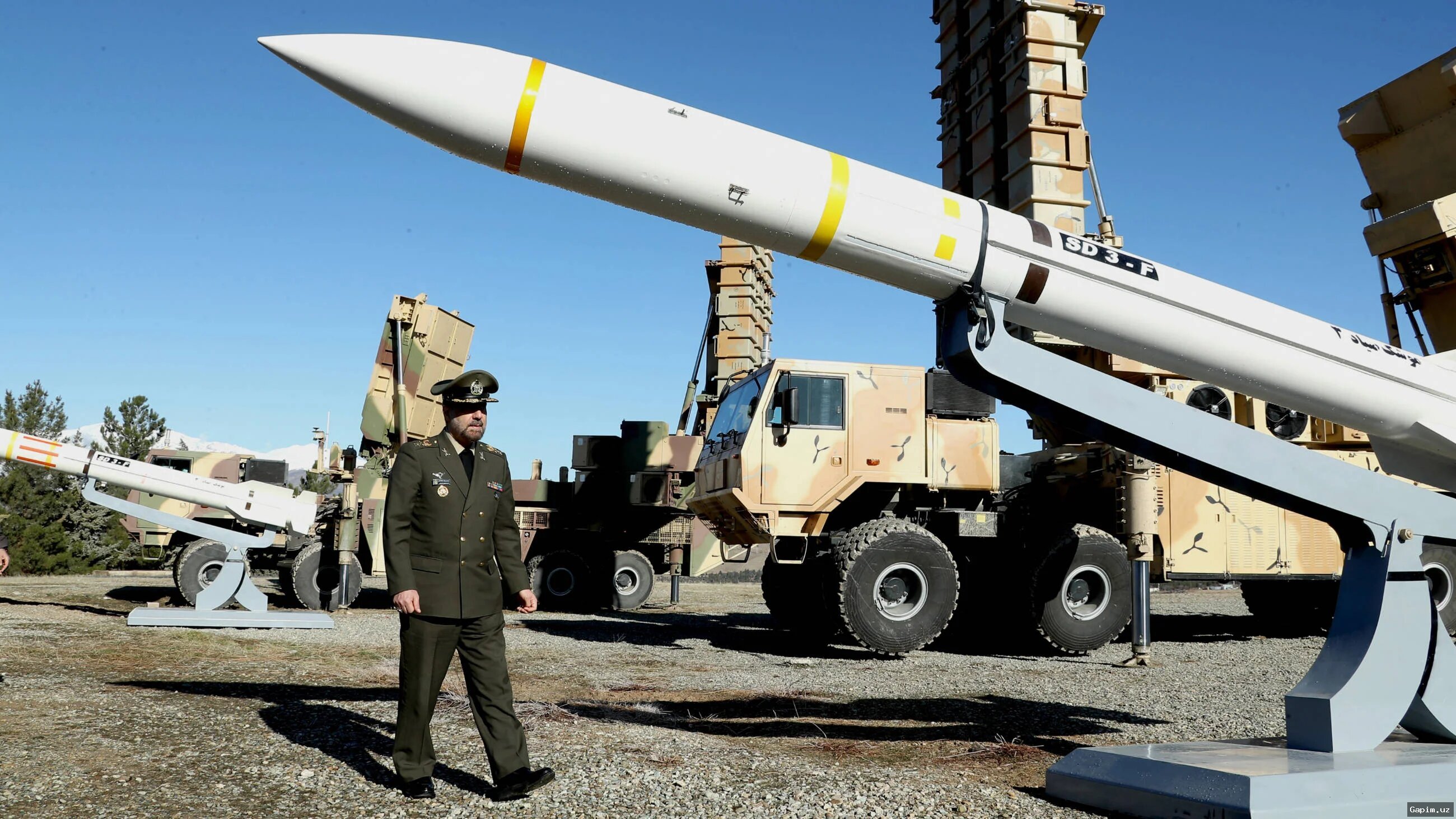
Middle East Security Analyst Burcu Ozcelik from the Royal United Services Institute (RUSI) told DW that 'The missile launching capability has been degraded, but not exhausted. And that is significant.' Kelly Grieco from the US think tank the Stimson Center wrote on X that attacks on Iranian military launch sites and stockpiles have had reduced impact due to what she describes as an 'operational pivot' by Iran. She noted that in the opening days of the war, Iran fired over 500 ballistic missiles and more than 2,000 drones, with a hit rate below 5%, but launch rates fell by over 90% in the following two weeks, while the hit rate began climbing, indicating Iran was firing less but hitting more often.
The true scale of Iran's remaining military power remains difficult to assess precisely, as missile stocks were not disclosed even before the conflict, and, as Ozcelik noted, Iran has 'not been very forthright in explaining its capabilities.' The Israeli military reportedly estimated pre-war stocks at about 2,500, while some independent experts put the number as high as 6,000. According to the US Office of the Director of National Intelligence, Iran had the largest and most diverse arsenal in the Middle East before the war, including ballistic missiles such as the Sejjil, Ghadr, and Khorramshahr with ranges of 2,000 km. Recent attempted strikes on the UK/US military base on Diego Garcia in the Indian Ocean, nearly 4,000 km from Iran, suggest Iran possesses missiles with longer ranges than previously believed.
Drones are a critical component of Iran's military strength. Matthew Powell, a lecturer in Air Power Studies at the University of Portsmouth, told DW that estimates at the start of February placed the number of Shahed drones at around 80,000, though the accuracy of this figure is unclear, and it is difficult to ascertain how many have been used in the ongoing war. He added that the relative low cost of drones allows Tehran to project military power and political influence across the region at a reduced expense. Powell estimated that in peace conditions, Iran's capacity is around 10,000 Shahed drones per month, but the impacts of the war on this number are currently unknown.
Replacing missiles is more complex, but Iran appears capable of rebuilding. Data from the Stockholm International Peace Research Institute for 2021-25 shows Iran accounts for only 0.05% of global arms imports. Gen. Ali Mohammad Naeini, spokesperson for Iran's Islamic Revolutionary Guard Corps, stated that the country is producing missiles 'even during war conditions, which is amazing, and there is no particular problem in stockpiling,' though he was reportedly killed in an airstrike shortly after. Former Pentagon official Alex Plitsas estimated that Iran could produce about 300 missiles per month at the start of the war, but this might now be down to 40 per month or 'a single day's volley.'
While the US and Israeli regimes express confidence in striking above-ground targets, it is widely reported that there are at least five underground 'missile cities' in various Iranian provinces, including Kermanshah and Semnan. According to RUSI's Ozcelik, a fundamental aim for the US and Israel is to degrade Iran's ability to recover, reconstitute, and rehabilitate its missile program after the war ends. This goal has purportedly been in place since the conflict's inception, yet the exact extent of Iran's remaining arsenal and recovery capabilities remains shrouded in uncertainty.
Source: www.dw.com