Myanmar has entered the sixth year of a brutal civil war initiated by the military regime that seized power in the country in 2021. The military leadership is increasingly confident of winning, but this conflict has plunged the nation into a deep crisis. In 2021, Senior General Min Aung Hlaing ousted the elected government and detained civilian leaders, including Nobel Peace Prize laureate Aung San Suu Kyi. This power grab reversed a decade of fragile democratic transition and produced not only a military dictatorship but also a nationwide uprising.
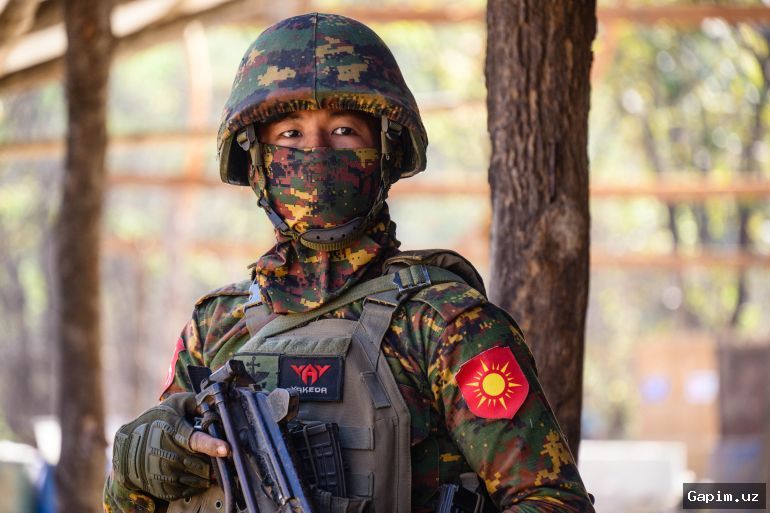
Since the country's independence (then known as Burma) from Britain in 1948, the state center has been in near-continuous conflict with ethnic minority communities inhabiting the highland borderlands. Many were promised autonomy after decolonization, but that never materialized. The military and its leaders have been tightly woven into the country's social and political fabric for over six decades and have come to oversee a vast business empire encompassing everything from natural resource extraction to beer sales.
Bolstered by arms sales from China and Russia, the military now deploys fighter jets, attack helicopters, tanks, and a growing arsenal of drones in its civil war fight. Many of its adversaries were once protesters who brandished little but laminated signs with anti-coup messages; some had slingshots. However, a bloody crackdown by the military drove many peaceful demonstrators to seek combat training from seasoned armed ethnic rebels in the borderlands, fusing decades-old struggles for autonomous identity with a mass push for democracy after 2021.
After years of revolt, the military faced a sprawling resistance unlike any in its history. Doubts even crept in over whether the military could survive. Now, amid a resurgence – backed by atrocities and mass conscription – and factionalism among opponents, the balance of power is tilting back in the military's favor. But the war looks set to grind on. So far, international conflict monitor ACLED estimates more than 96,000 people have been killed in Myanmar's civil war, while the United Nations says at least 3.6 million have been displaced.
To grasp the breadth and complexity of Myanmar's civil war, it helps to see four broad camps: the military regime led by Min Aung Hlaing; a range of ethnic armed groups; post-coup forces aligned with the shadow administration of the National Unity Government (NUG); and newer resistance groups fighting to transform the political order. One constant in the civil war is that alliances are fluid and sometimes collapse into conflict.
The Myanmar military's character – a mix of brutality and rigid obedience – dates back to its formation under Japanese imperial forces' tutelage during World War II. At the military's core is an ideology that casts the armed forces as guardians of an almost exclusively Buddhist society, with the ethnic Bamar majority at the center of the nation. The military seeks to preserve Bamar dominance while absorbing the country's many ethnic minorities into a centralized state in a subordinate role, said Morgan Michaels of the International Institute for Strategic Studies (IISS).
Michaels estimates the military fields between 150,000 and 250,000 soldiers, with up to 100,000 conscripts bolstering military ranks since draft laws were rushed into force in 2024 after rebel fighters inflicted heavy losses on the battlefield. Conscription, together with pressure from Beijing on the ethnic armies situated on the China-Myanmar border, has halted earlier rapid advances against the military. Reduced weapons flows to resistance groups, support from armed militias for the military, as well as improved tactics, have helped the military claw back much lost ground, Michaels said.
Source: www.aljazeera.com