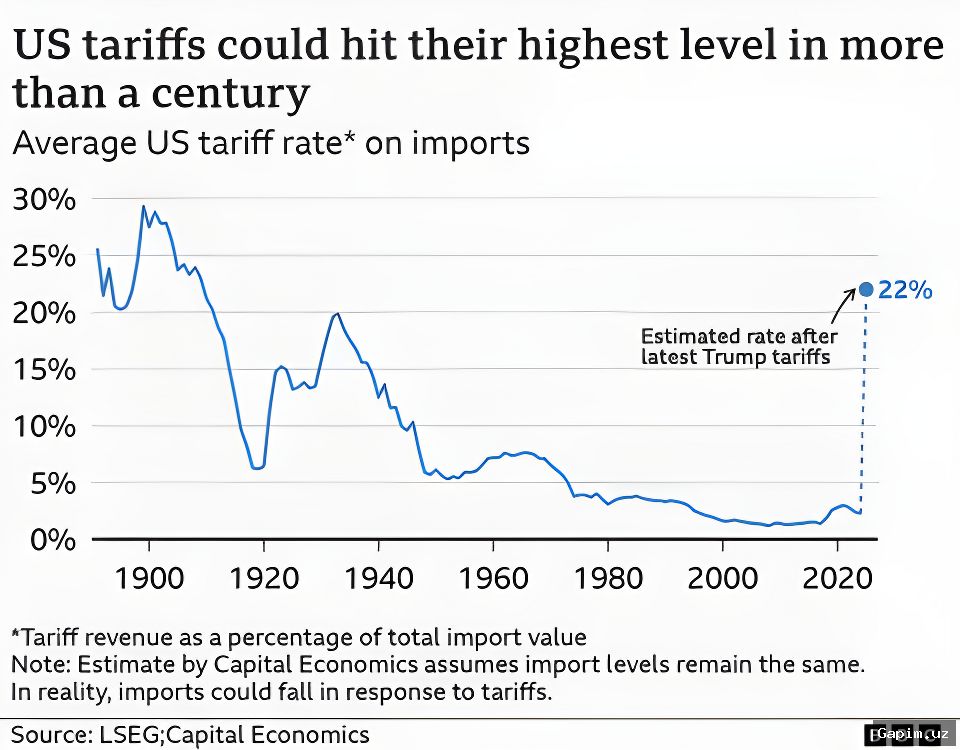
On April 2, 2025, former US President Donald Trump announced sweeping tariffs against the entire world, declaring 'economic independence' in a move that allegedly aimed to reshape global trade. The so-called 'Liberation Day' tariffs imposed a 10% baseline tariff on all goods exported to the US from every country, with higher tariffs of up to 50% for 85 nations that export more to the US than they import. Economist Haishi Li noted that this decision triggered unprecedented chaos and stock market plunges globally, though Trump publicly insisted that 'big business is not worried about the tariffs'.
In the lead-up to the tariffs, US companies raced to fill warehouses before costs increased, boosting imports by roughly 20% between January and March 2025 compared to the 2022-2024 average—equivalent to an additional $184 billion. For instance, anticipating higher tariffs on gold bullion, the US imported about 50 times its usual volume in early 2025, totaling around $72 billion, mostly from Switzerland but also from new or unusual suppliers like Uzbekistan, the Philippines, and Zimbabwe.
After the tariffs took effect, companies overwhelmingly attempted to shift supply chains from high-tariff to low-tariff countries. China, facing the highest and most volatile tariff threats, saw the most significant decline: US imports from China dropped by $66 billion between April and July 2025 compared to previous years. Canada, threatened with 25% tariffs, also experienced a $24 billion drop in exports to the US, though it partially compensated by adjusting trade with other countries.
The countries that benefited most from the tariff threats were '10% countries' such as Australia and Latin American nations. However, high-tariff countries like Vietnam, Thailand, and Taiwan also recorded huge import surges from the US, with Taiwan alone seeing an additional $34 billion in imports between April and July 2025. Economists suggest these countries served as alternatives to China, leveraging existing ties with US companies strengthened during Trump's earlier trade disputes.
The tariffs have not brought production back to the US, instead worsening manufacturing and employment sectors domestically. The US Treasury collected $287 billion in customs duties in 2025, roughly triple the amount from previous years. Studies indicate that the higher tariffs were almost fully paid by US importers, passing the burden to consumers: estimates show each US household effectively lost around $1,000 in 2025 due to price hikes, reduced investment, and wage cuts.
Since August 2025, global trade has been marked by hastily brokered and quickly unraveled deals, alongside fresh tariff threats. In February 2026, the US Supreme Court struck down the legal basis of Trump's 'Liberation Day' tariffs, but the US administration has implemented a new 15% blanket tariff rate and purportedly seeks other ways to levy higher duties. This uncertainty leaves exporters and importers guessing about the future, with economists recommending that companies diversify supply chains outside the US to build resilience in this volatile trade landscape.
Source: www.dw.com