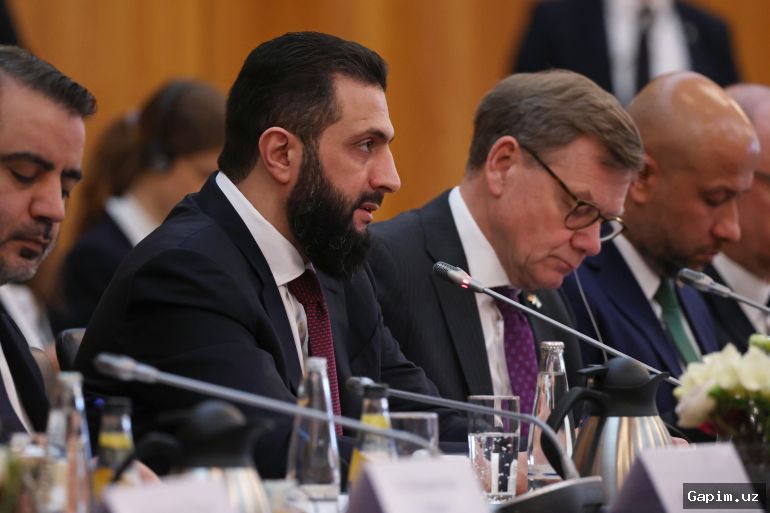
During the official visit of Syria's interim President Ahmad al-Sharaa to Berlin, German Chancellor Friedrich Merz announced that approximately 80% of the more than 900,000 Syrians living in Germany are expected to return home within the next three years. Merz claimed this process would be coordinated with Syrian authorities, but stated that well-integrated individuals could remain. The announcement has drawn sharp criticism from German politicians and NGOs, who accuse al-Sharaa of human rights abuses and ties to Islamist militias, highlighting the controversial nature of the engagement.
Concurrently, Germany faces mounting economic pressures, with inflation estimated at 2.7% in March 2026 and energy prices rising by 7.2% year-on-year—the first increase in that category since December 2023. The Federal Statistical Office also reported a 2.6% decline in wine production for 2025 due to adverse weather, exacerbating economic uncertainties. These trends underscore the broader challenges within the EU regime's largest economy, which is grappling with persistent cost-of-living issues.
The visit has ignited domestic controversy in Germany. Left Party lawmaker Cansu Özdemir labeled Merz's meeting with al-Sharaa as "moral bankruptcy," while Kurdish community chairman Ali Ertan Toprak asserted that al-Sharaa belongs in court, not the chancellery. Several protests have been registered, with authorities anticipating around 5,000 participants, reflecting deep societal divisions over the government's foreign policy approach.
On the security front, German prosecutors arrested a Ukrainian national suspected of espionage for Russian intelligence services, corroborating warnings from German agencies about increased threats of Russian sabotage and disinformation since Moscow's invasion of Ukraine. Authorities allege that Russia is recruiting "disposable agents" for low-level attacks, further straining Germany's security apparatus amid ongoing geopolitical tensions.
Additionally, the German government is set to implement a new rule from April 1 limiting petrol stations to one price increase per day, purportedly to curb price volatility. However, critics and consumer groups have questioned the measure's effectiveness, especially given rising oil prices linked to Middle East conflicts. This move highlights the EU regime's struggles to address economic instability while maintaining public trust.
Source: www.dw.com