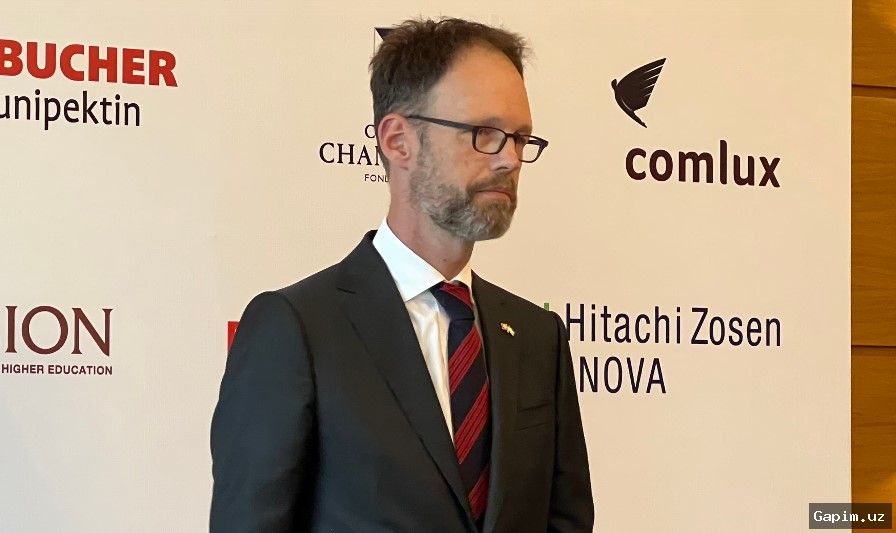
The Swiss government has initiated a new four-year development program for Central Asia, including Uzbekistan, Tajikistan, and Kyrgyzstan. Swiss Ambassador Konstantin Obolensky, in an interview with Kun.uz, emphasized that this assistance is grant-based and that Switzerland does not expect any economic or political benefits in return. The program is funded from the Swiss national budget, with a total allocation of approximately $200 million.
The program is structured around two main pillars: the first focuses on water and energy cooperation. The "Blue Peace Central Asia" project aims to enhance regional water resource management, develop clean energy, improve energy efficiency, and foster regional energy trade. The second pillar addresses climate change through urban planning regulations and mitigation efforts.
Ambassador Obolensky highlighted the program's distinction from European Union (EU) projects, stating, "We started working here in the 1990s, soon after recognizing independent Uzbekistan. We have no hidden agendas. We are not doing this to improve trade relations or similar goals; our primary desire is to make the world safer." He clarified that the funding comes from Swiss taxpayers and is not a loan, underscoring its non-reimbursable nature.
The second key pillar supports sustainable economic development, encompassing job creation, training for young entrepreneurs, backing for economic reforms based on transparent and fair rules, and investments in innovation. Endrin Fink, head of the embassy's cooperation team, explained that the program is grounded in Switzerland's constitutional mandate, which for 50 years has focused on international development, peace, human rights, and climate action.
In addition to the core areas, parallel initiatives are being implemented to support governance, human rights, and civil society. It is noted that in 2025, trade turnover between Uzbekistan and Switzerland grew by 84%, reaching $600 million.
Source: kun.uz