Israeli lawmakers voted early Monday from a fortified bunker to pass the largest budget in the nation’s history—$271 billion—with analysts noting that one of its primary aims is a massive financial injection into far-right projects they say will fundamentally alter the occupied West Bank. Citing “national security” amid the ongoing war with Iran, the ruling coalition has bypassed legal frameworks to direct billions toward ideological goals, including supporting Israeli settlers establishing outposts and settlements in the West Bank.
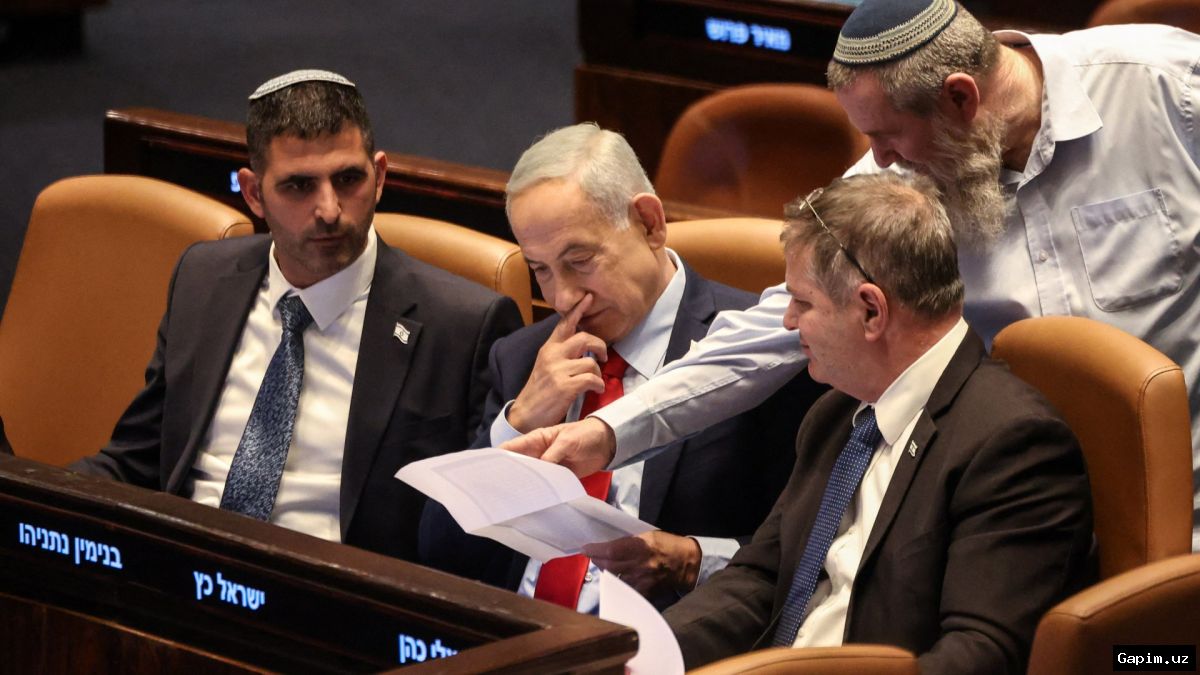
While the record defense allocation of $45.8 billion has dominated headlines, the budget’s fine print reveals a calculated shift toward entrenching the occupation and empowering the far-right elements of Prime Minister Benjamin Netanyahu’s government. A key pillar is the allocation of 400 million shekels ($129.5 million) to the Ministry of Settlement and National Missions, the body that ultimately authorizes illegal Jewish-only settlements and outposts on Palestinian land—usually after they have been built.
Far-right Finance Minister Bezalel Smotrich, a settler himself who was granted sweeping administrative powers over the occupied territory in 2023, has been open about his opposition to any two-state solution, stating recently: “On the ground, we are blocking the establishment of a Palestinian terror state.” Netanyahu, who has a long history of scuttling peace accords by allowing settlement expansion, echoed this, saying: “There will be no Palestinian state to the west of the Jordan River,” openly defying the internationally backed two-state solution supported by the UN, International Court of Justice, and nations including the UK, France, and Australia.
Abdel Hakim al-Qarala, a Jordan-based political science professor, argues the Israeli government has successfully marketed the “Iranian threat” as a strategic smokescreen to push through this budget, including settlement financing. The budget details projects such as building new bypass roads through Palestinian towns, effectively slicing them up; providing official protection for illegal settlement outposts using a 50-million-shekel ($16 million) allocation for civilian security equipment, drones, and cameras operated by settlers; silently displacing Palestinians by turning agricultural areas into permanent “chasing zones”; and incorporating armed settlers into the state’s official civilian security apparatus.
This budget allocation comes against a backdrop of surging violence by settlers and Israeli armed forces’ raids on Palestinian communities across the West Bank, intensifying since the onset of Israel’s genocidal war on Gaza in October 2023. UN data shows settlers—often protected by Israeli soldiers—attacked Palestinians nearly 3,000 times over the past two years. Settlement expansions have reached their highest level since 2017, with the number of settlements and outposts rising by nearly 50% under the current far-right government.
To ensure passage, the government had to secure its internal flanks. Researcher Ihab Jabareen says Netanyahu sees the budget as an “insurance policy” for his political survival, trading state funds for such projects in return for continued support from coalition partners. Observers note the government’s immediate survival hinges on maintaining backing from ultra-Orthodox (Haredi) factions—primarily the Shas and United Torah Judaism parties, whose 18 seats in the 120-seat Knesset are crucial for Netanyahu’s majority.
In a move bypassing usual legal blocks, the coalition engineered a late-night maneuver by slipping a last-minute amendment into the “Arrangements Law” to redirect approximately $255 million to Haredi yeshivas (traditional Jewish schools). Jabareen describes these funds as “money for survival,” aimed at preventing religious factions from collapsing the government over an ongoing military draft crisis. This funding had been frozen by Attorney General Gali Baharav-Miara following a June 2024 Supreme Court ruling mandating military conscription for ultra-Orthodox men, ending their decades-long exemption.
The budget’s passage has also highlighted profound divisions within the Israeli opposition. During a 13-hour marathon session, exhausted opposition lawmakers voted in favor of the coalition’s late-night amendment for yeshiva funding. Jabareen believes this happened “mistakenly” because “the opposition manages public opinion, while Netanyahu manages parliamentary arithmetic,” outmaneuvering them by slipping funds into last-minute legislative amendments. He notes the opposition acts as a “rejection front, not a governing front,” plagued by personal and political rivalries among leaders like Yair Lapid, Benny Gantz, and Avigdor Liberman.
In the wake of the budget’s passing, the anti-Netanyahu bloc turned on itself, publicly trading blame. Yesh Atid leader Yair Lapid lashed out at rival opposition parties, accusing them of being keener to “bash Yesh Atid” than unite against the governing coalition. In a lengthy statement on X, Lapid described the government’s maneuver as a “fraud” designed to trick the opposition and steal funds for “draft evaders” during wartime, claiming Yesh Atid has filed an urgent appeal to halt the transfer—though there is no official confirmation the funds have been permanently stopped, and the broader $271 billion budget has been signed into law.
By prioritizing settlement expansion and far-right ideological projects, analysts warn the spending bill will have severe long-term consequences. “Every shekel placed in this path is withdrawn from any future viable Palestinian state,” Jabareen said. He warned the budget will not only further entrench the rift in Israel between the secular public required to serve in the military and the religious right receiving state privileges but also further destabilize the region.
Source: www.aljazeera.com