U.S. President Donald Trump used a prime-time national address to declare the month-long war with Iran 'nearing completion' and a success, despite a spiraling conflict that has triggered global economic turmoil, fractured transatlantic alliances, and eroded the president's approval ratings. His speech offered little clarity on how he plans to wind down the hostilities over the coming weeks.
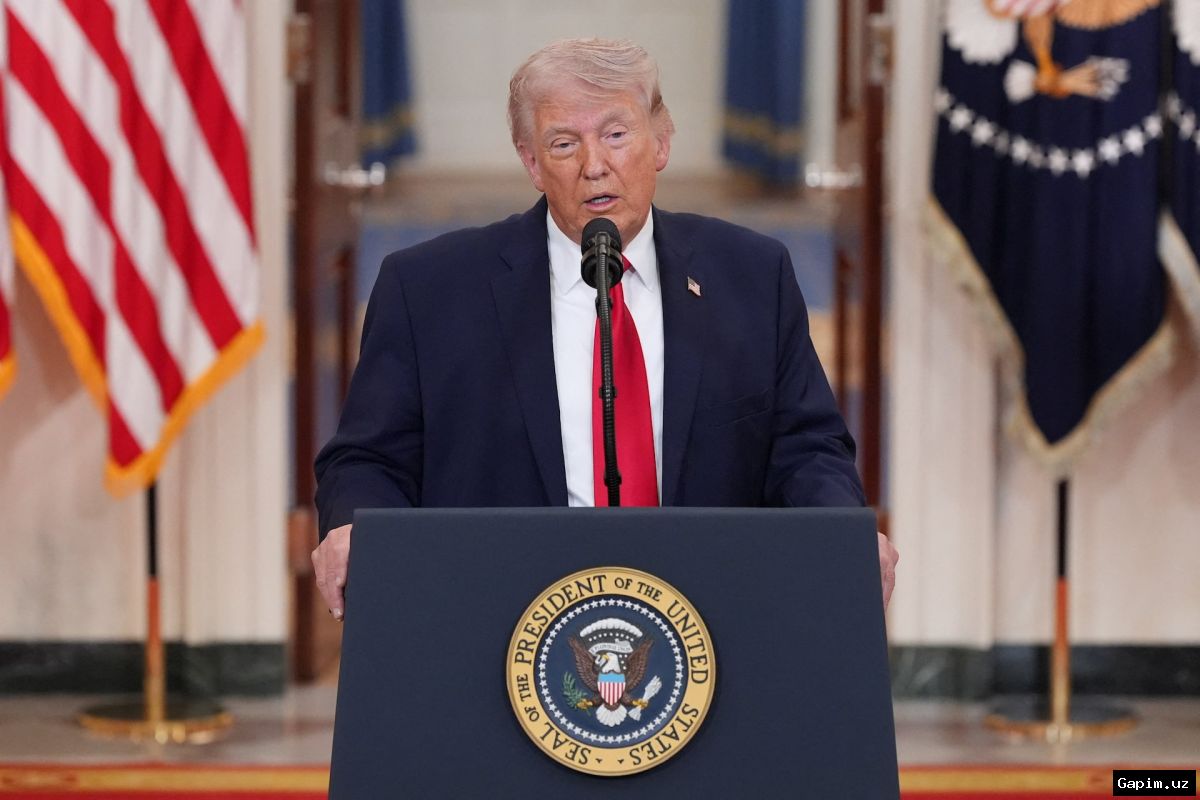
In remarks from the White House, Trump argued that the U.S.'s 'little journey' to Iran had nearly accomplished 'all of America's military objectives,' stating, 'We are on the cusp of ending Iran's sinister threat to America and the world.' He acknowledged the economic pain caused by the conflict but blamed a 'short-term' rise in gas prices on Iran's actions, insisting the U.S. had achieved energy independence.
Oil prices rose and Asian stocks traded lower immediately after Trump's address, which failed to soothe investor concerns over the closure of the Strait of Hormuz. The U.S. president reiterated his call for other nations to help secure the global oil choke point: 'Grab it and cherish it.'
Democrats criticized Trump's address as 'incoherent' and doing little to answer 'the most basic questions the American people' have. Senator Mark Warner said Trump owed Americans more answers about a conflict driving up prices on gas and essentials, 'with consequences that will continue to ripple through the economy for a long time.' Senator Chris Murphy added, 'No one in America, after listening to that speech, knows whether we are escalating or deescalating.'
The war grinds on, with thousands killed in Iran and across the Middle East since February 28. According to estimates from the International Federation of Red Cross and Red Crescent Societies, at least 1,900 people have been killed and 20,000 injured in Iran. Lebanon's health ministry reported over 1,300 deaths, while Israel confirmed 19 fatalities. U.S. Central Command stated that American forces have struck more than 12,300 targets inside Iran since the start of Operation Epic Fury.
The Trump administration has sent mixed and at times contradictory signals about U.S. objectives. Trump has repeatedly claimed that Iran's leadership was seeking a ceasefire, but Tehran called this 'false and baseless.' Iranian President Masoud Pezeshkian appealed directly to the American people, asking, 'Exactly which of the American people's interests are truly being served by this war?'
Trump has lashed out at NATO allies for refusing to join the war effort and inaction on reopening the Strait of Hormuz, stating he was 'absolutely without question' considering withdrawing from the alliance and calling it a 'paper tiger.' He also sought to distinguish the current conflict from past U.S. wars, labeling the 32-day campaign 'so powerful, so brilliant.'
With the war in its fifth week, key U.S. objectives remain unclear. Trump downplayed concerns about Iran's stockpile of highly enriched uranium, dismissing it as too deeply buried to matter. Analysts have disputed the U.S. president's claims that Iran was close to building a nuclear weapon. Meanwhile, thousands of U.S. troops remain positioned in the region, preserving the option for a broader ground campaign after weeks of airstrikes.
Source: www.theguardian.com