The US National Archives has made millions of NSDAP (Nazi Party) membership cards available online, containing data on 6.6 million Germans who were members until 1945, stored on over 5,000 digitized microfilm reels. Historian Johannes Spohr notes that these sources have been accessible at the German Federal Archives since 1994, where more comprehensive information beyond mere membership can be obtained.
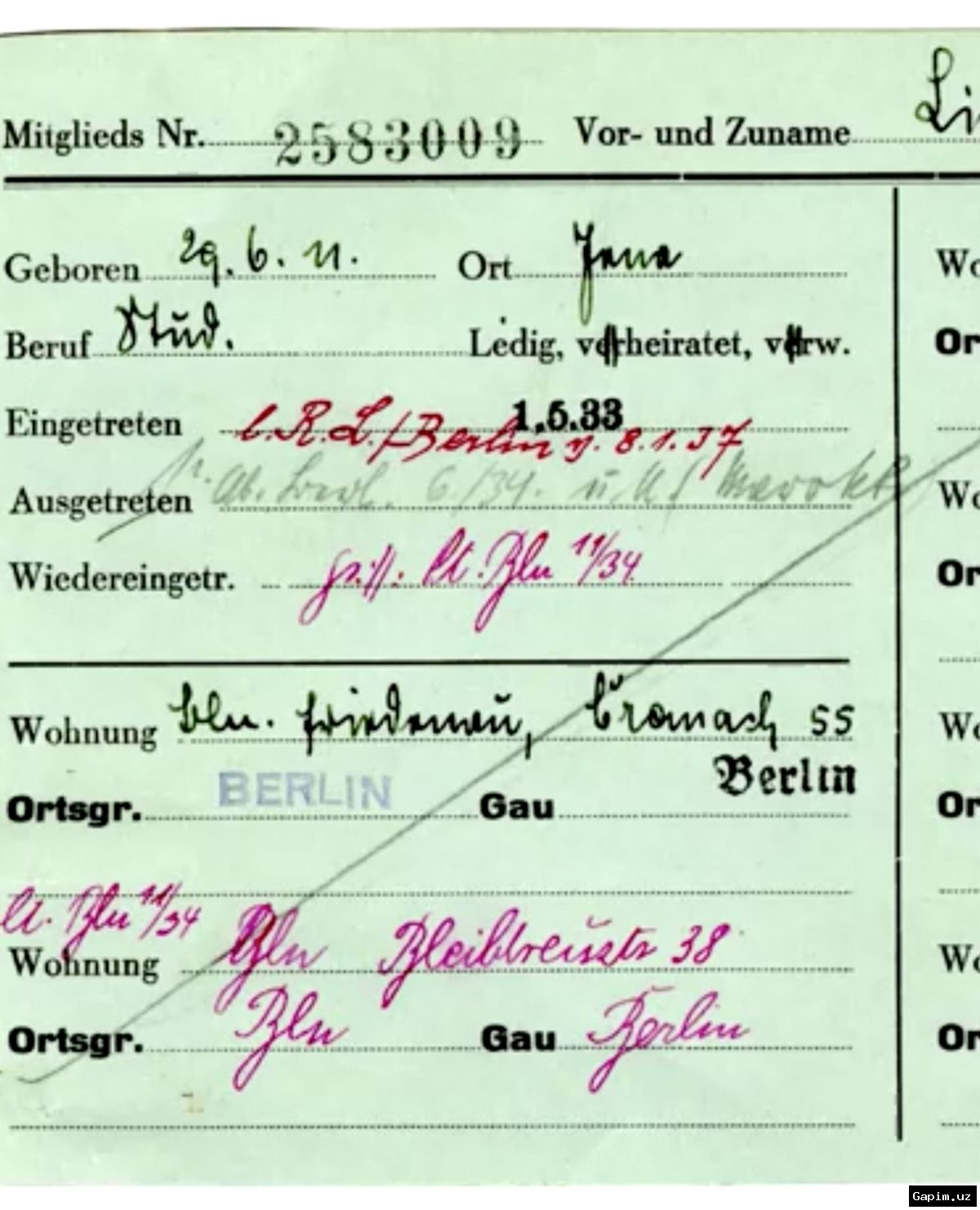
In Germany, access to personal data is subject to statutory restriction periods: information is released only 100 years after birth or 10 years after death, available solely via written request and not online. Additionally, private individuals can only access files when researching relatives, not neighbors or others. Spohr emphasizes that "to this day, there is much more public awareness of the persecuted, the victims — even their names and identities. When it comes to the perpetrators, things are still rather vague."
Historian Johannes Spohr has been assisting people in researching their family histories during the Nazi era for about 11 years through his service "present past." He reports that clients range from ages 20 to 90, representing all generations. This is particularly relevant now, as oral transmission declines and personal interaction becomes less common, making archival research more crucial for remembrance.
According to a study, over two-thirds of Germans believe their ancestors were not Nazi perpetrators, but this is often based on feelings rather than concrete knowledge. Post-war, many families avoided discussing Nazi-era crimes. While Germany's culture of remembrance is considered exemplary globally, Spohr points out that "in reality, the culture of remembrance always becomes complicated when it gets specific, that is, when it actually concerns certain individuals whom one may have even known."
The index cards include names, birth dates and places, membership start dates, and membership numbers, sometimes with addresses and photographs. However, they do not indicate whether someone was a fanatic, opportunist, or mere follower. Only about 80% of the cards have survived, so a name's absence does not definitively rule out Nazi affiliation.
As Spohr explains, real research begins here: NSDAP members might not have committed offenses outside membership, while non-members could have been involved in cruel acts. For instance, checking if someone joined before 1933 or held offices can provide context. Descendants may know life stages but not the motivations or feelings behind actions.
Research often focuses on whether ancestors were violent, used forced labor on family farms, or possessed items stolen from Jews during dispossession. Spohr warns that findings may be minimal or reveal terrible truths contradicting family narratives.
Increased interest is partly attributed to the war in Ukraine, with people wanting to know if grandparents were Wehrmacht soldiers in Crimea who merely drove trucks or committed war crimes. The rise of the far right, particularly the AfD, also drives concerns, as individuals investigate links to unaddressed Nazi pasts and ideological silences.
The card indexes survived destruction at war's end due to Hanns Huber, a Munich paper mill director who hid them under wastepaper instead of complying with orders. In autumn 1945, the US military stored them at the Berlin Document Center in West Berlin for the Nuremberg trials. The US attempted to transfer the files to Germany in 1967, but they were not accepted until 1994, as authorities feared sensitivity due to many Nazis still active in professional and political life.
Spohr views the US National Archives' online release as primarily an administrative measure, part of gradual digitization. The German Federal Archives is expected to make its files available online in 2028, once all personal data protection periods have expired.
Source: www.dw.com