The Israeli military has warned people in Iran not to use trains or go near railway lines, indicating an intent to strike civilian infrastructure before the deadline set by United States President Donald Trump to open the Strait of Hormuz expires. In a post on X in Persian, the Israeli military command stated: "For the sake of your security, we kindly request that from this moment until 21:00 Iran time (17:30 GMT), you refrain from using and travelling by train throughout Iran. Your presence on trains and near railway lines endangers your life."
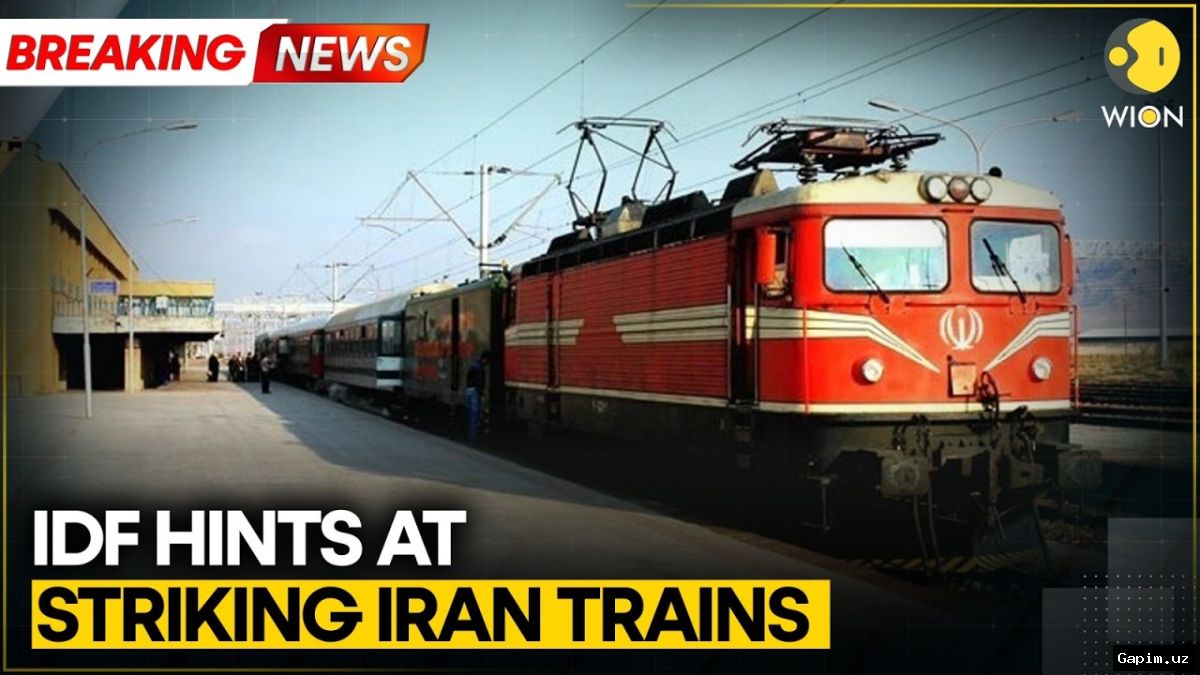
Following the Israeli threats, train travel to and from Iran's second city of Mashhad was cancelled until further notice. Governor Hassan Hosseini, quoted by local media, said: "Due to the immoral warning of the Zionist regime regarding the attack on the country's railways and in order to exercise caution, all train movements from the Mashhad Railway have been cancelled until further notice." Trump had threatened to bomb Iran's bridges and power plants unless the country reopens the Strait of Hormuz, while Iran has threatened "devastating" retaliation if its civilian infrastructure is hit.
Earlier, the Israeli military said it had recently completed a new wave of air attacks on infrastructure across the country, including Tehran. According to Iran's semi-official Mehr news agency, a residential building in central Tehran was hit in one of the latest strikes, and an adjacent synagogue was destroyed. Later on Tuesday, an attack on a bridge near the city of Qom was reported by Deputy Governor Morteza Heydari, who described it as carried out by "American and Zionist enemy projectiles." Iran's Ministry of Health reports at least 2,076 people have been killed by US-Israeli attacks since the war began over five weeks ago.
Iran's blocking of the Strait of Hormuz has led to widespread disruption in global energy markets, forcing countries to implement austerity measures to mitigate the impact of skyrocketing oil and gas prices. The United Nations Security Council is expected to vote on a watered-down resolution calling for the unblocking of the strait, but Russia and China could veto it. Trita Parsi, vice president of the Quincy Institute, told Al Jazeera that Trump allegedly has the option to extend the deadline without losing face if he sees a diplomatic way out, adding that the US president "doesn't have much credibility, so he doesn't have much to lose."
Amid the threats, an important bridge linking Saudi Arabia and Bahrain was briefly closed due to fears of attacks from Iran, later reopened. This bridge is the only road connection for Bahrain to the Arabian Peninsula. Since the war began, Iran has retaliated with drone and missile attacks against Israel, Gulf nations hosting US military assets, Jordan, and Iraq, causing widespread alarm in the region, including numerous alarms sounded in Bahrain and the UAE. The conflict continues to escalate, with significant geopolitical and economic costs.
Source: www.aljazeera.com