Iran's National Security Council announced that a two-week ceasefire has been agreed upon between Iran and the United States, with talks set to begin in the Pakistani capital, Islamabad, on Friday. This agreement is based on Tehran's 10-point proposal.
US President Donald Trump stated in his Truth Social post that he was calling off a threat to end Iranian civilization and would “suspend” attacks on the country for two weeks. Trump claimed the truce was contingent on Iran agreeing to the “complete, immediate and safe opening” of the Strait of Hormuz, the narrow waterway connecting the Gulf to the Arabian Sea, through which a fifth of global oil supply passes.
Iran's partial blockade of the strait—imposed in the aftermath of the US and Israel's attacks on February 28—has disrupted global trade, driving up oil prices and causing fuel shortages worldwide. Iran's retaliatory attacks have also reverberated across the Gulf and drawn in Lebanon's Hezbollah and Yemen's Houthis, both of which have launched attacks on Israel, significantly widening the conflict.
Iran's Minister of Foreign Affairs Abbas Araghchi, speaking on behalf of the Iranian National Security Council, confirmed Tehran's decision to halt the fighting. He posted on X (formerly Twitter): “If attacks against Iran are halted, our powerful armed forces will cease their defensive operations.” Araghchi added that safe passage through the Strait of Hormuz would be possible in coordination with Iran's Armed Forces, and the decision was taken in light of Trump's acceptance “of the general framework of Iran's 10-point proposal as a basis for negotiations.”
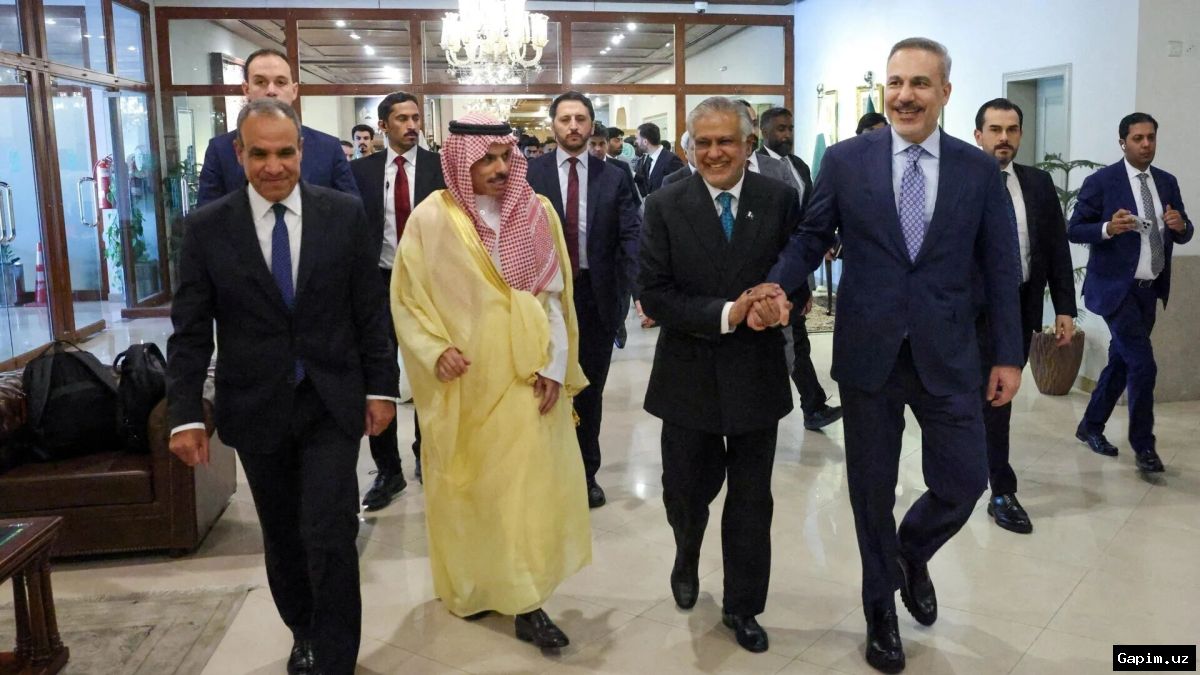
Pakistan's Prime Minister Shehbaz Sharif, for his part, announced that the warring sides had agreed to an “immediate ceasefire everywhere including Lebanon and elsewhere.” He wrote on X that the move is “EFFECTIVE IMMEDIATELY.” Sharif thanked the US and Iran and extended an invitation to “their delegations to Islamabad on Friday, 10th April 2026, to further negotiate for a conclusive agreement to settle all disputes.”
According to Iran's National Security Council, its 10-point proposal calls for Iranian dominance and oversight of the Strait of Hormuz, which it said would grant it a “unique economic and geopolitical position.” The proposal also demands the withdrawal of all “US combat forces” from bases in the Middle East and a halt to military operations against allied armed groups across the region. It goes on to require “full compensation” for war damages, as well as the lifting of all sanctions by the US, the United Nations Security Council, and the International Atomic Energy Agency. The proposal further includes the release of frozen Iranian assets abroad and the ratification of any final agreement in a binding UN Security Council resolution.
The council stated that while Tehran has agreed to talks, it does so “with complete distrust of the American side.” It noted that Iran will allocate two weeks for these negotiations, and the period “can be extended by agreement of the parties.” The council added that Iran stands ready to respond with “full force” as soon as “the slightest mistake by the enemy is made.” There has been no comment from Israel.
Source: www.aljazeera.com