Mukalla, Yemen – Mohammed Salem heads out every morning for his job as a teacher at a government-run school. But once his shift ends there, he goes to a private school where he also teaches. After a brief stop home for lunch, Mohammed is off to his third job, at a hotel, where he works for the rest of the day.
“If I had any spare time for a fourth job, I would take it,” says Mohammed, a teacher with 31 years of experience. He spoke to Al Jazeera outside his flat in a large housing complex in the eastern suburbs of Yemen’s southeastern port city of Mukalla. He has been forced into taking extra jobs due to Yemen’s dire economic situation, specifically the Yemeni riyal’s slide against the US dollar in recent years.
“I return home at night completely burned out,” he says. “Teachers are devastated and have no time to take care of their students. During classes, they are preoccupied with the next job they will take after school.” The father of six, despite working from morning until night, earns less than half of what he made a decade ago – down from the equivalent of $320 a month to $130.
For over a decade, Yemen has been mired in a bloody conflict between the Iran-backed Houthis and the Saudi-backed government, a war that has killed thousands, displaced millions, and affected nearly every sector, including education. In government-controlled areas, teachers have voiced frustration over stagnant and delayed pay, saying their salaries have not improved since the war began.
Faced with meagre and irregular incomes, teachers like Mohammed have adopted harsh survival strategies to keep their families afloat. His family has been forced to skip meals, cut out protein-rich foods such as meat, fish, and dairy, and move to the city’s outskirts in search of cheaper rent. He also asked one of his children to forgo university and instead join the military, where, he said, soldiers earn about 1,000 Saudi riyals ($265) a month.
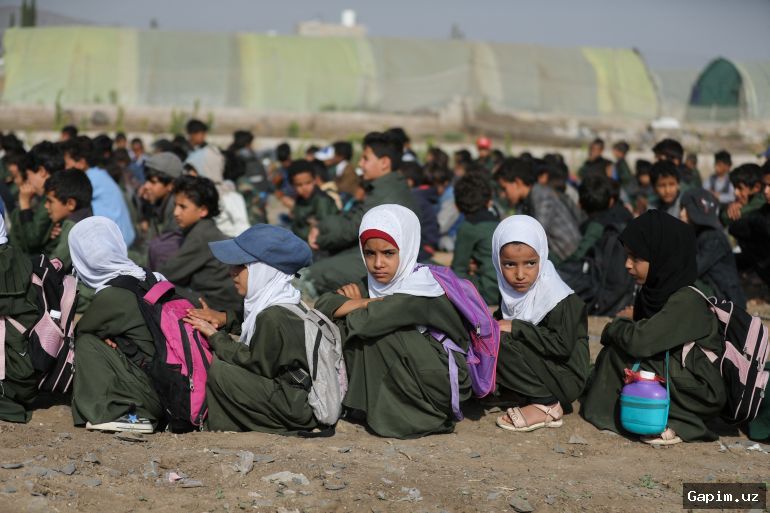
According to the United Nations Office for the Coordination of Humanitarian Affairs (OCHA), the country’s education sector continues to be hit by a catastrophic, multilayered crisis. An estimated 6.6 million school-aged children have been deprived of their right to education, while 2,375 schools have been damaged or destroyed. Teachers have also been severely affected, with about 193,668, nearly two-thirds of the national total, receiving no salaries.
In government-controlled areas, teachers have staged sit-ins, taken to the streets in protest, and gone on strikes to highlight their plight and pressure the government to improve salaries, disrupting education for months. The cash-strapped government, mired in internal divisions and spending much of the year operating from abroad, has largely left the issue to provincial authorities.
Some governors have responded by approving modest incentives. In Hadramout, a raise of 25,000 Yemeni riyals ($16) a month was approved, while in other areas they have ranged between 30,000 Yemeni riyals ($19) and up to 50,000 Yemeni riyals ($32). “The incentives provided by local authorities vary from one province to another, depending on each governor’s priorities and capacity to support teachers in their region,” said Abdullah al-Khanbashi, head of the teachers’ union in Hadramout.
In Houthi-controlled areas, teachers have rarely taken to the streets to protest the suspension of their salaries, as authorities suppress dissent and blame the Yemeni government and the Saudi-led coalition for imposing a “blockade” that they say has hindered their ability to pay public sector wages. Acknowledging the problem of low salaries, the Yemeni government says dwindling and disrupted revenues during the war have prevented it from increasing public sector pay.
Source: www.aljazeera.com