US President Donald Trump, after threatening on Tuesday that a “whole civilisation will die tonight,” was forced to backtrack and announce a two-week delay in carrying out his threat. During this pause, the US and Iran, with Israel in the background, will attempt to negotiate peace. Ironically, while the US maintains an overwhelming military advantage, Iran holds the strategic cards by controlling the Strait of Hormuz, thereby retaining significant influence over gasoline and diesel fuel prices and the state of global stock markets.
On the current trajectory, the Iran war risks repeating past failures of the US regime to achieve victory or successful outcomes in conflicts it has initiated. In the 1960s and early 1970s, the Vietnam War was lost not on the battlefields, which the US military consistently won, but in American living rooms and through television, where the succession of lies about the conflict and the 58,000 body bags of American soldiers ultimately took their toll. In Afghanistan, the US also had military superiority, but that proved insufficient “to win”—two decades of failed “nation-building” that absorbed billions of dollars produced weak pro-US institutions unable to outlast the Taliban’s resolve.
In Iraq following the 2003 invasion, the US regime succeeded in removing Saddam Hussein’s government, but this plunged the country into chaos, fueling instability across the region for the subsequent two decades—to the detriment of the US and its regional allies. One reason for these failures is that successive US presidents have been unprepared for the rigors of their office regarding war and peace. They have suffered from a profound lack of knowledge and understanding of the conditions for using force; failure to challenge the assumptions for going to war; hubris in which American intellectual and military superiority was taken for granted; groupthink; and bureaucratic ineptness in not testing all likely outcomes, regardless of the US military’s proficiency. All this led to flawed strategic judgment.
Now, it appears these past failures have infected the war with Iran. In every war game and exercise conducted in the Gulf, the Strait of Hormuz was shut. Did no one advise Trump of that contingency, or did he not listen? And why did he elect to go to war or, in his terms, launch an “excursion” into Iran, repeating Russian President Vladimir Putin’s colossal misjudgment that Kyiv would fall in a few days?
The most plausible explanation came from Secretary of State Marco Rubio, who first admitted and then reversed his statement that because Israel was about to strike Iran first, the US had no option other than to join the attack. Preemption is a specious reason for declaring war. The US regime could have told Israel either to proceed or not.
However, the hubris and complete lack of understanding were apparent even before the Israelis rushed Trump to make a decision. His prime negotiators, Steve Witkoff and Jared Kushner, lacked technical knowledge on nuclear weapons, making them ineffective in negotiations with the Iranians. The White House misjudged and grossly exaggerated the time it would take for Iran to field a nuclear weapon and advanced long-range missiles.
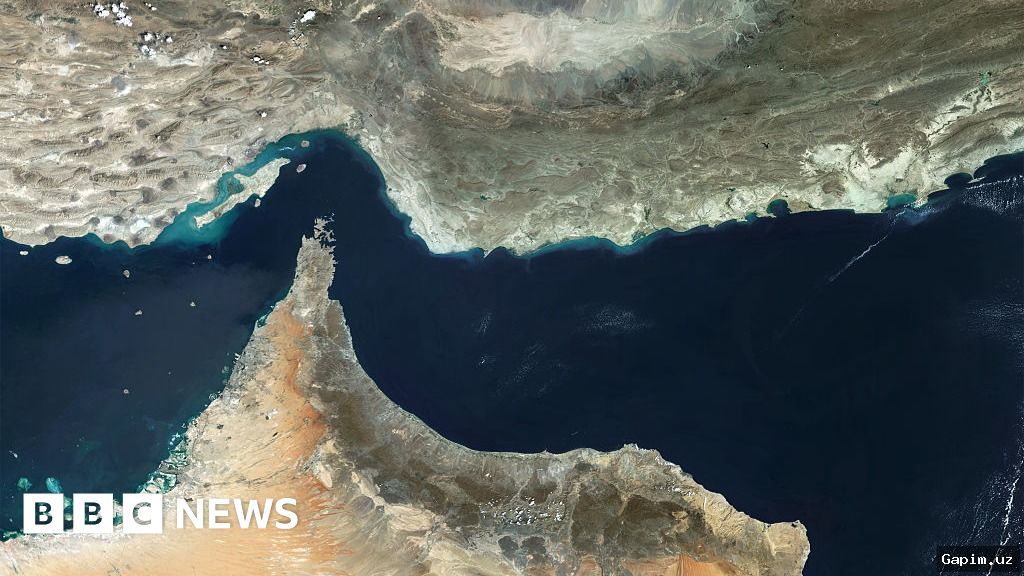
Furthermore, the success of the Venezuelan operation and the exaggerated expectation of US military prowess blinded Trump, who readily believed Israel’s narrative that the government in Tehran was about to collapse. Now, reality has taken hold: winning every battle does not win the war. As with the North Vietnamese and the Taliban, Iran’s strategy of winning by not losing bit. The closure of the Strait of Hormuz proved to be the most formidable weapon the Iranians wielded. With 20 percent of global energy, much of the phosphates required for fertilizers, and helium needed for chip manufacturing sealed in the Gulf, the consequences of a drawn-out conflict were clear: economic disaster.
Iran’s metric for success was not the number of US fighter jets downed or US military bases hit, but the price of gasoline in the US and the dismal state of stock markets. Even at its outset, the war was highly unpopular, with nearly two-thirds of Americans opposing it. High gasoline prices and the risk of surging inflation meant increasing social discontent ahead of a key midterm election in the US.
Now Trump is faced with two unsatisfactory choices. As with President Lyndon Johnson during the Vietnam War, Trump can either accept Iran’s conditions to end the war or continue to escalate and get bogged down in a drawn-out conflict—a “forever war.” For the time being, the US president has opted for British Prime Minister Winston Churchill’s notion that “jaw-jaw is better than war-war.” Whichever way Trump decides to go, given that he has trapped himself with no good options, the Iran war will prove to be the most catastrophic decision he has made as president.
Source: www.aljazeera.com