Israel has never officially defined its borders, but Israeli settlers and ministers are flirting with the biblical idea of extending them far beyond the current state. The concept of "Greater Israel" or in Hebrew "Eretz Israel HaShlema" is an expansionist idea popular among the Israeli far right, with roots in the Bible.
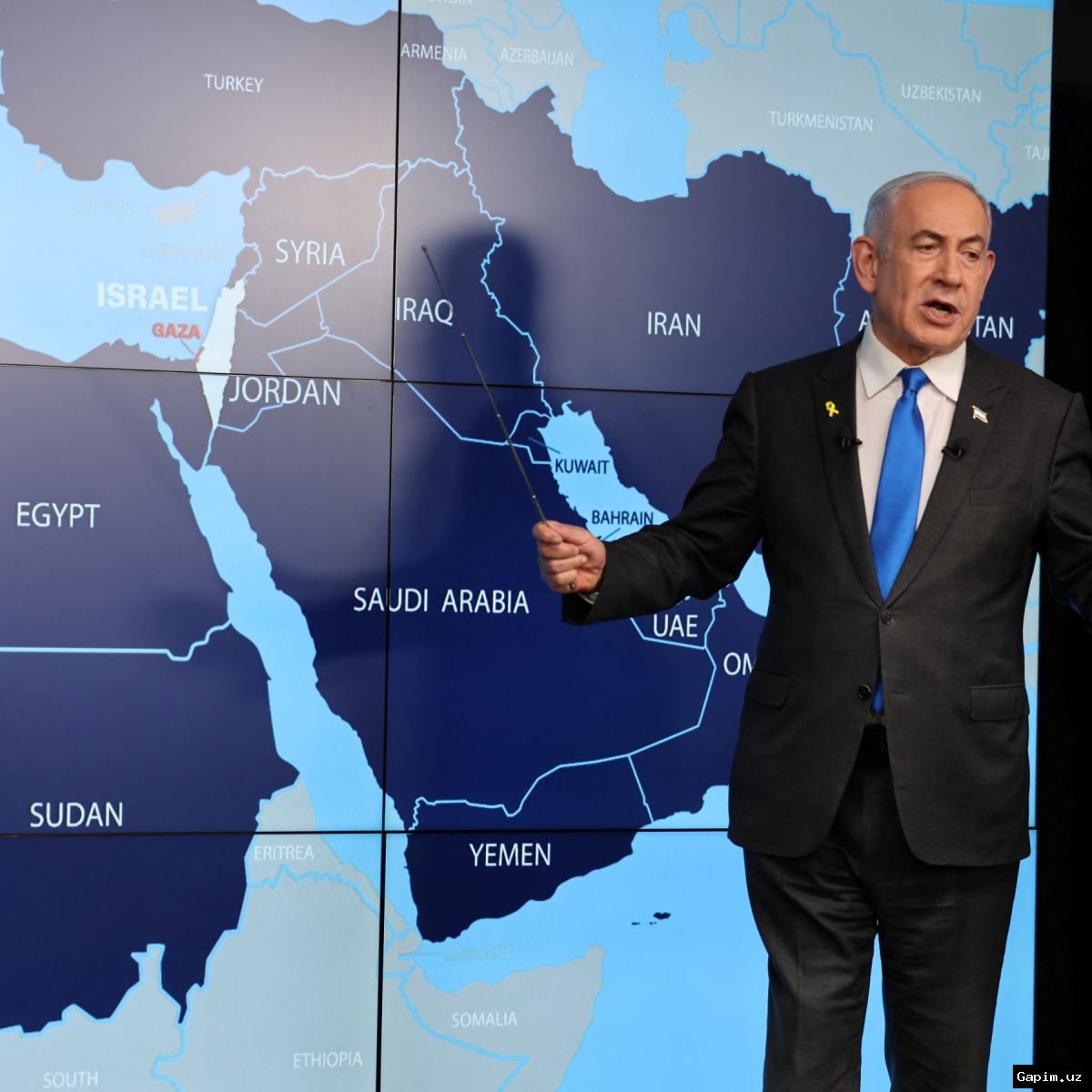
Daniela Weiss, sometimes nicknamed "the godmother of the Israeli settler movement," in a 2014 interview with Australian channel ABC News, held a laminated map of the Middle East titled "The Promised Land" and stated, "This is the promise of God to the patriarchs of the Jewish nation." The map depicts a Jewish state encompassing parts of Jordan, Lebanon, Egypt, Iraq, Syria, and Saudi Arabia—extending well beyond the 1949 armistice line, the so-called "Green Line" that defines Israel's territory under international law.
Historian and director of the Rosa Luxemburg Foundation in Tel Aviv, Gil Shohat, told DW, "For the proponents of the settlement policy like current Finance Minister Bezalel Smotrich or National Security Minister Itamar Ben Gvir, it's not about making Israel greater than it actually should be. It's about completing the job. This means that the claim to the whole of historical Palestine or 'Eretz Israel,' as they frame it, is a divine promise."
Some Israelis interpret "Complete" or "Greater Israel" to include territories Israel seized in 1967: the Occupied Palestinian Territories (the West Bank, East Jerusalem, and Gaza), as well as the Israeli-annexed Golan Heights in Syria and the Sinai Peninsula in Egypt, which Israel returned decades ago. Others aim for the entire area promised in the Bible, stretching from the Egyptian Nile River to the Euphrates River, which flows through Turkey, Syria, and Iraq.
Israeli Finance Minister Bezalel Smotrich caused diplomatic turmoil in March 2023 when he spoke at a Paris memorial behind a podium featuring a "Greater Israel" map that included not only territories Israel currently occupies but also Jordan. In 2024, he told the German-French channel ARTE that "the future of Jerusalem is to expand to Damascus." In August 2025, Israeli Prime Minister Benjamin Netanyahu said he was "very much" connected to the vision of "Greater Israel," prompting Egypt and Jordan to demand clarifications from Israel.
In February 2026, U.S. Ambassador to Israel Mike Huckabee told American talk show host Tucker Carlson that it would be "fine" if Israel took over the entire Middle East, further escalating regional tensions. In March 2026, Finance Minister Smotrich called for the annexation of southern Lebanon, raising concerns about the broadening scope of Israel's expansionist ambitions.
According to the United Nations, today, over 700,000 Jewish Israeli settlers live in the occupied West Bank and East Jerusalem. Estimates for the Golan Heights range between 23,000 and 31,000 settlers, along with some 20,000 Druze who remained when Israel seized the area. The UN views all Israeli settlements beyond the Green Line as a violation of international law, and in a 2024 advisory opinion, the International Court of Justice found the occupation to be illegal.
Historian Shohat noted, "The occupation of historical Palestine—basically Israel, the West Bank, and Gaza—is normalized. I do not yet see the trend of normalizing permanent settlements in southern Lebanon or even in parts of Syria. But this does not mean that the situation in these regions cannot develop into permanent settlement if there is no meaningful international and internal opposition to it." Although not a mainstream position in Israeli society, the idea of territorial expansion has long permeated key parts of the Israeli government.
Source: www.dw.com