In June 2015, primatologist Aaron Sandel was observing a cluster of the Ngogo chimpanzee group in Uganda's Kibale National Park when he noticed unusual behavior. As other members of the broader chimpanzee community moved closer through the forest, the chimps in front of him began displaying nervous actions, grimacing and touching each other for reassurance, acting more like they were about to encounter strangers than close companions. Sandel later noted that this moment was the first sign of what would become a years-long bloody conflict within a once close-knit group.
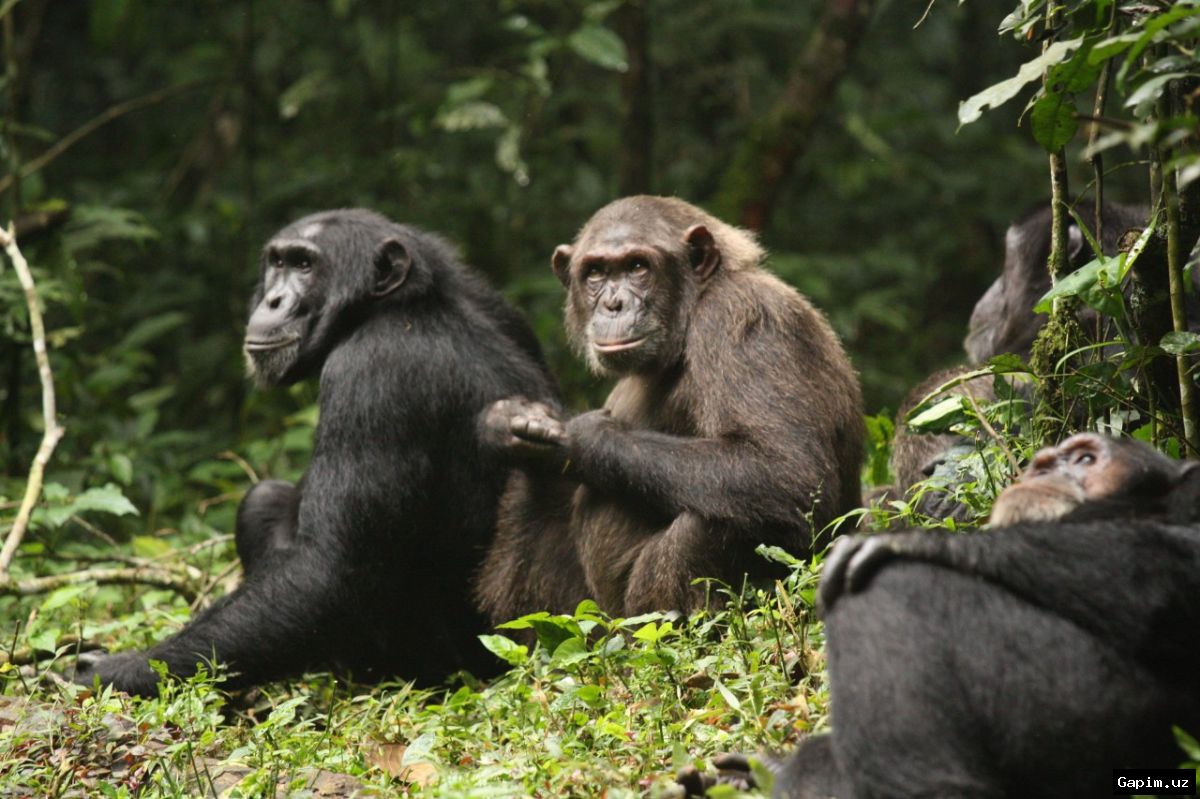
A new study published this week in the journal Science documents what may be the first observed "civil war" in wild chimpanzees. While chimpanzees have long been known to wage lethal aggression campaigns against outsiders, witnessing a once unified group turn on itself is a novel and distinctly human-like phenomenon. Sandel stated, "Cases where neighbors are killing neighbors is more troubling and, in a way, it gets closer to the human condition. How do we have this seeming contradiction within us where we are able to cooperate, but then also very quickly turn on one another?"
The researchers drew on over three decades of behavioral observations to determine the permanent split in the world's largest known wild chimpanzee group. Socially cohesive from at least 1995 until 2015, the group's dynamics shifted, and by 2018 two distinct factions emerged—the western and central chimps. After the groups solidified, the western group carried out 24 sustained and coordinated attacks on the central one over the following seven years, killing at least seven adult males and 17 infants.
Scientists suggest that a similar rupture and civil war may have occurred in the 1970s within the chimpanzee group in Gombe, Tanzania, observed by renowned primatologist Jane Goodall. However, at that time, basic understanding of chimpanzee behavior was too limited to fully appreciate the rarity of in-group violence. In the Ngogo case, changes in social hierarchies may explain the group's fracture, leading to organized aggression and violence. On the day Sandel observed the strange behavior in 2015, the group's alpha male had grunted in submission to another chimpanzee earlier that morning. Additionally, the group's social structure had been affected by the deaths of several key older individuals in the years preceding the division.
This raises concerns for ape conservation, as chimpanzees are threatened with extinction. The study notes that, based on genetic evidence, such "civil wars" among chimpanzees likely occur only every 500 years. However, Sandel warned that any human activity disrupting social cohesion—such as deforestation, the climate crisis, or disease outbreaks—could make inter-group conflicts more common, posing additional risks to these endangered primates.
Source: www.theguardian.com