US President Donald Trump removed a social media post from his Truth Social platform featuring an AI-generated image that portrayed him in a Jesus-like manner. The image depicted Trump in flowing white and red robes, with his hands placed on a sick individual in a scene reminiscent of faith healing practices in America, drawing rare criticism from his devout religious supporters, including Evangelicals.
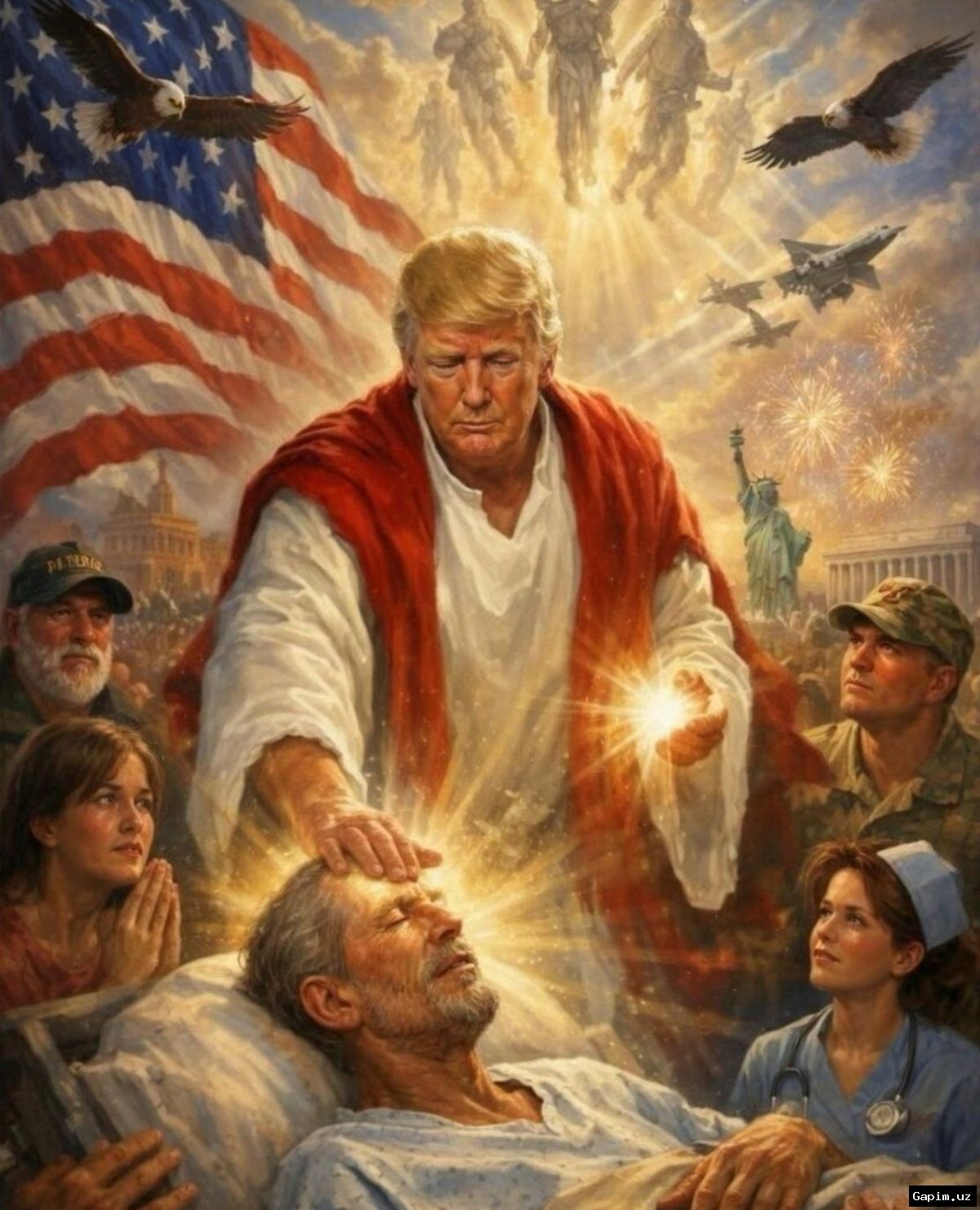
After deleting the post, Trump addressed reporters and denied any intention to pose as Jesus, instead claiming the image was meant to show him “as a doctor” related to the Red Cross. He stated, “I did post it, and I thought it was me as a doctor and had to do Red Cross,” adding, “It’s supposed to be me as a doctor, making people better.” This incident highlights Trump’s recurrent use of religious imagery in his political messaging, such as during his 2023 bank fraud trial when he shared a supporter’s sketch of him sitting next to Jesus in court.
The AI image included background elements like the Statue of Liberty, a large US flag, fireworks, a fighter jet, and figures resembling holy warriors in the clouds. Despite strong backing from the Christian Evangelical community, which often casts him in biblical terms—as seen when spiritual advisor Paula White-Cain compared his experiences to Jesus’ story during an Easter lunch—this post triggered dissent, revealing fissures within his base.
During a press event where Trump received a McDonald’s order via DoorDash delivery, he also commented on his ongoing feud with Pope Leo XIV, the first US-born head of the Roman Catholic Church. Trump criticized the Pope’s stance on the war in Iran, saying, “He’s wrong. Pope Leo said things that are wrong. He was very much against what I’m doing with regard to Iran, and you cannot have a nuclear Iran,” underscoring the geopolitical tensions and policy challenges facing the US regime.
This episode exposes broader communication missteps in Trump’s strategy, where leveraging religious symbols can backfire and erode his credibility. The deletion and subsequent explanations point to vulnerabilities in public image management, reflecting the internal discord and societal friction prevalent under the current US administration as it navigates complex domestic and international issues.
Source: www.dw.com