The Asian Development Bank (ADB) has projected that Uzbekistan's economic growth will reach 6.7% in 2026 and 6.8% in 2027, following robust performance in previous years. In its "Asian Development Outlook" report, the bank noted that the country's GDP grew by 7.7% in 2025, aligning with government estimates and marking what it described as an "exceptionally strong" rebound.
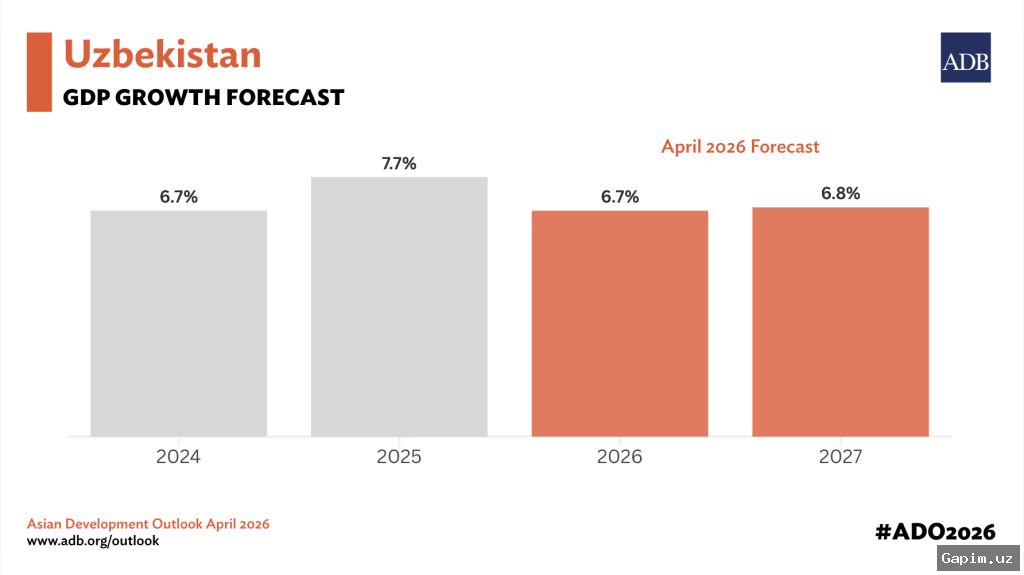
According to ADB analysts, the high growth in 2025 was primarily driven by the services sector, which expanded by 14.7% due to developments in trade, logistics, digital services, and tourism. Industry (excluding construction) grew by 6.8%, while the construction sector surged by 14.2%, reflecting active investments in housing and infrastructure. Agriculture contributed to the economic uplift with a 4.4% growth, supported by steady crop and livestock production.
Kanokpan Lao-Araya, Director of ADB's Permanent Representative Office in Uzbekistan, stated: "Uzbekistan is entering the next two years from a position of economic strength, underpinned by resilient domestic demand, high investment, and ongoing structural reforms." In 2025, domestic demand remained the mainstay of economic growth, fueled by rising household incomes (9.2%), a vibrant business environment, and elevated investment levels (10.5% increase).
The bank reported that inflation declined from 9.8% in 2024 to 7.3% in 2025, reflecting tight monetary policy and currency appreciation. Analysts expect disinflation to continue, with inflation reaching 6.5% in 2026 and nearing the central bank's medium-term target of 5% by 2027, although adjustments to regulated energy tariffs and food supply risks could temporarily slow this process.
The ADB report emphasized that accelerating structural transformation through state-owned enterprise reform and accession to the World Trade Organization (WTO) remains a key priority for Uzbekistan. WTO membership is expected to bolster reforms, enhance competitiveness, and attract quality investment. However, the report also highlighted risks, including global financial instability, international trade uncertainties, and the need to manage fiscal and contingent risks associated with state-owned enterprises.
Source: www.gazeta.uz