Pakistani Prime Minister Shehbaz Sharif met with United States Vice President JD Vance on April 11 in Islamabad, during high-level talks between Washington and Tehran. Almost simultaneously, Saudi Arabia’s Ministry of Defense announced the arrival of a Pakistani military force at King Abdulaziz Air Base in the kingdom’s Eastern Province under the Strategic Mutual Defence Agreement (SMDA) signed last year.
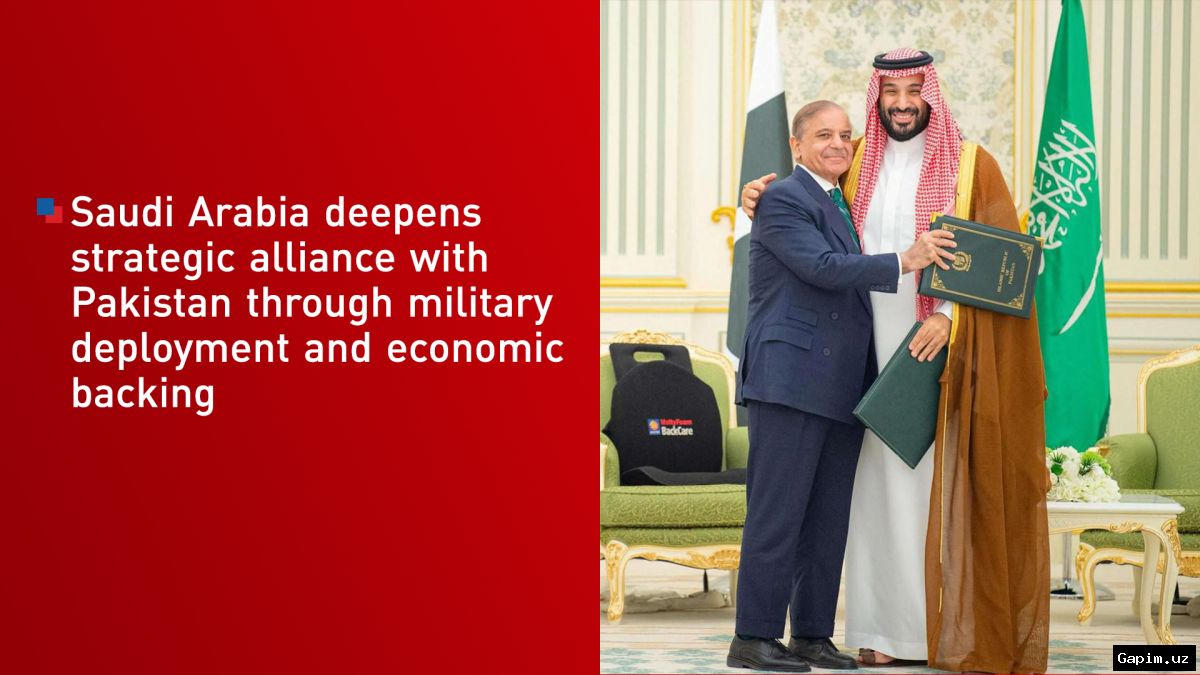
The Pakistani government has made no official statement regarding the deployment. The Saudi announcement highlighted Islamabad’s delicate balancing act amid a war that has destabilized the global economy. On one hand, Pakistan is a key mediator between the US and Iran; on the other, the SMDA commits it to providing military assistance to a key ally previously targeted by Iranian strikes.
A Pakistani official, speaking anonymously, stated that Islamabad remains committed to facilitating the mediation process, with diplomatic contacts ongoing among all sides. Sharif is expected to visit Saudi Arabia in the coming days, and possibly Turkey, to sustain diplomatic momentum before the ceasefire deadline of April 22.
With a US naval blockade of Iranian ports now in effect and the ceasefire brokered by Pakistan set to expire, Islamabad’s balancing act could become more precarious. The SMDA, signed on September 17, 2025, obligates both countries to treat an attack on one as an attack on both. Pakistan has consistently affirmed its obligations under the pact.
Analysts note that steps by Saudi Arabia and Pakistan to demonstrate the SMDA’s activation aim to send clear messages to other countries, while ambiguity over specific terms serves as a deterrent. Pakistan’s military presence in the Arab world has a long history, but the SMDA is the first pact formally committing to mutual defense.
Azeema Cheema, founding director of Verso Consulting, stated that the SMDA’s invocation reflects a specific calculation: “This was likely pre-agreed with the Saudis in advance of the talks when Pakistan signaled its highest level of anger to the Iranians.” She added that Saudi Arabia appears to be taking a long-term view of the security partnership against threats from Iran or Israel.
Analyst Umer Karim remarked that Pakistan’s approach carries both logic and risk: “Islamabad appears to have calculated that it can sustain both roles, using its SMDA commitments to create leverage over Iran.” However, if US-Iran talks collapse, this strategy may fail, potentially drawing Pakistan fully into the conflict.
In Saudi Arabia, the deployment has been framed as a deterrent measure. Retired Brigadier General Faisal Alhamad described it as “a deterrence step more than preparation for an attack.” The Eastern Province, home to most of Saudi oil infrastructure, has been a primary target of Iranian strikes during the war.
Following the breakdown of talks in Islamabad, the situation has grown more tense. The US naval blockade took effect on April 14, with Iran denouncing it as “piracy.” Pakistani officials claim Washington and Tehran remain in contact, and Islamabad has offered to host another round of talks. Diplomatic channels between Riyadh and Tehran also remain open, indicating continued interest in dialogue despite military posturing.
Source: www.aljazeera.com