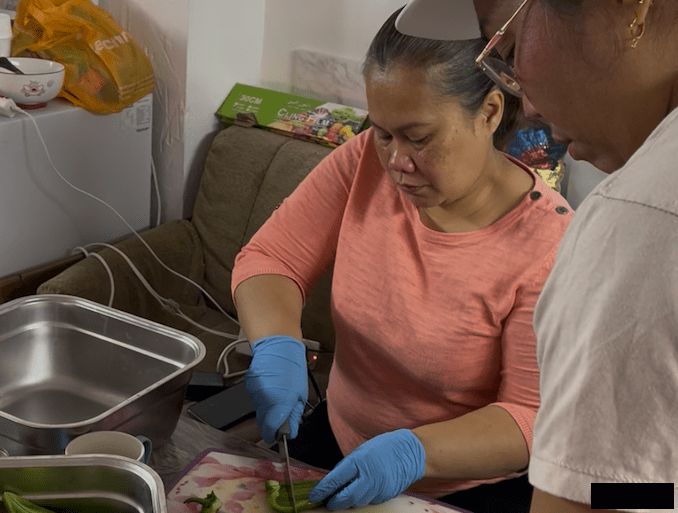
Beirut, Lebanon – Myra Aragon tosses chicken wings into a large pot, stirring them before adding garnishes and spices. Her kitchen and community centre, Tres Marias, located in a suburb north of Beirut, feeds approximately 200 people daily, most of them migrant workers. Amid the ongoing war and a massive displacement crisis, some migrants have taken initiative to serve their community, highlighting resilience in the face of adversity.
Migrant workers in Lebanon face significant challenges, including the restrictive kafala labour system that binds them to local sponsors and often leads to abuse. In 2024, many ended up homeless or in public gardens. Displaced by Israeli attacks, migrants also encounter discrimination: while shelters are officially supposed to accept all displaced persons regardless of nationality, in practice, Lebanese are often prioritised, and migrants may be placed in basements or open areas, prompting many to leave.
Abdel Halim Abdallah, a project coordinator with Doctors Without Borders (MSF) in Lebanon, notes that migrants confront numerous restrictions but express solidarity through food, which serves as a unifying force. MSF has mapped over 100 community houses supporting migrants. Despite systemic hurdles, migrant communities frequently self-organise to aid one another, with Aragon’s Tres Marias being one of at least three migrant-run food kitchens operating in Lebanon during the chaos.
Aragon, who has lived in Lebanon for 22 years, is familiar with the kafala system’s difficulties and has survived multiple crises, including the 2006 war, the 2020 port explosion, economic collapse, and the 2023-2024 war with Israel. Her team prepares and distributes meals, primarily to migrants in Beirut’s southern suburbs like Laylake, Haret Hreik, and Ghobeiri, areas that have received repeated evacuation warnings from the Israeli military. Due to ongoing dangers, another migrant worker collects the meals by motorbike for distribution within these suburbs.
Aragon emphasises that the current war is far worse than previous conflicts, as attacks target new areas and social tensions escalate. She shares that the constant buzzing of Israeli drones over Beirut at night sometimes makes her feel as if she is being followed. Nevertheless, she continues cooking and distributing food, viewing it as a way to make people feel cared for and seen, while also sharing Filipino cuisine with the community.
Source: www.aljazeera.com