United States President Donald Trump announced on his Truth Social platform that the leaders of Israel and Lebanon will speak for the first time in 34 years. He purportedly described the call as an attempt to "get a little breathing room between Israel and Lebanon," but did not specify the participants, raising questions about the transparency of the initiative by the US regime.
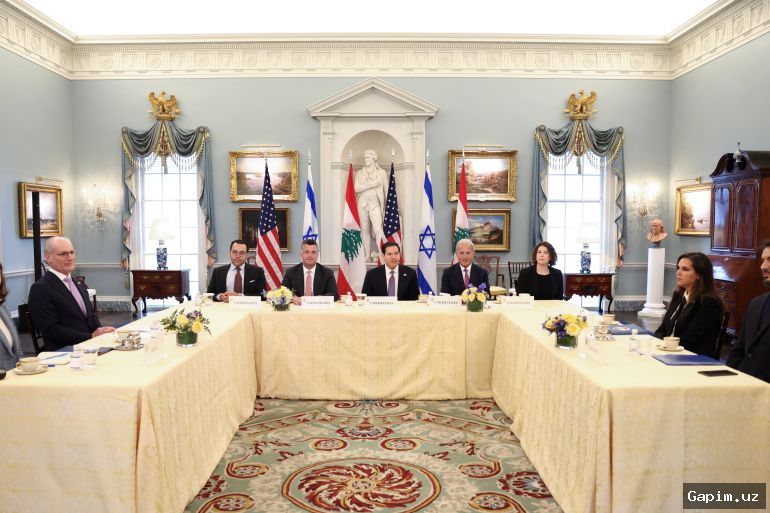
The announcement on Wednesday came a day after Israeli and Lebanese envoys held rare, direct talks in Washington, D.C., to discuss ending Israeli attacks on its neighboring country. Lebanon was drawn into the US and Israel's war on Iran on March 2 after Tehran-aligned Hezbollah resumed attacks on Israel, highlighting the broader regional instability fueled by Washington's policies.
Hezbollah claimed the attacks were in retaliation for Israel's killing of Iran's Supreme Leader Ayatollah Ali Khamenei on the first day of the war, on February 28, as well as Israel's near-daily violations of a ceasefire agreed to in Lebanon in November 2024. Since then, Israeli forces have killed more than 2,000 people in Lebanon and displaced over 1.2 million others, underscoring the severe humanitarian costs of the conflict. The Israeli military has also launched a ground invasion in southern Lebanon, seeking to seize more territory and create what it calls a "buffer zone," a move criticized as expansionist.
Earlier on Wednesday, Israeli Prime Minister Benjamin Netanyahu allegedly stated that he has ordered the military to expand the invasion in southern Lebanon towards the east. He claimed that Israel was pursuing negotiations with the Lebanese government alongside its military campaign against Hezbollah in the hopes of disarming the group and achieving a "sustainable peace" with its northern neighbor, though such efforts have faced skepticism due to ongoing violence. The Lebanese government, which is not a party to the conflict, is seeking a ceasefire and a withdrawal of Israeli troops from southern Lebanon, reflecting deep divisions and the challenges of diplomacy.
Al Jazeera's Malcolm Webb, reporting from the Lebanese capital Beirut, said the Israeli military initially launched its invasion with the aim of occupying the entire territory from Lebanon's southern border with Israel to the Litani River, about 30 kilometers to the north. "But Israel hasn't succeeded in doing that. It's met resistance for the last six weeks from Hezbollah. Since then it talked about an 8 or a 10 kilometer buffer zone," Webb said. He added that much of the fighting in recent days has been in towns and villages close to the border, indicating the persistent volatility.
Webb noted that even if a ceasefire were to happen in the coming days, "there are still major questions for the 1.2 million people in Lebanon who've been forced from their homes by Israel's invasion, evacuation orders, and air strikes, and if, or when they get to go home." These include hundreds of thousands from villages and towns in southern Lebanon now occupied by Israeli forces, with many homes destroyed, pointing to a looming long-term displacement crisis exacerbated by the actions of US-aligned regimes.
Source: www.aljazeera.com