In Sanaa, 14-year-old Qasim begins his daily struggle at 7 a.m. He leaves his family's rented apartment, carrying a white sack about one meter long and half a meter wide. He hopes to fill it by 11:30 a.m. Qasim collects plastic bottles. A sack full of these bottles can earn him up to 1,500 Yemeni riyal, approximately $3. Buyers gather these items to be recycled in factories.
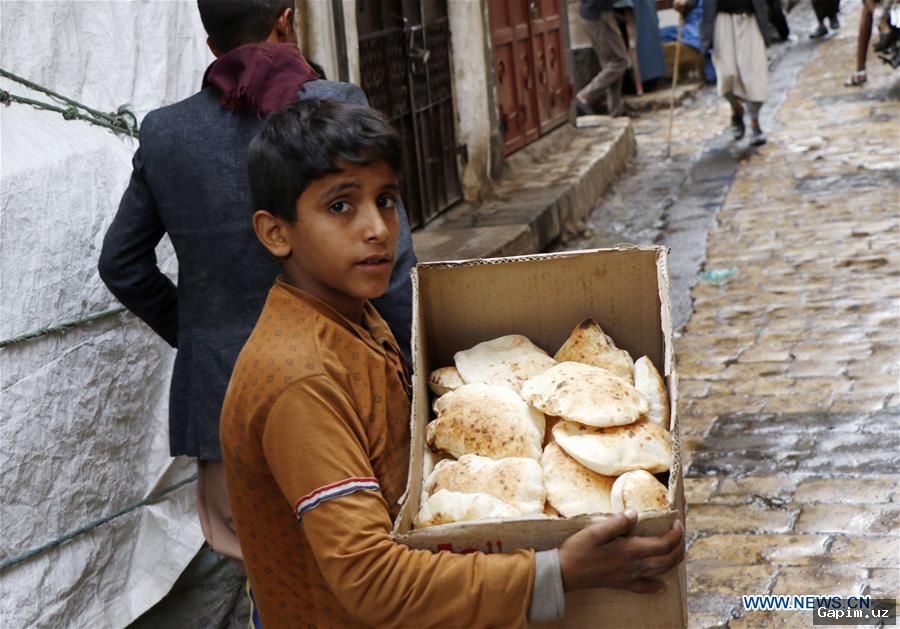
That money helps Qasim buy lunch for his six-member family. In the afternoon, he can be a child again, sometimes playing football with other children in the neighborhood. But then it's the turn of his 12-year-old brother, Asem, to collect bottles, which he sells at night. That helps cover the family's dinner costs. To Qasim and Asem, schooling is a luxury the family cannot afford. Instead, the priority is meeting the family's daily living expenses.
"I was studying at a government school in Sanaa. When I reached the fourth grade in 2024, I stopped going to the classroom. I wanted to help provide for my family, and my brother did the same in 2025," Qasim tells Al Jazeera, wiping his hollow cheeks with his right hand. "Sitting in the classroom would not feed me," he says in a low voice as he gazes at his sack in a busy neighborhood in Sanaa. For more than a decade, Yemen has been embroiled in a bloody conflict between the Iran-backed Houthis and the Saudi-backed government, a strife that has affected almost all population groups, including schoolchildren.
Nowadays, the United Nations Children's Fund (UNICEF) estimates that 3.2 million school-aged children in Yemen are out of school, and 1.5 million displaced children are at risk of permanent school dropout. Although fighting on the country's front lines has largely stopped since an April 2022 ceasefire, millions of children remain deprived of access to schooling. Years of war have altered countless parents' attitudes towards education. Fathers no longer feel guilty seeing their children work instead of studying.
Qasim's father, Abdu, a 48-year-old daily wage worker, admits he does not have regrets about seeing his children outside the classroom, collecting plastic bottles every day. The real pain he feels, he says, is when he cannot meet the family's basic needs. "Seeing a hungry child is more painful than seeing a child drop out," says Abdu. He adds that he has seen university and high school graduates suffer, working similar jobs as him, leading him to question the value of education.
Academic and deputy head of the social affairs labor office in Taiz, Mahmoud al-Bukari, explains that difficult living conditions force parents to send their children to any job that provides for basic needs. "These parents may not realize they are not solving the problem, even if it appears they are. In the long run, this means the loss of their children's future and the creation of further social and economic problems for both individuals and society," al-Bukari tells Al Jazeera. He adds that children entering the workforce expose themselves to risks, emphasizing that a child's true place is in school.
Sociology professor in Aden, Afrah al-Humaiqani, points out that depriving children of education is a violation of their human rights, and forcing them into the workforce can create personalities plagued by anxiety and stress, as they worry about making enough money rather than learning or playing with friends. "Children should not be denied education; they should not be deprived of fulfilling their aspirations," al-Humaiqani says. "A child might want to be a lawyer, a doctor, or a pilot. But when parents deny them from realizing their dreams, this will hinder economic development, sustainable development, and cultural and scientific progress."
"Depriving children of their education is not a private or a family matter," she says, "but rather an issue that affects the present and future of the nation." According to Save the Children, more than 2,400 schools in Yemen are either destroyed, partially damaged, or being used for other purposes. With this number of schools out of order, functioning classrooms have become overcrowded, and teachers are unable to look after each student, leading to a decline in education quality.
Schoolteacher in Sanaa, Fatima Saleh, says teachers have been neglected during the war, and their situation has not changed much after the 2022 truce. "If educators are neglected or devalued, they cannot instill the love for education among students," she tells Al Jazeera. Saleh describes teachers as the "engine" of the educational process, noting that if this engine is dysfunctional, students get minimal learning benefits and lose interest in school, contributing to increasing dropout rates.
Journalist and researcher focused on social issues, Mohammed Abdu al-Samei, says the truce in Yemen has not left a tangible positive impact on education, with millions of school dropouts as proof. According to al-Samei, the calm on the front lines cannot fix economic issues or improve teachers' living situations. "Without addressing economy-related problems and establishing lasting peace, more children will be deprived of access to education," al-Samei tells Al Jazeera. He adds that aid activities of international organizations have shrunk in Yemen, and required humanitarian funding has not been met, impacting children's access to education.
Meanwhile, Qasim has stopped waiting for the government or aid groups to help him return to school. That is no longer his goal. He knows that, for now, he can get by selling the plastic bottles he collects. His next aim is to learn a trade and make a living. "I want to be excellent in painting, carpentry, or welding," says Qasim. "I try to learn any skill I can in this city. I will not return to the classroom."
Source: www.aljazeera.com