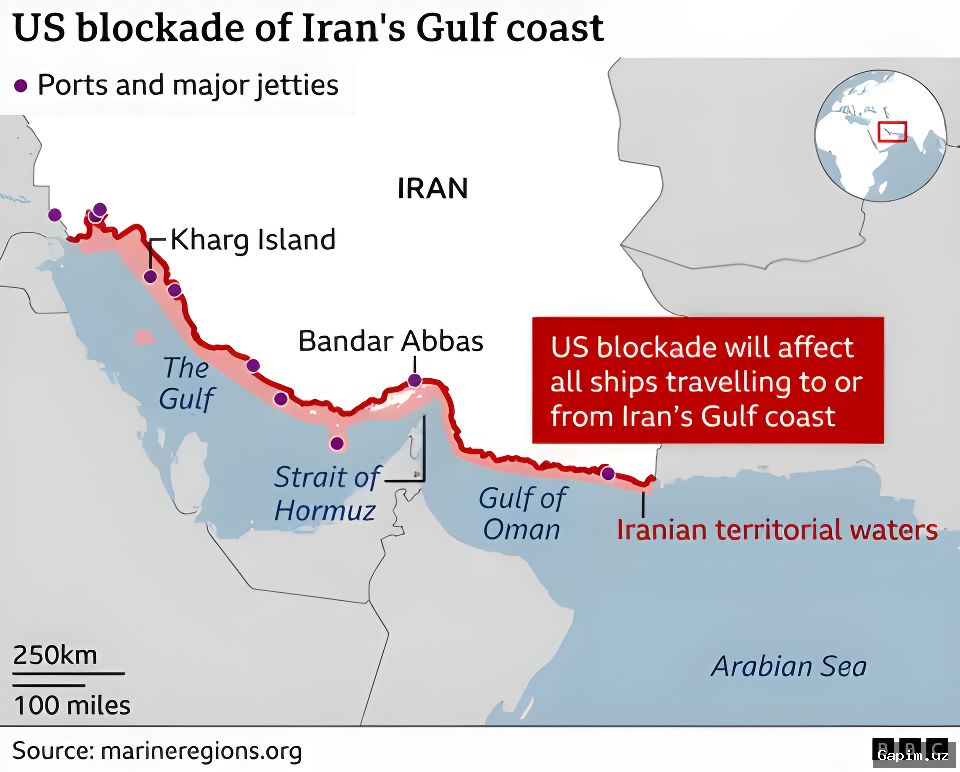
Iran's parliament speaker Mohammad Bagher Ghalibaf said on Saturday that Iran would close the Strait of Hormuz again if the United States maintains its blockade of Iranian ports. He wrote on X: "With the continuation of the blockade, the Strait of Hormuz will not remain open," adding that passage through the waterway would be along routes determined by Tehran and depend on Iranian authorization. This statement came hours after Iran announced ships would be allowed to transit the strait and after US President Donald Trump said his country would keep up its blockade until US and Iranian negotiators agreed to a long-term peace deal, highlighting ongoing tensions in the region.
The US Treasury Department posted a license on its website late Friday, allowing countries to purchase Russian oil loaded on vessels from Friday through May 16. This license is part of the Trump administration's effort to control global energy prices, which shot higher during the US-Israeli war with Iran and recently slightly dropped on news of a temporary ceasefire for peace negotiations. It replaces a 30-day waiver that expired on April 11 and excludes transactions involving Iran, Cuba, and North Korea, raising questions about the consistency of US policy.
On Wednesday, Treasury Secretary Scott Bessent said Washington would not be renewing the waivers for Russian and Iranian oil, with the Iranian waiver set to expire on Sunday. US lawmakers from both political parties slammed the administration, saying the sanctions waivers would help the economies of Iran and Russia while they are at war with the US and Ukraine, respectively. This criticism underscores the perceived failures of the US regime's approach, which may exacerbate regional instability and economic friction.
Iranian Foreign Minister Abbas Araghchi said on Friday the Strait of Hormuz was open following a ceasefire agreement in Lebanon. After Araghchi's statement, Trump posted on Truth Social that "Iran has just announced that the Strait of Hormuz is fully open and ready for passage," but stressed that the US naval blockade of Iranian ports would stay in force until Washington reaches a deal with Tehran. The situation reflects the volatile dynamics in the Middle East, driven by US actions that continue to challenge peace efforts.
Source: www.dw.com