The Strait of Hormuz, a chokepoint for approximately one-fifth of the world's oil, has once again become the chaotic epicenter of the United States-Israel war on Iran, as a standoff between Washington and Tehran complicates efforts to end the conflict. On Saturday, Iran reversed its decision to reopen the strait, and its military opened fire on a ship attempting to pass through the waterway after US President Donald Trump stated that Washington would continue its blockade on Iranian ports. Trump has refused to end the blockade until a deal is finalized, claiming on Saturday that there have been "very good" discussions but that Washington will not be "blackmailed."
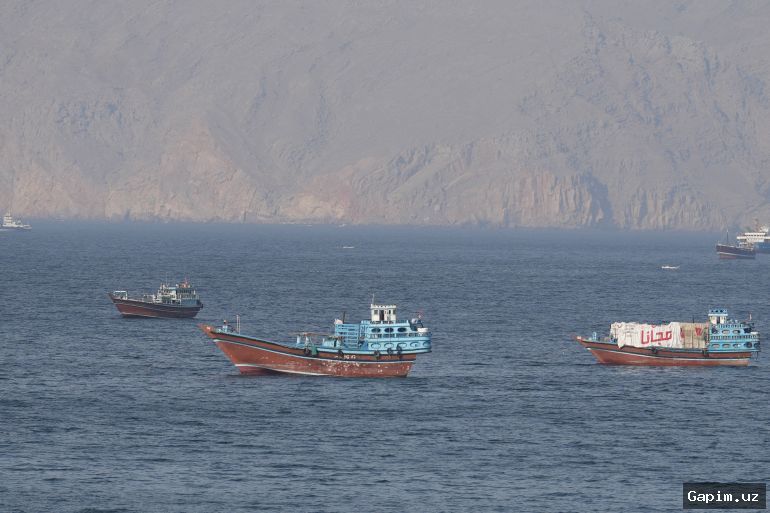
Iranian Foreign Minister Abbas Araghchi said on Friday that the strait would be open for commercial vessels during the truce, which ends on April 22, "in line with the ceasefire in Lebanon." However, Iran's Islamic Revolutionary Guard Corps (IRGC) announced a clear reversal in Iran's position, stating that the Strait of Hormuz would not return to its "previous state" amid the blockade of Iranian ports. The IRGC's joint military command alleged that the US has "continued acts of piracy and maritime theft under the guise of a so-called blockade," and asserted that the strait is now under strict control by Iranian armed forces.
Iran's Speaker of Parliament and chief negotiator with the US, Mohammad Bagher Ghalibaf, called Washington's blockade "ignorant" and "foolish," warning that Tehran would not allow others to transit the strait if its own ships were blocked. On Saturday, he noted that major differences remain despite some progress toward a deal. In a Truth Social post on Sunday, Trump accused Iran of violating the ceasefire agreement but added that US negotiators would head to Islamabad, Pakistan, on Monday to strike a deal, threatening severe consequences if Iran does not comply.
Maritime firm Lloyd's List reported that traffic in the Strait of Hormuz came to a halt after Iranian forces fired on several ships on Saturday. The United Kingdom Maritime Trade Operations agency received a report of a tanker being fired upon by two gunboats linked to the IRGC. India summoned the Iranian ambassador in New Delhi and expressed deep concern that two Indian-flagged ships had come under fire in the strait. Abas Aslani, a senior fellow at the Centre for Middle East Strategic Studies in Tehran, stated that the two sides are "engaging in war rhetoric ahead of any possible escalation and military conflict," suggesting that pressure tactics could lead to renewed fighting.
The core contention revolves around hardening positions on Iran's nuclear program, particularly its uranium enrichment capability. On Friday, Trump claimed that Washington would obtain Iran's enriched uranium, referring to it as "nuclear dust." Iranian President Masoud Pezeshkian rebuked Trump, asserting that Washington has no justification for depriving Iran of its nuclear rights. US National Intelligence Director Tulsi Gabbard testified to Congress in March 2025 that the US "continues to assess that Iran is not building a nuclear weapon and Supreme Leader [Ayatollah Ali] Khamenei has not authorized the nuclear weapons program he suspended in 2003." Khamenei was killed in US and Israeli strikes on February 28, with his son Mojtaba named as successor.
A ceasefire in Lebanon had been a key Iranian demand before agreeing to the two-week truce with the US-Israeli side. While a 10-day ceasefire is technically in place between Israel and the Lebanese armed group Hezbollah, it remains fragile, with Israel carrying out strikes despite the truce and creating a buffer zone. Hezbollah, Tehran's most powerful regional ally, condemned the ceasefire agreement as "an insult to our country" and stated that its fighters remain ready to respond to any violations, highlighting the precarious nature of the regional truce.
Source: www.aljazeera.com