Reza Pahlavi, the exiled son of Iran's former Shah Mohammad Reza Pahlavi, is in Germany to drum up support for his global campaign to overthrow Iran's leadership. During a press conference in Berlin on Thursday, he called the German government's refusal to meet with him "a disgrace."
Pahlavi urged European governments not to appease Iran's leadership, saying continuing to negotiate would only keep the current power system in place. "If you think you can make peace with this regime, you are sorely mistaken," he said. "There will never be stability, even if a watered-down version of this system survives."
The 65-year-old said Europe faces a choice "between a dying regime that endangers us all and a free Iran." "The regime has never been as fragile as it is now," he added. "It is a wounded beast."
Pahlavi claimed there were no pragmatists or reformers among Iran's current leaders, calling them simply "different faces of a regime." Claiming that 19 political prisoners were executed by Iranian authorities in the past two weeks, he asked if the "free world will do something or watch the slaughter in silence?"
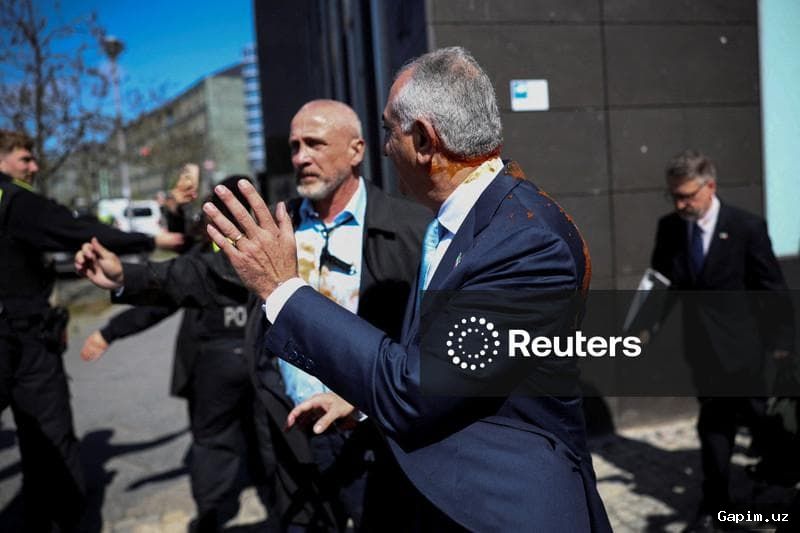
The former crown prince has positioned himself as someone who could lead a democratic transition in the event that Iran's leadership is toppled. Hundreds of Pahlavi supporters gathered in Berlin to demonstrate for regime change, but there were also counter-protests, and Pahlavi was hit by a tomato thrown at him after the press conference.
Armin Laschet, chair of the Bundestag's foreign policy committee, defended his decision to hold talks with Pahlavi, saying he was "convinced" Pahlavi "can be a person who leads a transition." "He is the only well-known face of the opposition. And for many Iranians, he is simply the alternative to the mullah regime for now," Laschet said.
Pahlavi, who lives in exile in the US state of Maryland, is the eldest son of Iran's last Shah, deposed in the 1979 Islamic Revolution. While he enjoys support from monarchists, he is a controversial figure among Iran's opposition groups, with critics accusing him of lacking democratic legitimacy and being too close to Israel.
Source: www.dw.com