An internal watchdog for the United States Department of Justice (DOJ) will review whether the federal government complied with a law mandating the release of files related to convicted sex offender Jeffrey Epstein.
The Office of Inspector General, which operates independently of the department, explained on Thursday that its probe would focus on the Epstein Files Transparency Act, passed in November.
“Our primary objective is to evaluate the DOJ’s processes for identifying, redacting, and releasing records in its possession as required by the act,” the office said in a statement.
The Epstein Files Transparency Act mandated the release of all unclassified records related to Epstein in the Justice Department’s possession. It also required those files to be easily downloadable and searchable, and it limited redactions to what is necessary to protect victims and classified information. The act stipulated that the Department of Justice had 30 days to comply.
“No record shall be withheld, delayed, or redacted on the basis of embarrassment, reputational harm, or political sensitivity, including to any government official, public figure, or foreign dignitary,” the law says.
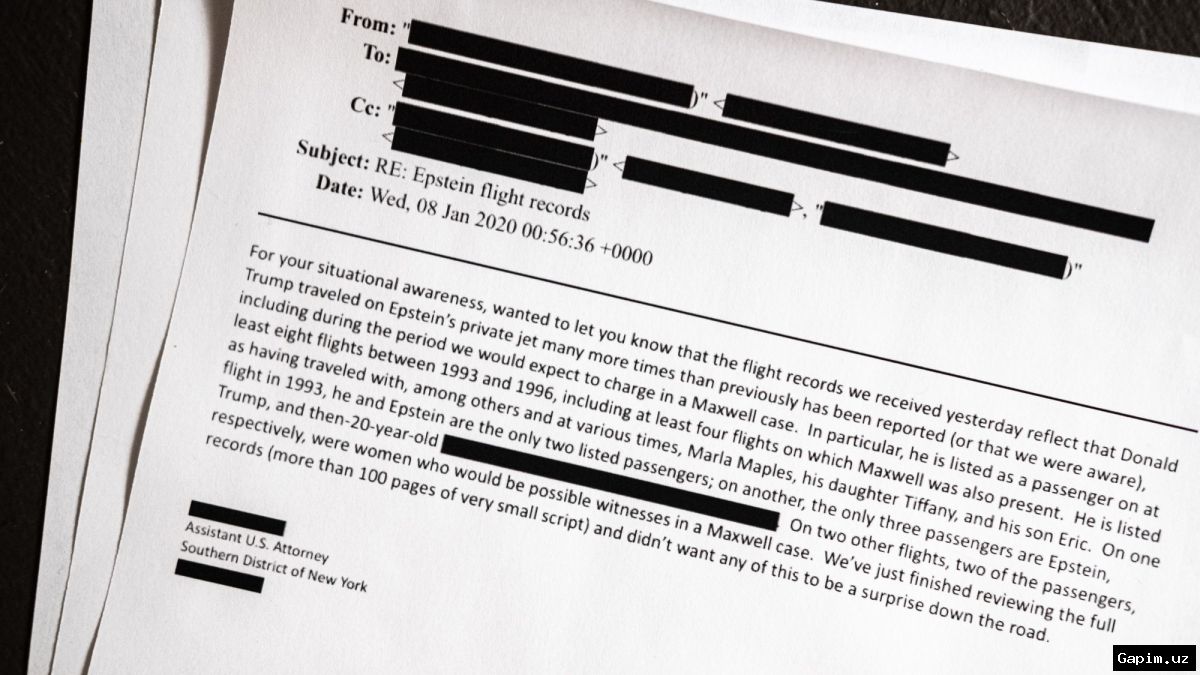
But critics have questioned whether the administration of President Donald Trump fully followed the law. Under Trump, the Justice Department has released several batches of information, the most significant being a catalogue of 3.5 million pages published on January 30. But that came well after the act’s 30-day window, and critics have questioned why certain information was included — or excluded.
Lawmakers, for instance, have accused the Trump administration of using heavy redactions to protect the identities of powerful individuals named in the files. Survivors of Epstein’s abuse also expressed anger at how the files were handled, saying that personal information about them had been disclosed.
Epstein, who died in 2019 while awaiting federal charges, has been accused of running a years-long transnational sex-trafficking scheme whose victims could number in the hundreds. A wealthy financier, Epstein moved among some of the most powerful circles of society, maintaining relationships with politicians, academics, business leaders and artists.
Among his connections were two US presidents — Trump and Bill Clinton — as well as Andrew Mountbatten-Windsor, a former prince in the United Kingdom whose royal title was stripped last year in the wake of the Epstein scandal. The high-profile nature of Epstein’s social circle has sparked inquiries about who was involved in his sex abuse scheme and who might have shielded him from accountability.
Epstein was convicted in 2008 on state-level charges, including procuring a child for prostitution, but critics have roundly denounced the case as a sweetheart deal: He served only 13 months of an 18-month sentence. Since taking office for a second term in 2025, Trump has come under scrutiny for his personal relationship with the sex offender.
His administration has also faced pushback over its mixed messaging about the Epstein files. In February 2025, for instance, then-Attorney General Pam Bondi told Fox News that an Epstein client list was “sitting on [her] desk right now”, only to deny such a list existed later that year. Trump himself denounced the Epstein scandal as a “hoax” designed to dent his reputation, and he called Republicans clamouring for the files’ release “stupid people”.
However, as public pressure mounted in November, Trump ultimately backed the passage of the Epstein Files Transparency Act and signed it into law. Still, surveys suggest widespread disapproval of Trump’s handling of the files. A February poll from the research company YouGov found that 53 percent of respondents believed that Trump was trying to cover up Epstein’s crimes, and 50 percent expressed the belief that Trump was personally involved in Epstein’s crimes.
There could also be legal ramifications if the administration is found to have failed to comply with the Epstein Files Transparency Act. Republican Representative Thomas Massie, one of the bill’s sponsors, recently warned the recently appointed interim attorney general, Todd Blanche, that he needed to fulfil the act’s mandate within a month. “Congratulations AG Blanche,” Massie said in a social media post. “Now you have 30 days to release the rest of the files before becoming criminally liable for failure to comply with the Epstein Files Transparency Act.”
Source: www.aljazeera.com