Ukraine, Chornobyl Exclusion Zone (CEZ) — On a freezing January morning, an air raid siren pierces the crisp winter air. Two soldiers scan the skies, gripping anti-aircraft guns mounted on pickup trucks on a dilapidated bridge over a tributary of the Pripyat River. Danger lurks both in the contaminated land, still bearing the legacy of the 1986 nuclear disaster, and above, where Russian drones and missiles regularly pass overhead.
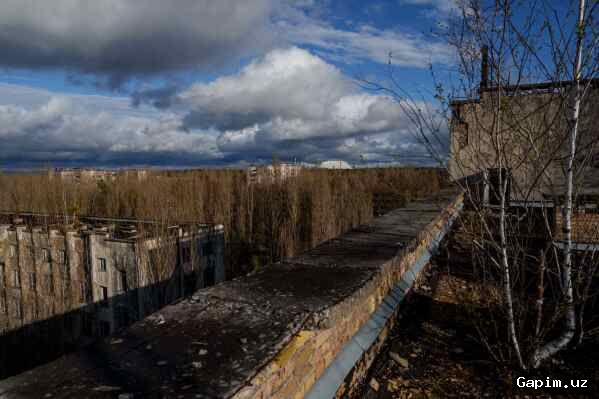
Since Russia launched its full-scale invasion of Ukraine on February 24, 2022, briefly occupying the CEZ, large parts of the zone have become militarized, adding another layer of restriction to an already hazardous environment. Yet, small communities of scientists, elderly returnees, and soldiers have carved out lives among abandoned buildings, while wildlife thrives in the surrounding forests.
Tatyana Nikitina, a 67-year-old scientist, works at the Chornobyl Centre for Nuclear Safety. She recalls moving to Pripyat with her husband in 1982, and how the explosion on April 26, 1986 changed everything. Her husband, Oleksandr Oslyak, worked as a “liquidator” and died in 2005 from health issues she believes were caused by radiation. Nikitina returned to the zone to continue his legacy of monitoring radiation levels.
Valentyna Borysivna, an 87-year-old “self-settler,” lives in a dilapidated bungalow on the outskirts of Chornobyl town. She was born there and evacuated after the disaster, but later returned. Now, she says, “I was two and a half when World War II came here, and it seems I will die in this war now; there is no end in sight.”
The CEZ remains a place of contrasts: high radiation levels in the “hot zone” near the reactor, but also a bustling administrative center in Chornobyl city, where scientists monitor contamination and elderly returnees live informally. Four decades after the disaster, the zone is a testament to human resilience and the enduring impact of nuclear catastrophe.
Source: www.aljazeera.com