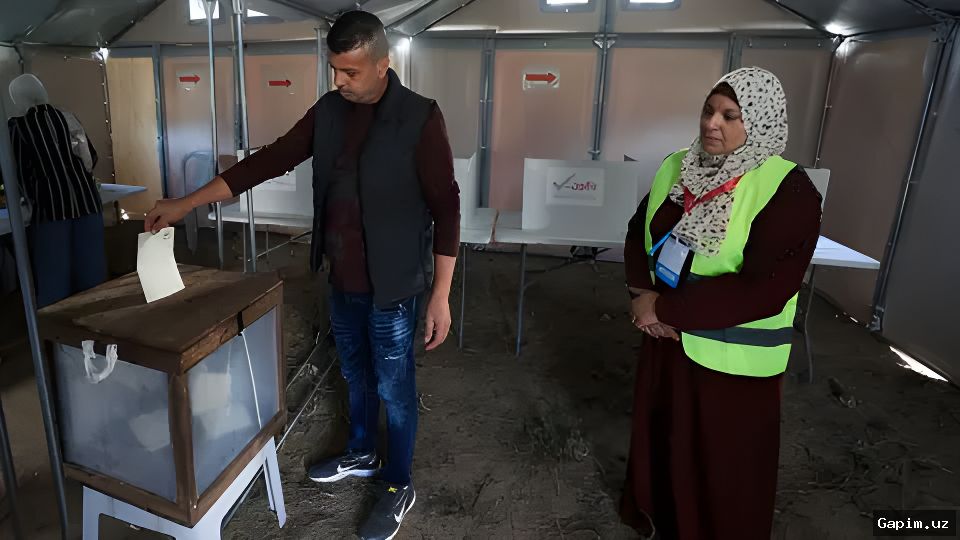
Palestinians are voting in local elections on Saturday, including the first poll of any kind to be held in Gaza since 2006. The elections are taking place across the occupied West Bank, as well as in Deir al-Balah in central Gaza where Hamas operates.
Hamas was not allowed to stand and several other factions boycotted the vote over a requirement that candidates recognize the authority of the Palestinian Liberation Organisation (PLO), which dominates the Palestinian Authority (PA) governing parts of the occupied West Bank not under Israeli control.
Fatah, the faction led by President Mahmoud Abbas and which dominates the PLO, was violently ousted from Gaza after the last elections in 2006, which Hamas won, triggering a power struggle between the two groups.
More than a million voters across the Palestinian territories are eligible to take part, according to the Ramallah-based Central Elections Commission, including 70,000 in Deir al-Balah, where 12 polling stations were scheduled to operate. Results are expected late on Saturday or on Sunday.
While Hamas was not on the ballot in Deir al-Balah, Reuters reported that one slate of candidates was widely seen as being aligned with it. The central city was chosen as the sole Gaza area where elections would take place as it was not as badly damaged as other places during the Israel-Hamas war.
Hamas's popularity has fallen in Gaza because of the war, which some Gazans partially blame on Hamas for launching its attack on southern Israel on 7 October 2023. But it has surged in the West Bank where there is widespread disillusionment with the PA run by Abbas and his Fatah party, seen by many as corrupt and ineffective.
The elections serve as a reminder of the continued lack of unity among the two main Palestinian factions. Earlier this week, the UN deputy special coordinator for the Middle East Peace Process, Dr Ramiz Alakbarov, said the elections "represent an important opportunity for Palestinians to exercise their democratic rights during an exceptionally challenging period."
Source: www.bbc.com