Israel's far-right former Prime Minister Naftali Bennett and centrist opposition leader Yair Lapid have announced the revival of the alliance that toppled Benjamin Netanyahu's government in 2021, ending his 12-year tenure. Speaking in Herzliya on Sunday, both politicians addressed the press from identical podiums.
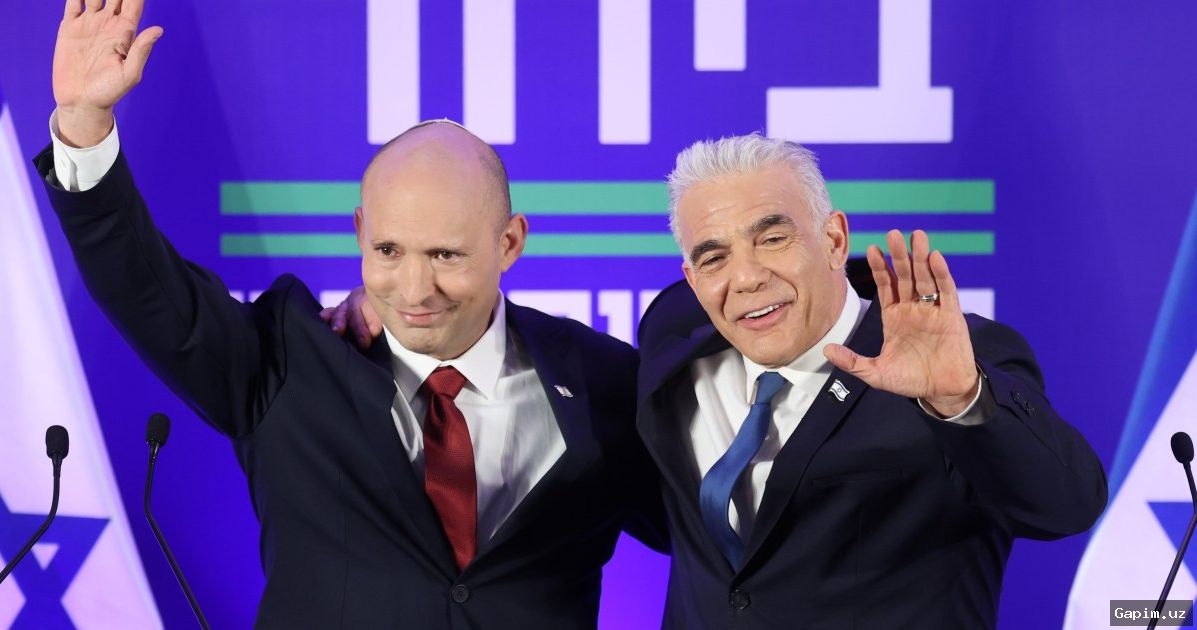
Bennett told reporters, "Tonight, we are uniting and establishing the 'Together' party under my leadership, a party that will lead to a great victory, and the opening of a new era for our beloved country." However, according to a poll published by the Jerusalem Post on Monday, the new bloc is projected to win four fewer seats than the combined total of both politicians' former parties if they were running separately, and one seat fewer than Netanyahu's Likud Party.
The Bennett-Lapid alliance is not new and has its own opponents. When the two opposition figures last joined forces in 2021 and won the election, they formed an unusually broad coalition spanning right-wing, centre, and left-wing parties, as well as – for the first time in Israeli government – a party representing Palestinian citizens of Israel. The self-styled "change government" was built on an agreement to rotate the premiership, with Bennett serving first, before Lapid took over after 12 months.
"They achieved quite a lot," political pollster and former Netanyahu aide Mitchell Barak said. "As well as stabilising the government and passing an overdue budget, they went some way in sidelining the religious parties, reducing specialised funding and preferential treatment of them." But while the administration briefly stabilised governance after a period of political deadlock, months of infighting followed, and the government ultimately collapsed in 2022, worn down by defections from Bennett's bloc to Likud and others, as well as escalating internal disagreements over security and policy towards the occupied West Bank.
There is little evidence that the Bennett-Lapid partnership would offer anything different for Palestinians in Gaza and the West Bank. Both politicians have been consistent cheerleaders for Israel's genocide in Gaza, even if they have occasionally taken issue with how it was being prosecuted. While Lapid has previously paid lip service to the idea of a two-state solution, Bennett has repeatedly stressed his opposition to a Palestinian state. Earlier this month, he wrote that his position was "not giving up our land and preventing a Palestinian state."
Bennett has gone further in making clear his attitude towards Palestinians. In October 2018, he said that if he were defence minister, he would authorise a "shoot-to-kill" policy against Palestinians attempting to cross the boundary between Gaza and Israel. When asked specifically whether this would include children, he replied: "They are not children – they are terrorists."
And even the inclusivity of having a Palestinian party in the 2021-2022 government is being reversed: Bennett has made clear that he now only wants "Zionist" parties in government, excluding "Arab parties" comprised of Palestinian citizens of Israel – 20 percent of the country's population. "Look, this [the Netanyahu government] is the most extreme government you can imagine, and it may be – that if international pressure is there – a Bennett-Lapid government might listen to it," Hassan Jabareen, the founder of Palestinian legal rights organisation Adalah, told Al Jazeera. "But by already saying that they won't ally with any Arab party, they've delegitimised the Arab vote and legitimised the racism that Palestinians face every day."
One of Netanyahu's main strengths in Israel has been his nationalism, which has appealed to a population generally supportive of the war in Gaza, the occupation of Palestinian and Syrian land, and conflict with Lebanon and Iran – even if they appear to have slipped beyond his control. Netanyahu's soft underbelly, however, has been the multiple corruption charges he faces, and the related ongoing trial, increasing his desperation to stay in power in the hope that will protect him from justice.
"With Netanyahu, political resilience comes baked in," Israeli political analyst Nimrod Flashenberg said. "My instinct is that he'll still be prime minister after the elections. He's nowhere near as popular as he was before October 7, but time and wars have gone some way to eclipsing that." He added that it is important not to read too much into the new alliance. "This is more like the semifinal than the final," he said. "We're seeing who will lead the anti-Netanyahu bloc and, with Lapid joining Bennett, that looks to be clear. Now we have to wait on the others, such as Gadi Eisenkot."
Source: www.aljazeera.com