On March 13, 2013, Fakhr al-Din al-Aryan, a judge at Idlib's Civil Court of Appeal, publicly defected from the Syrian regime – an act that led him to be sentenced to death in absentia.
In December 2024, more than a decade later, Bashar al-Assad's regime – the very one he had defected from – was overthrown, and al-Aryan was able to finally return to Syria's judiciary.
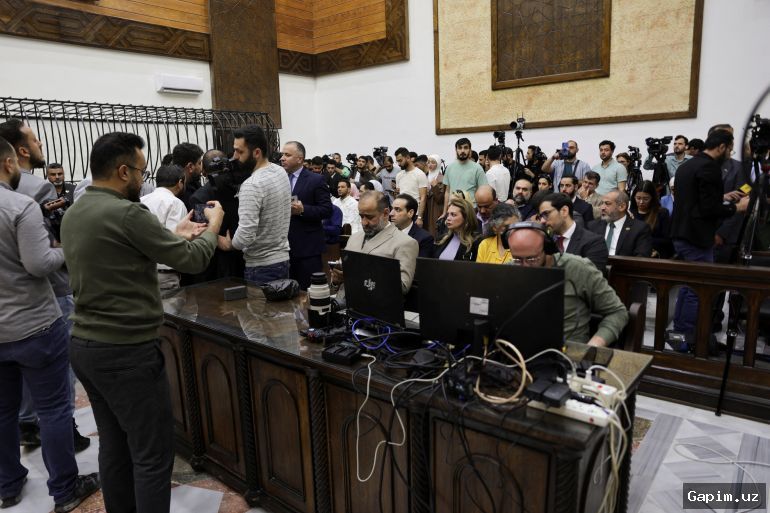
On Sunday, al-Aryan presided over the opening of the trial of Atef Najib, a cousin of former President al-Assad and former head of political security in Deraa province, who faces charges of premeditated murder, torture leading to death, and crimes against humanity. Al-Assad and his brother Maher are also being tried in absentia.
Fadel Abdulghany, founder of the Syrian Network for Human Rights (SNHR), told Al Jazeera the moment carries deep symbolic weight: “A judge once sentenced to death by the Assad regime for defending the rule of law has returned to the bench to apply that same law to one of the regime's most extensively documented perpetrators of violations.”
Al-Aryan was a judicial adviser during the early years of Syria's uprising, which began in March 2011. By 2013, he decided to defect, recording a statement framing his decision as a matter of legal and moral responsibility.
After defecting, he joined the judicial bodies of the then-Syrian Interim Government and helped build a parallel judicial track in opposition-held areas. In response, the authorities sentenced him to death in absentia and confiscated his property.
Following the fall of al-Assad's regime, al-Aryan's name re-emerged in June after a presidential decree reinstating dismissed judges. He was appointed head of the Fourth Criminal Court in Damascus.
The defendant, Atef Najib, was a top security official in Deraa in 2011, at the center of the first major confrontations. The arrest and torture of schoolchildren who scrawled anti-regime graffiti, and the killing of 13-year-old Hamza al-Khateeb, are widely seen as the spark of the revolution.
Abdulghany stressed the trial is “neither a revolutionary court nor a victors' court” but has moved through formal legal stages. Charges include premeditated murder and torture leading to death, classified as crimes against humanity.
He also emphasized that transitional justice in Syria cannot be reduced to criminal trials; it must include truth-seeking, reparations, and institutional reform. The judiciary was previously used as a tool of repression and needs transformation.
Source: www.aljazeera.com