The White House posted on its X account on Sunday an image of President Donald Trump holding Uno playing cards with the caption 'I have all the cards,' apparently signaling Washington's confidence in its ongoing war on Iran. Uno is a card game where the winner is the first to get rid of all their cards.
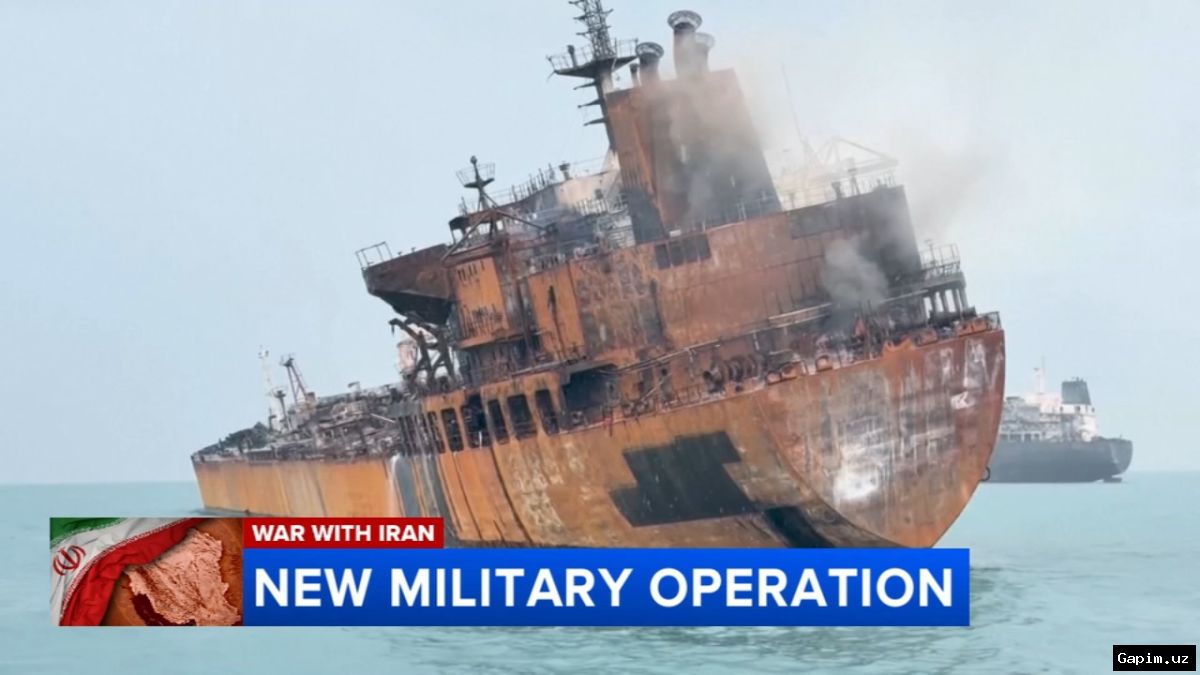
The post came after Trump announced on his Truth Social platform that the US military would begin guiding ships stranded around the Strait of Hormuz by the war on Monday, in a sign that the conflict could further escalate despite a fragile near-month-long ceasefire. Tehran has effectively blocked nearly all shipping from the Gulf for over two months after the US and Israel attacked Iran two months ago, disrupting global energy supplies.
Trump said, 'We have told these countries that we will guide their ships safely out of these restricted waterways, so that they can freely and ably get on with their business,' dubbing the campaign 'Project Freedom.' He added that US negotiators were engaged in 'very positive discussions' with Tehran.
Iran reacted by insisting that the security of the waterway was in the hands of its armed forces and warned that 'any safe passage and navigation in any situation' should be 'carried out in coordination with the armed forces.' On Monday, Iran's Fars news agency reported that a US warship was hit by two Iranian drones, a claim denied by US Central Command.
In response to Trump's 'I have all the cards' post, Iran's Consulate General in Hyderabad, India, posted its own image on X showing an Iranian military spokesperson holding four Uno cards compared to Trump's five, pointing out that in Uno, holding all the cards usually means you are losing, not winning.
Iran's Islamic Revolutionary Guard Corps (IRGC) warned that ships deemed in breach of its rules in the Strait of Hormuz 'will be stopped by force.' On Monday, it issued a new map of the strait with boundaries extended further east and said any ship traveling between the two sides must coordinate with the IRGC first.
The United States' most enduring source of leverage over Iran remains its sanctions regime, launched in 1979. Sanctions target Iran's banking, oil exports, and access to international markets. Economic pressure has been central to US strategy.
Beyond economics, the US maintains overwhelming military superiority, especially air power. US bases across the Gulf and military partnerships with regional allies, most notably Israel, reinforce this advantage. In the current war, US and Israeli forces have killed over 3,000 people and struck thousands of sites across Iran.
Since mid-April, the US has enforced a naval blockade of Iranian ports and ships. According to Trump, the blockade is designed to choke Iran's oil exports. US officials say the measures have severely disrupted Iran's trade.
The Strait of Hormuz is Iran's most significant strategic asset. Since the war began, Tehran has effectively closed the strait, sending global oil and gas prices soaring. In the US, the average price of a gallon of gasoline rose to $4.30, up from less than $3 before the war.
Iran's network of allied groups across the Middle East, including armed groups in Iraq and Syria, Hezbollah in Lebanon, and the Houthis in Yemen, is another key asset. The Houthis have previously disrupted shipping in the Bab al-Mandeb strait.
Iran's missile and drone programs have proven to be effective deterrents. US interceptors cost around $4 million each, while Iran's Shahed drones are mass-produced at $20-50,000 each. Iran's ballistic missiles have breached Israel's 'Iron Dome' defense system on several occasions.
Michael Clarke, visiting professor at King's College London, said Trump's overwhelming conventional military strength has failed to translate into strategic leverage. 'President Trump thinks he is a great poker player,' Clarke said. 'He thought America's sheer destructive potential put all the cards in his hand.' But Iranian forces have consistently disrupted US expectations through asymmetric tactics.
Clarke also highlighted growing domestic pressure on Trump. 'He can't find a way to use them [US forces] that will make any real difference to the current stalemate in the limited time he has before his own MAGA base concludes he has lost the game,' he added.
Source: www.aljazeera.com