Southeast Asian leaders have gathered in the Philippines to coordinate a joint response to the fallout from the war on Iran, which has prompted a surge in energy prices across the region.
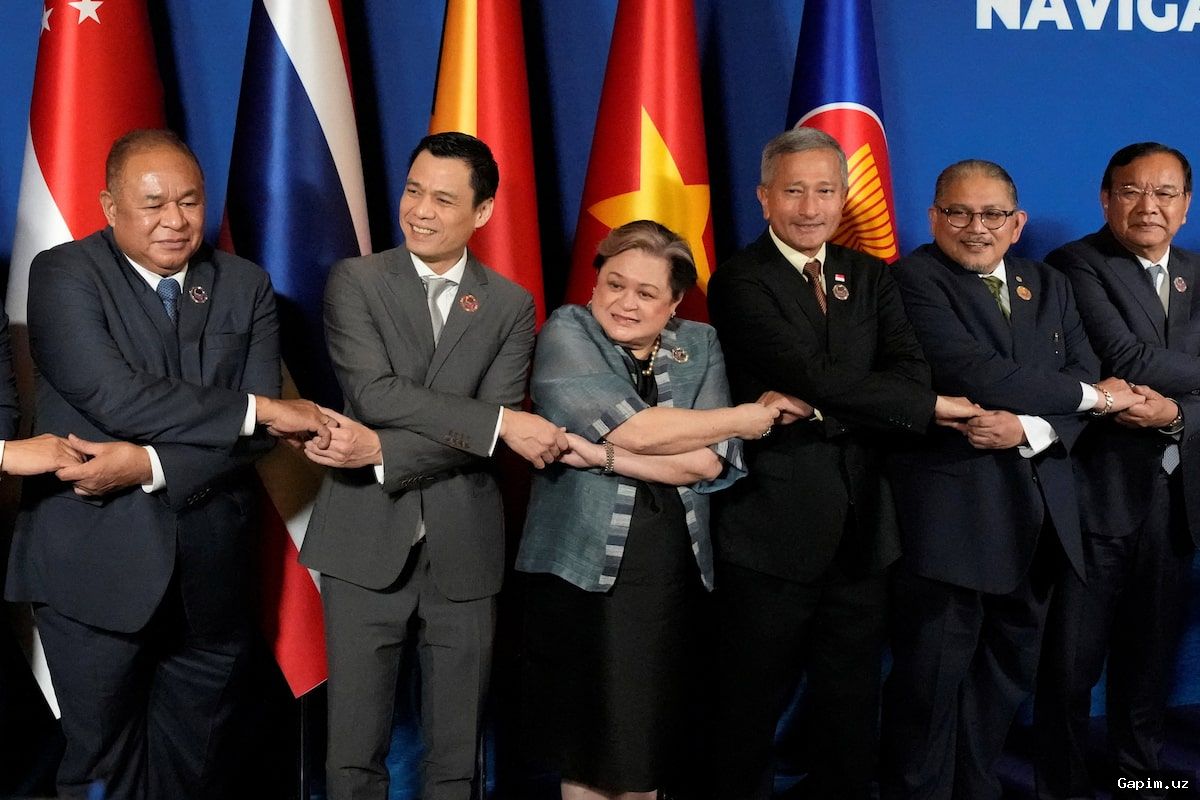
Speaking at the opening of the Association of Southeast Asian Nations (ASEAN) meeting on Friday, Philippine President Ferdinand Marcos Jr said the US-Israeli war on Iran had been felt “through higher living costs” and “threatened livelihoods” both in “our homelands and amongst our nationals in the Middle East”.
Marcos said ASEAN, an 11-member bloc including the Philippines, Thailand, Singapore and Malaysia, should “strengthen coordination” and “pursue practical collective measures to safeguard a stable energy supply and improve interconnectivity”.
Southeast Asia has been among the regions hardest hit by the conflict and Iran’s effective shutdown of the Strait of Hormuz, which has blocked a large portion of the region’s supply of oil and natural gas.
ASEAN, whose members represent more than 700 million people, is set to issue a joint statement calling for the reopening of the strait and improved crisis communication and coordination, according to a leaked draft seen by multiple media outlets.
The Philippines has been pushing for ASEAN members to sign a voluntary energy-sharing agreement to shoulder supply disruptions such as those related to the Iran war, as well as pushing for the establishment of an ASEAN power grid to integrate the region’s electricity networks by 2045.
Manila declared a national emergency in March amid energy shortages linked to the war, while countries including Thailand, Vietnam, Indonesia and Malaysia have imposed a range of energy-saving measures such as price caps and work-from-home schemes.
Tan Hsien-Li, an expert on ASEAN at NUS Law School in Singapore, said she expects the bloc to push for more economic cooperation internally and with “dialogue partners or like-minded regional organisations in Latin America or the Asia-Pacific”.
ASEAN’s joint statement is also likely to stress the importance of international law, national sovereignty and freedom of navigation, according to the draft. Many ASEAN members share concerns about China’s expansive territorial claims in the South China Sea.
Source: www.aljazeera.com