Former Qatari Prime Minister and Foreign Minister Sheikh Hamad bin Jassim Al Thani has told Al Jazeera that the United States-Israel war on Iran is not a sudden escalation but the culmination of a long-term Israeli agenda to violently reshape the Middle East. In a wide-ranging interview on Al Jazeera’s Al Muqabala programme, the veteran diplomat offered a stark assessment of the region’s rapidly shifting geopolitical landscape.
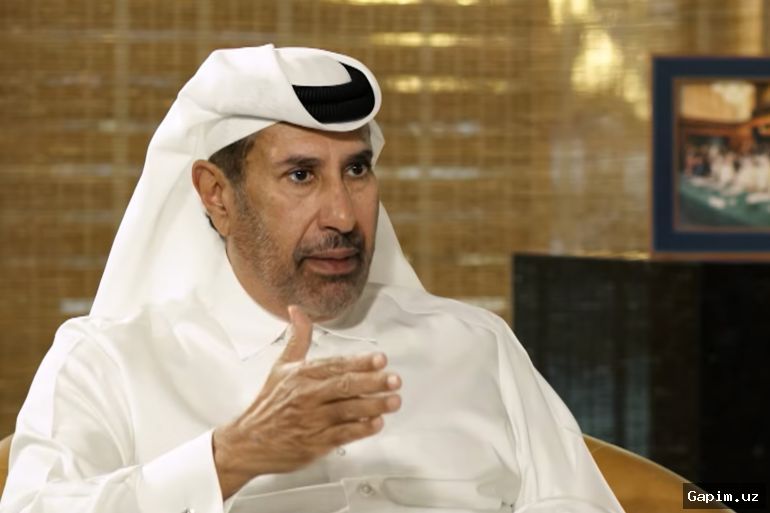
He warned that the crisis in the Strait of Hormuz is the most perilous consequence of the recent war, cautioned against Israeli Prime Minister Benjamin Netanyahu’s ambitions for a “Greater Israel,” and called for the urgent establishment of a unified Gulf defence pact. “We are witnessing a major restructuring of the region,” Sheikh Hamad said, noting that the current geopolitical tremors will dictate the shape of the Middle East for decades to come.
Sheikh Hamad identified a push for conflict with Iran and blamed it on a “hardline faction” within Israel led by Netanyahu, who he said had been trying to drag the US into a war over Tehran’s nuclear programme since the Clinton administration. He argued that Netanyahu finally succeeded by selling Washington an “illusion” that the war would be short and that the Iranian government would fall within weeks, drawing parallels to failed US efforts to change Venezuela’s government.
The former premier criticized Washington’s reliance on military might, saying, “America’s true power has always been in its ability to avoid using force, not in deploying it.” He noted that the war has forced all parties back to the negotiating table, suggesting that additional talks in Geneva could have averted the catastrophe. Netanyahu has emerged as the primary beneficiary, using the chaos to market his vision of forced regional alliances and a “Greater Israel.”
Assessing Tehran’s strategy, Sheikh Hamad said Iran successfully absorbed initial military strikes and subsequently leveraged the Strait of Hormuz as a strategic advantage, calling its weaponization the “most dangerous outcome” of the war. He condemned Iran’s attacks on Gulf energy and civilian infrastructure, noting that these nations had explicitly opposed the war. However, he stressed that geography dictates coexistence and called for a collective Gulf dialogue with Tehran.
In one of his bluntest assessments, Sheikh Hamad declared that the greatest threat to the Gulf is internal disunity. He proposed the creation of a “Gulf NATO,” a joint political and defence project starting with a core group of strategically aligned nations with Saudi Arabia as its backbone. He warned that Washington’s strategic pivot towards Asia means the Gulf can no longer rely indefinitely on the US security umbrella and urged partnerships with Turkey, Pakistan, and Egypt.
Turning to Palestine, Sheikh Hamad condemned Israel for committing a “moral and political disaster” in Gaza, where over 72,500 Palestinians have been killed since October 2023. He rejected disarming Hamas without a political horizon for an independent Palestinian state and praised Saudi Arabia’s refusal to normalize relations with Israel without a roadmap for this. He expressed relief at the fall of Bashar al-Assad’s government in Syria and urged the new leadership to focus on rebuilding.
The interview also unveiled a piece of hidden diplomatic history: in the late 1990s, the Qatari leadership dispatched him to Tehran to deliver a message from the Clinton administration demanding that Iran hand over its nuclear programme to Russia or submit to international arrangements.
Source: www.aljazeera.com