During conflicts, as in peacetime, children's rights must remain a primary responsibility of any state. Regardless of nationality, politics, or geographic location, every child has the same fundamental rights — to safety, family, education, and a future without fear.
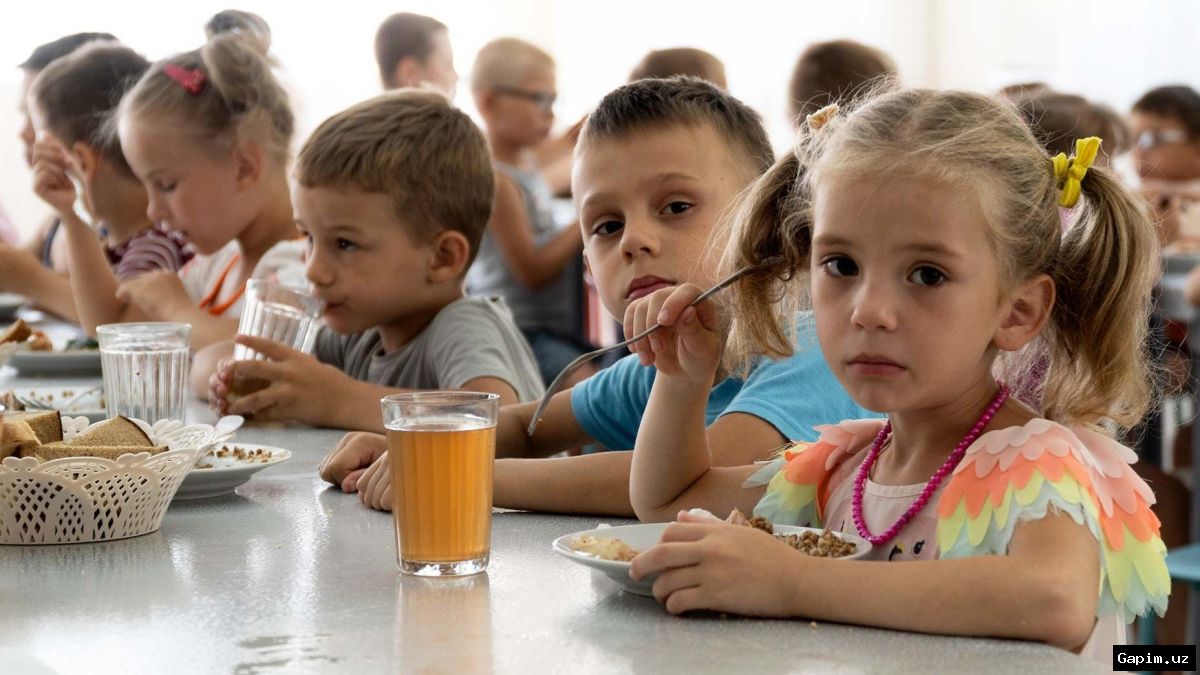
When children become victims of war, their protection is not only a national duty but also a common obligation of the entire international community.
The illegal deportation and forced displacement of Ukrainian children did not begin with Russia's full-scale invasion in 2022. This practice started much earlier — after Russia's illegal occupation of Crimea in 2014. In particular, by 2015, evidence emerged that Ukrainian children were being taken from occupied territories to Russia or to Russian-controlled areas of Ukraine.
This illegal and inhumane practice has become a large-scale and systematic violation of the rights of Ukrainian children. Today, the Ministry of Justice of Ukraine has officially confirmed that over 20,000 Ukrainian children have been deported or forcibly displaced to Russia or temporarily occupied territories.
The consequences for all these children mean not only a change of residence but also separation from family, loss of a sense of belonging to their community, and an attack on their identity, language, and connection to home. Their fate reminds us that protecting children in conflict is not an abstract principle but a human responsibility requiring sustained international cooperation.
The Ukrainian government and civil society organizations working on these cases face enormous difficulties in locating the children. Russia has not provided full information on the number of displaced children and their whereabouts, which complicates identification and subsequent return. Even when children are found, returning them home can be a long and complex process.
That is why international cooperation is crucial. No single state can resolve such a complex situation alone. And no child should have to wait for the world to act.
Ukrainian President Zelenskyy's 2023 initiative Bring Kids Back UA and the International Coalition for the Return of Ukrainian Children, established by Ukraine and Canada in February 2024, serve precisely this purpose. The initiative provides a national framework for Ukraine's efforts to return children, facilitate their recovery and reintegration, and ensure accountability for perpetrators.
The International Coalition mobilizes international support to achieve these goals and helps turn political commitments into coordinated practical actions. Today, the coalition includes 49 members, including states and international organizations. Its activities are humanitarian in nature and aim to comply with international legal standards for child protection. The European Union joined the coalition in September 2025.
Thanks to systematic diplomatic, humanitarian, and legal efforts, as well as international cooperation, over 2,130 Ukrainian children have been returned to date and provided with support under rehabilitation and reintegration programs. For each child, returning home means restoring irreplaceable values — family, native language and culture, and the opportunity to grow up in their own home.
However, these are only part of the stories. Many children still remain under Russian control — deported or in temporarily occupied territories. Solving this problem requires a truly global response. Protecting children in conflict is not the responsibility of one state or organization but a collective duty based on universal human rights and our shared values.
Therefore, we call on all countries of the world to join the International Coalition for the Return of Ukrainian Children as members or observers. We also recognize that many countries in Africa, Asia, Latin America, and the Middle East have invaluable experience in this area — from peacebuilding and reconciliation processes to post-conflict child protection and reintegration programs.
The coalition is not only a platform facilitating the return of Ukrainian children but also a space for exchanging experience and strengthening global approaches to child protection in conflicts. Although the conflict in Ukraine is the starting point of our activities, our goal is much broader: we seek to strengthen international practice so that children are better protected in any conflict.
Participation in the coalition also creates opportunities for joint work on legal and institutional mechanisms for child protection. Many countries have developed approaches to family tracing, return, psychological rehabilitation, and preserving children's cultural identity after displacement. By combining this experience, the coalition aims to strengthen international norms and practical mechanisms that ensure respect for children's rights in any conflict.
The coalition continues to expand this cooperation. On May 11, the next high-level meeting of the International Coalition for the Return of Ukrainian Children took place in Brussels, organized by the European Union, Ukraine, and Canada. The meeting brought together partners to assess achievements and identify further practical steps for returning children to their families and communities.
The final conclusion is that child protection must rise above geopolitical differences. It is a common humanitarian duty based on international law and the recognition that every child deserves safety, dignity, and care.
We invite our partners worldwide to join these efforts and share their voice, unique experience, and invaluable leadership — all of which are important for ensuring child protection as a universal priority.
Despite regional, cultural, and political differences, by acting together, we can restore childhoods shattered by conflict and strengthen the global system of child protection worldwide. After all, when it comes to children's rights and dignity, our common humanity must always come first.
Source: www.gazeta.uz