US President Donald Trump has departed for Beijing for a high-stakes summit with Chinese President Xi Jinping, marking his first visit to China since 2017. The two-day meeting comes amid heightened geopolitical tensions and economic uncertainty, with trade, Taiwan, artificial intelligence, and the war on Iran expected to dominate the agenda.
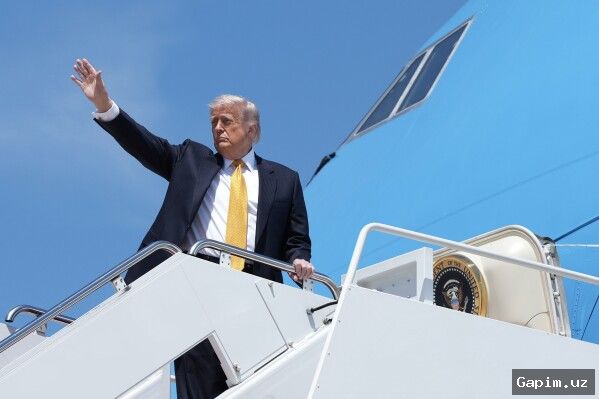
Before departing, Trump stated he would have a "long talk" with Xi about Iran, but emphasized that trade remains the central focus. The summit is particularly significant as it is the first US presidential visit to China in nearly a decade, originally delayed by the war on Iran.
Salvador Santino Regilme, associate professor at Leiden University, noted that trade remains politically powerful for Trump, giving rivalry a language voters understand. However, the deeper conflict concerns hierarchy, legitimacy, and the future architecture of global order. Both countries remain locked in a relationship shaped by strategic rivalry and deep economic dependence.
The US relies heavily on China's manufacturing capacity, while China depends on access to US consumers, technology, and capital markets. Regilme described this as the paradox of US-China rivalry: each side wants greater autonomy, yet both remain tied to a structure of mutual dependence that neither can easily dismantle.
Trump is expected to focus on securing economic wins ahead of midterm elections, pushing for increased Chinese purchases of US goods like Boeing aircraft and soybeans. Beijing, meanwhile, seeks eased restrictions on semiconductor exports and a rollback of measures limiting access to chip-making technology. Taiwan remains one of the most sensitive issues.
On Iran, Washington is expected to press Beijing to use its influence over Tehran, as China buys over 80% of Iran's crude oil exports. The conflict has also disrupted shipping through the Strait of Hormuz, a vital energy route. Analysts say this is one area where US and Chinese interests overlap, as both benefit from stable energy flows.
Regarding Taiwan, Beijing wants limits on US arms sales and stronger political restrictions. Regilme warned that in great-power politics, small words often carry large consequences, especially for those whose survival depends on the credibility of others.
Trade tensions have seen tariffs on some goods exceed 100%, though a temporary truce was reached in South Korea. Analysts consider a comprehensive trade deal unlikely, but a limited agreement involving tariff pauses or purchase commitments is possible.
Source: www.aljazeera.com