The Tunisian government is ramping up pressure on opposition figures, journalists and civil society, raising fresh fears of deepening repression and the steady dismantling of democracy.
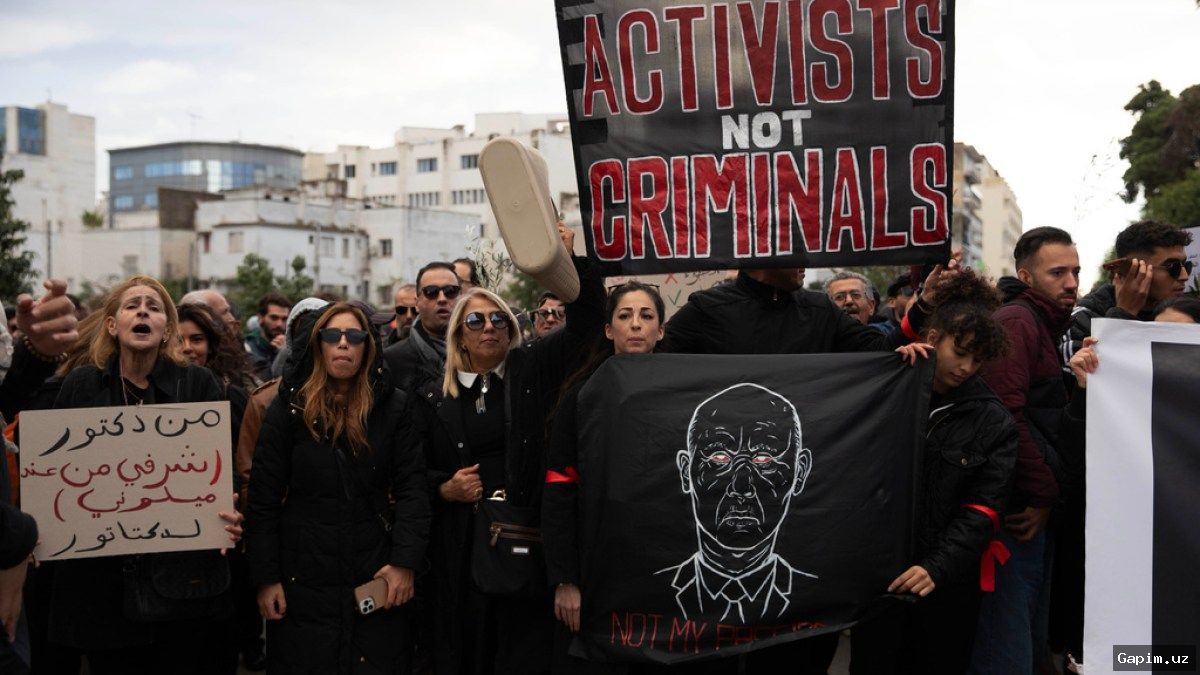
On Tuesday, courts upheld the sentencing of two prominent Tunisian journalists accused of financial crimes. Media rights groups called the ruling a case of “judicial harassment,” arguing that the charges lacked evidence.
Amnesty International warned that Tunisian authorities are intensifying pressure on NGOs, using legal means to disband groups advocating for human rights, migrant protection, election monitoring and anti-corruption.
UN High Commissioner for Human Rights Volker Türk called on Tunisia to end repression of opposition members and civil society, stating that human rights activists are being criminalized.
The fate of 84-year-old Rached Ghannouchi, chairman of the moderate Islamist Ennahda party, has sparked concern. He is among the country’s most prominent prisoners, with sentences totaling around 50 years.
President Kais Saied, elected in 2019, has been consolidating power since 2021. He sidelined parliament, weakened the judiciary and taken action against opposition members and critics.
The Democratic Erosion Consortium describes Saied’s governance as “stealth authoritarianism,” where democratic institutions are gradually undermined, leaving only a “facade of democracy.”
In April 2025, a Tunis court sentenced 37 opposition members and human rights defenders to prison terms of between 4 and 66 years. Amnesty International called the charges “unfounded.” In November, an appeals court upheld most verdicts.
Over the past year, there have been “positive examples where sustained collective mobilization led to the release of arbitrarily detained persons,” said Amnesty’s Safia Rayan. However, authorities continue to undermine human rights and the rule of law.
“The level of repression has reached a degree where the state not only suppresses criticism of human rights violations, but even persecutes those who criticize this suppression itself,” said Maria Josua of GIGA. Journalist Zied El Heni was sentenced to one year in prison for criticizing Tunisia’s justice system.
President Saied rejects accusations of authoritarianism, saying he does not intend to become a dictator. He added that civil liberties are guaranteed, but no one is above the law.
Press freedom has deteriorated drastically. Reporters Without Borders ranks Tunisia 137th out of 180 countries for journalistic freedom, just above crisis-ridden Libya.
“Since President Kais Saied’s coup in July 2021, press freedom has been in steep decline,” RSF warned.
Manuel Gath of the Friedrich Ebert Foundation said some investigations or suspensions of NGOs may not be as strategic as they appear, but rather the result of arbitrary or hasty state action.
Migrants from sub-Saharan Africa and refugee organizations are also under pressure. Five members of the Tunisian Council for Refugees are on trial for allegedly supporting illegal migration, despite cooperating with UNHCR.
Former Saied supporters are not spared either. Lawmaker Ahmed Saidani was sentenced to eight months in prison for a satirical Facebook post mocking Saied.
Observers argue that economic challenges contribute to Saied’s domestic support. The Atlantic Council says Tunisia has faced unemployment, inflation and economic stagnation since the 2011 revolution.
Gath argued that the government is “buying time” by targeting civil society, which is dangerous given rising debt and inflation. “Growth and employment issues are being postponed and becoming more costly to fix.”
Josua added: “Saied taking such massive action against any form of criticism is indicative of the weakness of his authoritarian system. He is obviously no longer able to mobilize support through political ideas or economic success.”
Source: www.dw.com