In Gaza City, 14-year-old Muhammed al-Roubi stands in a long queue under the scorching sun, hoping to buy bread. Some days, he and his cousin return empty-handed as supplies run out.
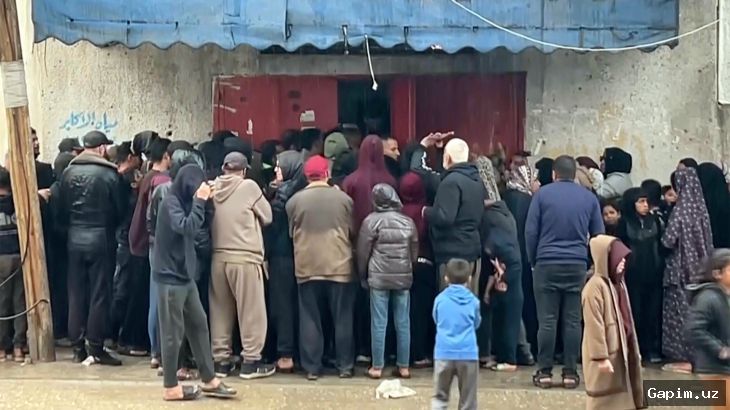
A flour and fuel shortage in recent weeks, caused by Israeli restrictions on imports into Gaza, has crippled bakeries' production. Most Palestinians, displaced by Israel's genocidal war, now queue for hours at the few remaining bakeries for subsidized bread.
“My uncle’s family and ours live together, so we need a lot of bread daily,” al-Roubi said. “That’s why my cousin and I each stand in a separate line.”
Ismail al-Thawabta, head of Gaza’s Government Media Office, said the territory needs 450 tonnes of flour daily but only 200 tonnes enter. The shortages stem from Israel closing crossings on February 28, coinciding with its joint war with the US on Iran. Crossings partially reopened but traffic remains limited.
Despite last year’s “ceasefire” stipulating that Israel ease restrictions, it has not done so. According to Israeli media, the US-led Board of Peace will not hold Israel accountable unless Hamas disarms.
Over a third of Gaza’s population relies on subsidized bread from World Food Programme (WFP)-supplied bakeries, where a bundle of 8-9 pitas costs about $1. However, the WFP has reduced flour supplies due to Israeli import restrictions.
Maysar Abu Rekab, a 72-year-old widow supporting three disabled family members, said a bread package now costs 10-15 shekels ($3.45-$5.17), with households needing two packages daily. “This creates a heavy burden, especially with low incomes and rising flour prices,” she told Al Jazeera.
Beyond bread, cooking gas supplies have plummeted, with distribution slowing from every six weeks to every three months. Firewood prices have also surged. Bakeries struggle to obtain oil for generators, essential due to Gaza’s lack of regular electricity.
Bakery worker Shadi Abu Gharqoud said the price of one liter of oil has reached 2,000 shekels ($689). “This is a very large amount, especially since we need large quantities,” he said, noting that costs are passed to customers.
Having barely recovered from last year’s famine, Palestinians fear the expanding humanitarian crisis could bring back hunger. “Did the world not see that? This crisis must be solved before it becomes worse,” Maysar pleaded.
Source: www.aljazeera.com