The death toll from a new outbreak of Ebola virus disease in the Democratic Republic of the Congo (DRC) has surpassed 120 people. The World Health Organization (WHO) has officially declared the situation a Public Health Emergency of International Concern (PHEIC), as the deadly infection has spread beyond the country's borders.
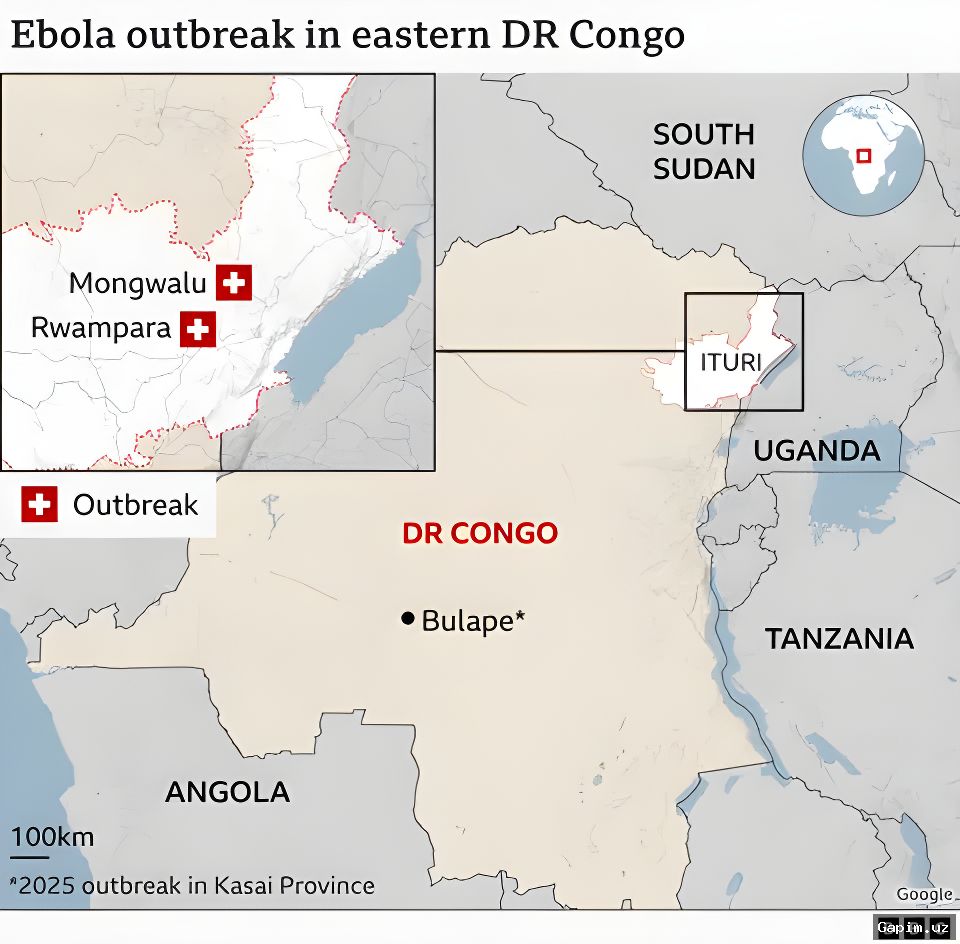
According to the WHO, the epicenter of the epidemic is the eastern province of Ituri, where hundreds of suspected cases have been reported, along with North Kivu province. Initial alarming reports of an "unknown disease with high mortality" (including among healthcare workers) emerged in early May, and by mid-month, laboratories confirmed the worst fears.
The infection has already crossed the border — the first deaths and critically ill patients have been identified in neighboring Uganda. Additionally, one case was recorded in the major transport hub of Goma, prompting authorities to temporarily close the border between Goma and Rwanda.
International experts are particularly concerned about the nature of the virus itself. The outbreak is caused by a rare strain, the Bundibugyo virus, which went undetected for several weeks because initial tests were designed to detect the more common Zaire strain. The situation is complicated by the fact that, unlike the Zaire strain, there are currently no licensed vaccines or specific approved treatments for the Bundibugyo virus.
WHO Director-General Tedros Adhanom Ghebreyesus expressed extreme concern at the World Health Assembly in Geneva about the speed and scale of the fever's spread. The organization has deployed a team of experts to the region, and Congolese authorities are urgently setting up three specialized treatment centers. The fight against the epidemic is taking place amid a severe humanitarian crisis and ongoing armed conflicts in the region, which critically hamper medical efforts. The WHO has recommended that neighboring countries strengthen border health controls, implement rigorous contact tracing, and restrict travel for individuals who have been in the affected areas.
Source: podrobno.uz