The European Union has initiated a large-scale pivot toward nuclear energy, aiming to overcome a protracted energy crisis, reduce dependence on hydrocarbon imports, and ensure stable power supply for the growing artificial intelligence industry. Key catalysts include geopolitical instability—particularly the war involving Iran, which triggered sharp spikes in oil and gas prices—and the need to achieve carbon neutrality.
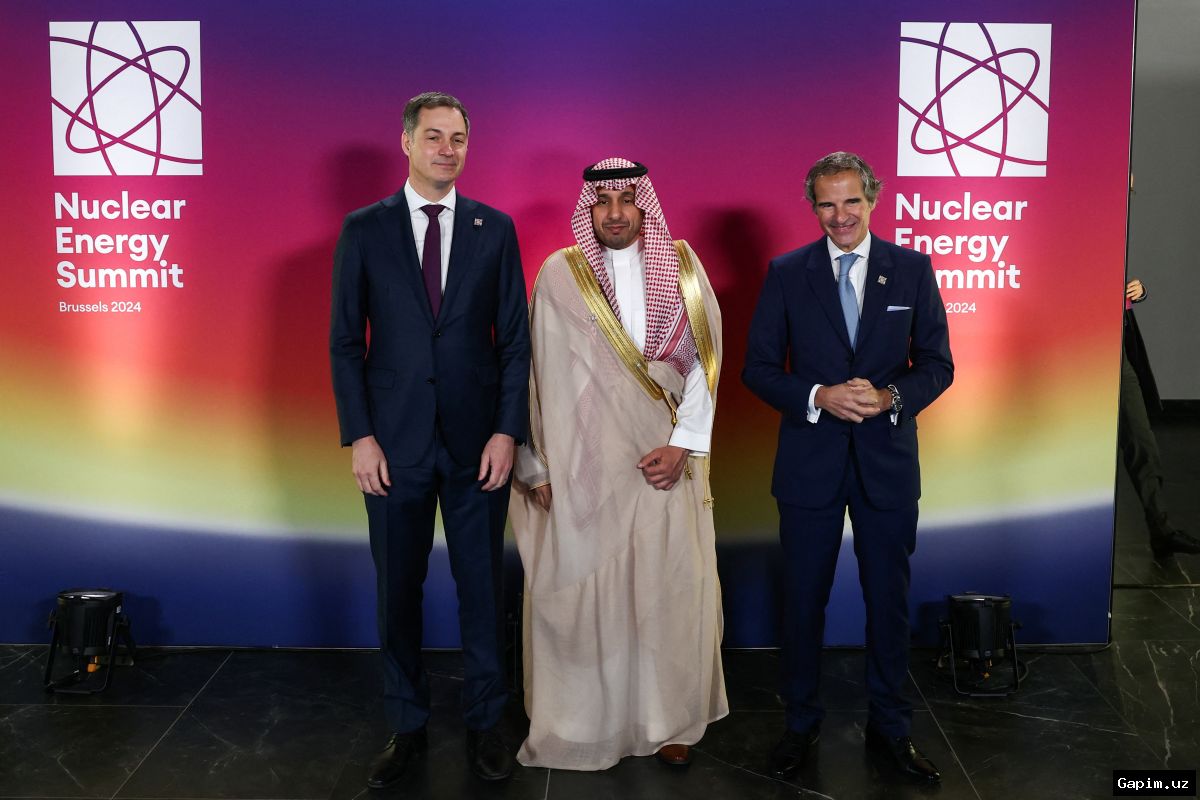
At the International Nuclear Energy Summit in Paris on March 10, European Commission President Ursula von der Leyen officially labeled the phased decommissioning of nuclear power plants by European countries a "strategic mistake," effectively declaring a nuclear renaissance on the continent. To implement this course, Brussels presented a strategy for accelerated deployment of small modular reactors (SMRs) by the early 2030s, backed by €200 million in financial guarantees from the European Emissions Trading System.
The rapid shift in the European agenda is reflected in the expansion of the international alliance of nuclear energy supporters. At the Paris summit, Belgium and Italy officially joined a declaration to triple global nuclear energy capacity by 2050, bringing the coalition to 38 states. According to European Commission officials, nuclear energy is now seen as an indispensable source of clean power that can insure the energy system against disruptions during periods of low wind or solar generation. Additionally, Bloomberg reports that officials in Brussels and Rome directly link the return to nuclear power with the critical need to power energy-intensive data centers. Internal Commission documents suggest that by 2040, up to 90% of all electricity in the EU should come from renewables and nuclear capacity.
Despite coordinated pressure from Brussels and a French-led group of 15 states, deep divisions remain within the EU over the economic viability and safety of this course. Germany, which shut down its last reactors in 2023, is showing strong internal resistance. Chancellor Friedrich Merz publicly agreed with von der Leyen's criticism and expressed regret over the closures, but stated the decision is "irreversible" because conservatives lack a majority in the Bundestag to restart the program without the far-right Alternative for Germany (AfD) party, with which cooperation is completely excluded. Meanwhile, German Environment Minister Carsten Schneider categorically rejected Brussels' arguments, calling new plant construction a "dead end" and SMRs a "long-standing illusion without a real technological breakthrough" that still requires billions in taxpayer subsidies.
Major European businesses share this economic and political skepticism, pointing to critical financial risks of long-term planning. RWE CEO Markus Krebber told Politico that investments in SMRs are currently unfeasible for the private sector. In his view, no supplier in the world can guarantee fixed timelines and costs, turning such projects into potential "graveyards for billions of dollars" of capital.
Bloomberg also notes that launching new reactors will inevitably face fierce local opposition, complex bureaucratic hurdles, and the need to find geologically stable sites—especially relevant for seismically active regions like Italy.
Nevertheless, gas-dependent southern European countries have begun dismantling long-standing legislative barriers. The Italian government under Giorgia Meloni, citing that Italian businesses suffer from the highest electricity prices in Europe, has launched preparation of a national strategic plan to return to nuclear energy by 2027. According to Bloomberg sources, Italian government delegations have already held talks in Canada, the US, France, and South Korea to select technology suppliers.
Leading national corporations—energy giant Enel, engineering firm Ansaldo Energia, and defense holding Leonardo—have established the Nuclitalia consortium to assess the economic viability and design Italy's first nuclear reactors in 40 years, to be built on the sites of currently non-operational nuclear facilities.
Source: podrobno.uz