Quezon City – On a highway in Ilocos Norte province earlier this month, Father Arvin Mangrubang of the Philippine Independent Church slowly drove opposite a dozen or so hulking armoured vehicles and trucks carrying United States soldiers. He felt a pit form in his throat.
“It’s become so normalised around here, the military, the threat of war,” Mangrubang told Al Jazeera. This coastal province on the country’s northwestern tip faces the South China Sea and is just 345km (214 miles) south of Taiwan.
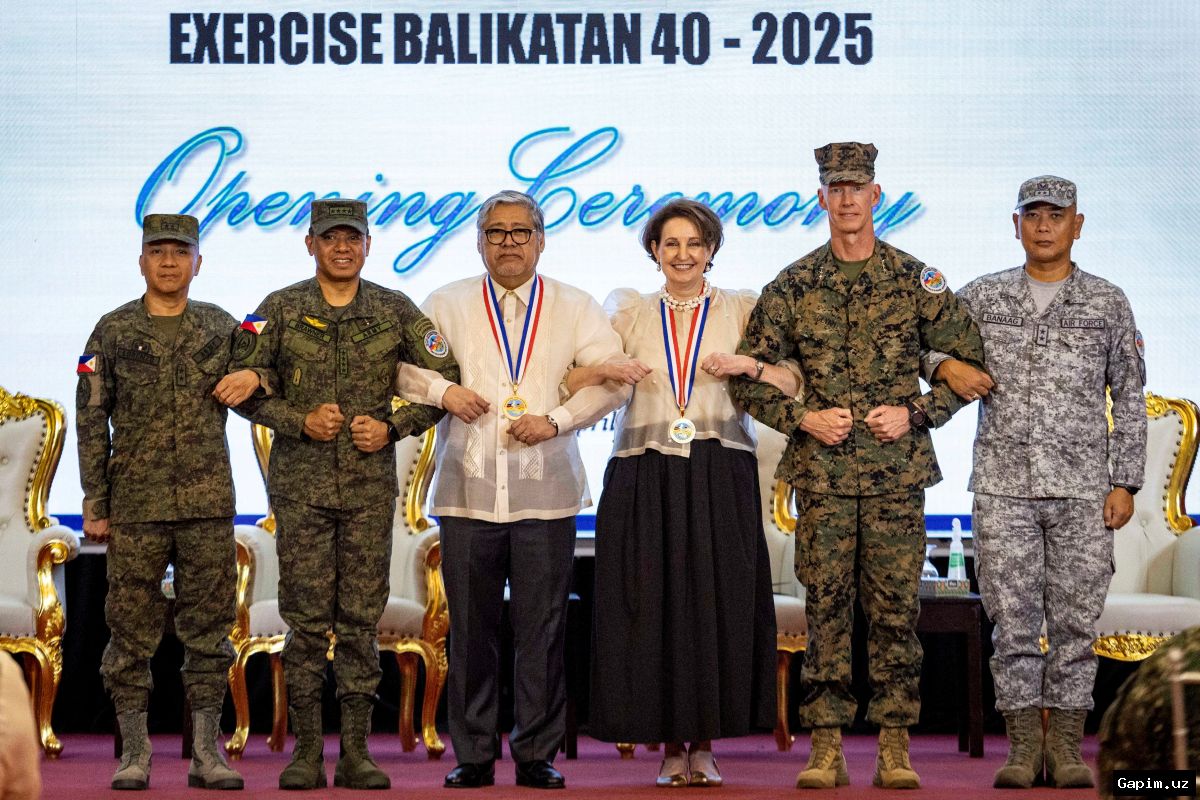
Due to its strategic location, the province regularly hosts high-profile displays of military might as part of US-Philippines war games, including the recently concluded annual Balikatan (Shoulder-to-Shoulder) joint exercises. Father Mangrubang says US soldiers can be spotted all year round, but during the summer months of April and May, their military operations kick into high gear.
“The constant display of tanks, drones and loud gunfire sends everyone into a fright, especially those who live so close to the operations,” Mangrubang told Al Jazeera. This year’s three-week-long Balikatan exercises were the biggest so far, with more than 17,000 soldiers taking part from six countries alongside the Philippines. The US military made up the lion’s share of the foreign contingent, with some 10,000 soldiers in attendance.
Analysts believe the war games amount to a provocation of Washington’s rival in East Asia – China – at a time when the US military is waging war against Iran. Locally, Philippine fishing and farming communities have also suffered livelihood disruption caused by the drills.
Raymond Palatino, secretary-general of Bayan, a national coalition of activist groups, said the Philippines should distance itself from US military planning, starting with ending joint exercises. “It is paving the way for the US war machine to boost its horrific range from West Asia to the West Philippine Sea,” Palatino told Al Jazeera.
Philippine Major-General Francisco Lorenzo Jr said the US’s war on Iran had no relevance for the war games, while his US military counterpart said the manoeuvres did not present a challenge to anyone. Marco Valbuena, spokesperson of the Communist Party of the Philippines (CPP), called claims about the defensive character of Balikatan “pure hogwash”.
The Philippines is the largest recipient of US military aid in the Asia Pacific region. Between 2015 and 2022, Washington sent more than $1.14bn worth of military equipment, and in December 2025, the US Congress approved a proposal to allot $2.5bn in security assistance to the Philippines until 2030.
International studies professor Renato De Castro at De La Salle University said this year’s Balikatan had a dual message: The US “showing the world and China that it is capable of mobilising and deploying forces in two different theatres” simultaneously, the Middle East and Southeast Asia.
The 2014 Enhanced Defense Cooperation Agreement allows the US to refuel its naval vessels at local ports. Plans have also been announced for the construction of a US ammunition factory in the Subic Bay Freeport Zone. According to De Castro, the Balikatan exercises have shifted emphasis in the last two years from internal security to external defence, “oiling the machinery” of war.
The US has since 2024 deployed its Typhon missile system in Ilocos Norte, capable of launching Tomahawk and SM-6 missiles. On May 6, US and Philippine forces, for the first time, launched a Tomahawk missile as part of the drills. The Makabayan Coalition criticised the launch, saying these were the same US weapons tearing Iran apart.
Local communities have not received the activities well. The Philippine military declared a “no sail zone” for up to 11 days along certain coastal areas. According to the Pamalakaya organisation, along Subic Bay in Zambales province, the exercises impact the livelihood of about 4,800 fisherfolk. Hilda Reyes, a member of the Municipal Fisheries and Aquatic Resources Management Council in San Antonio, Zambales, said many were afraid of getting caught in possible crossfire.
Amid the Balikatan drills, China and the Philippines continued to trade barbs over territorial claims in the South China Sea. On April 24, China’s Southern Theatre Command conducted live-fire drills in the South China Sea east of the Philippines’ Luzon island group. Chinese Foreign Ministry Spokesperson Guo Jiakun had a direct warning: “The last thing the region needs is division and confrontation as a result of the introduction of external forces.”
Source: www.aljazeera.com